

Chevron is signing onto a preliminary deal to invest in two Iraqi oil fields along with other investors, who are considering building a pipeline that would connect Iraq with the Syrian coast. Iraq wants to increase its oil production and diversify its export routes. Iran’s attacks on ships transporting oil through the Strait of Hormuz have pushed oil producers in the region to look for alternative routes for their exports. Iran has effectively shut down the strait to traffic for a second time, triggering a U.S. military response. The Wall Street Journal reports that Gulf governments are spending billions of dollars on new pipelines, rail corridors and energy storage hubs to bypass the strait.
One of the options the Chevron consortium is considering is rebuilding the pipeline from Kirkuk in northern Iraq to the Syrian port of Baniyas on the Mediterranean Sea that has been shut for more than two decades when it was damaged during the U.S. invasion of Iraq in 2003. The consortium plans to conduct technical studies to determine whether to build a new pipeline or update existing infrastructure to connect to pipelines through Turkey. The company has been in discussion with the Iraqi government for 12 to 18 months.
The Kirkuk-Baniyas Pipeline

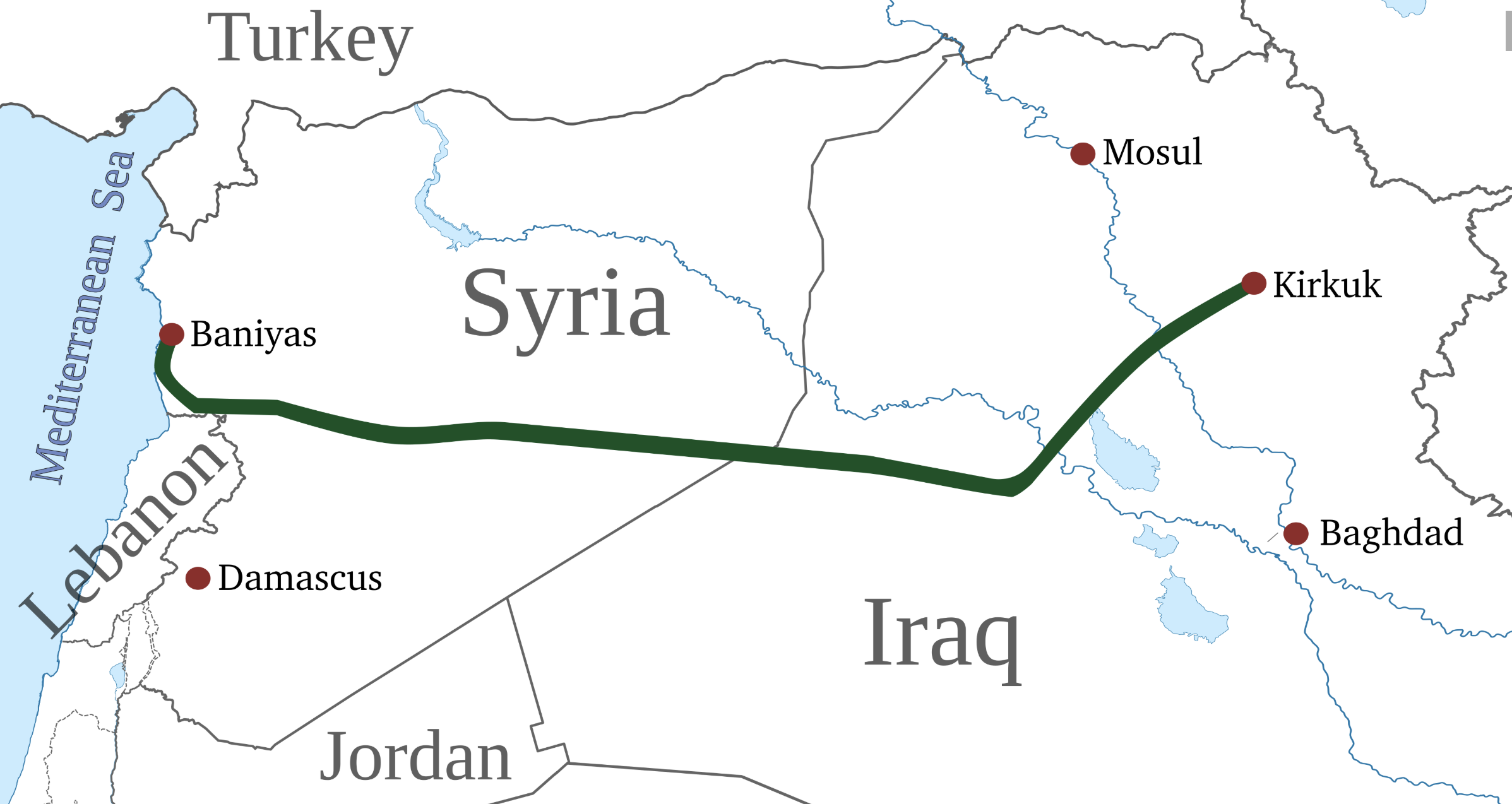
Rehabilitation of the Kirkuk-Baniyas pipeline, if undertaken, is likely to take years and will have its own security and logistical hurdles. The pipeline is slated to have an initial transport capacity of 2 million barrels per day.
Chevron is also discussing investments in two major Iraqi oil fields, West Qurna 2 and Nasiriyah. Chevron had entered into exclusive talks with state-run Basra Oil for a stake in West Qurna 2, one of the world’s largest onshore oil fields. Iraq removed Russia’s Lukoil as the operator of the oil field in the southern part of the country, about 40 miles north of Basra. The field produces some 460,000 barrels of oil a day. Chevron has been given exclusive negotiation rights for a year to secure the deal. Nasiriyah is a smaller oil field in southern Iraq. Chevron and Iraq signed an agreement in principle last August to develop the Nasiriyah oilfield, consisting of four exploration blocks, in addition to developing other producing oil fields.
Iraq is the Middle East’s second-largest oil producer behind Saudi Arabia. It normally produces 5% of the world’s oil, about 4.5 million barrels a day, but its exports have dropped during the conflict with Iran because of the closure of the strait. Iraq’s oil production fell from 4.2 million barrels per day in February to 1.45 million barrels per day in May. The country’s large southern fields depend almost entirely on exports through the Strait of Hormuz (about 90% flow through the strait); the northern pipeline alternatives to Turkey’s Ceyhan terminal are limited.
The Trump administration supports new Iraqi Prime Minister Ali Al Zaidi, who has been in Washington recently, meeting with President Trump and attending a U.S.-Iraq Business Summit with Energy Secretary Chris Wright and others where $60 billion in deals were signed. The United States is facilitating conversation between Iraq and Syria on future energy development projects and supports the growing diplomatic relationship between the two countries. “We’re going to be doing a lot of deals,” President Trump said. “We’re going to create a lot of jobs for both countries, and we’re going to be taking out a lot of oil. A lot of oil is coming out, and the American companies are doing it.”
Gasoline and diesel prices are rising again due to the military actions by both the United States and Iran. On July 18, American diesel prices rose above $5 a gallon, hitting an average price of $5.088, according to AAA, and regular gasoline prices hit $3.992 a gallon – below its peak of $4.56 in the spring. President Trump said this week that the strait is reopened for all nations except Iran, but safety concerns remain as Iran is still able to strike at commercial shipping vessels in the waterway.
Conclusion
Chevron is taking steps to construct a pipeline connecting Iraqi oil fields and reservoirs to the Syrian coast as oil majors seek alternate routes to the Strait of Hormuz. Chevron is considering rebuilding a pipeline from Kirkuk, Iraq, to the Syrian port of Baniyas on the Mediterranean Sea. The deals with Chevron are part of a larger plan for Iraq to shore up investment from the United States. Iraq wants to increase its oil production and diversify its export routes to avoid the strait, as do other Middle East oil producers. Nations across the Persian Gulf have poured billions of dollars into new pipelines, rail corridors and energy storage hubs.
For media inquiries, please contact press@ierdc.org

