The United Nations climate talks, COP31, being held in the resort city of Antalya, Turkey, broke down without a final agreement. It was the first time U.N. climate talks failed to reach a final agreement since COP15 in Copenhagen in 2009. The other time that annual global climate talks failed to reach agreement was at COP6 in The Hague in 2000. COP31 became the longest U.N. climate summit in history, surpassing one held in 2019 that went nearly an extra 45 hours. Negotiators from more than 190 countries meet every year to advance the goals of the 2015 Paris Climate Agreement. The United States has withdrawn from the 2015 Paris Agreement, and President Trump did not send diplomats to the conference.
After nearly two weeks of meetings and negotiations in Turkey, diplomats tried for two more days past the talks’ official deadline to see if Russia, Saudi Arabia, and other Arab nations would loosen their opposition to language about fossil fuels. Another issue plaguing the conference was that developing countries were not receiving the funding from wealthier nations that they say they need to deal with climate change. This has become a perennial sticking point at the conferences, with nations arguing over how much rich nations should give poorer nations. Oil-producing countries proposed increasing the deployment of technology to capture and store carbon dioxide emissions from fossil fuels. The proposed text had also included a target to expand electric power’s share of the global energy mix from its current 20% to 35% by 2035. The draft admitted that warming is on course to pass the 1.5-degree target, noting that thirty years of summits and trillions of dollars spent have not produced the desired results.
The COP process requires unanimity among the participants. Even when agreement has been reached, however, the process has been plagued by lawyerly fights over wording and a long history of unrealized promises. Since 2023, no final agreement has directly mentioned fossil fuels, and countries are realizing that they cannot phase out fossil fuels as quickly as the climate talks require. Canada is now fast-tracking an oil pipeline and LNG facilities. Australia has approved new projects that would last for decades. And the United States is using trade policy to promote fossil fuels abroad, having received the number one ranking as the world’s largest oil and gas producer.
That leaves Europe as the major region for climate policy, though soaring energy prices have compelled it to make concessions and delay some policies, such as its methane rule on imports. Its insistence on intermittent wind and solar technologies has raised electricity prices to two to three times those of the United States because it needs backup power when the wind and sun are not available. The EU is now confronting the reality that its “energy transition” is making it much more reliant on China for energy, repeating its former dependency on Russia, as demonstrated, among other things, by its deal to delay its new methane reporting and monitoring rules for two years. Europe buys most of its “green energy” devices from China, with China supplying 98% of European solar panels and 88% of its lithium-ion battery imports in 2024. Denmark, Spain and Portugal are among European nations that announced new fossil fuel phaseout plans recently.
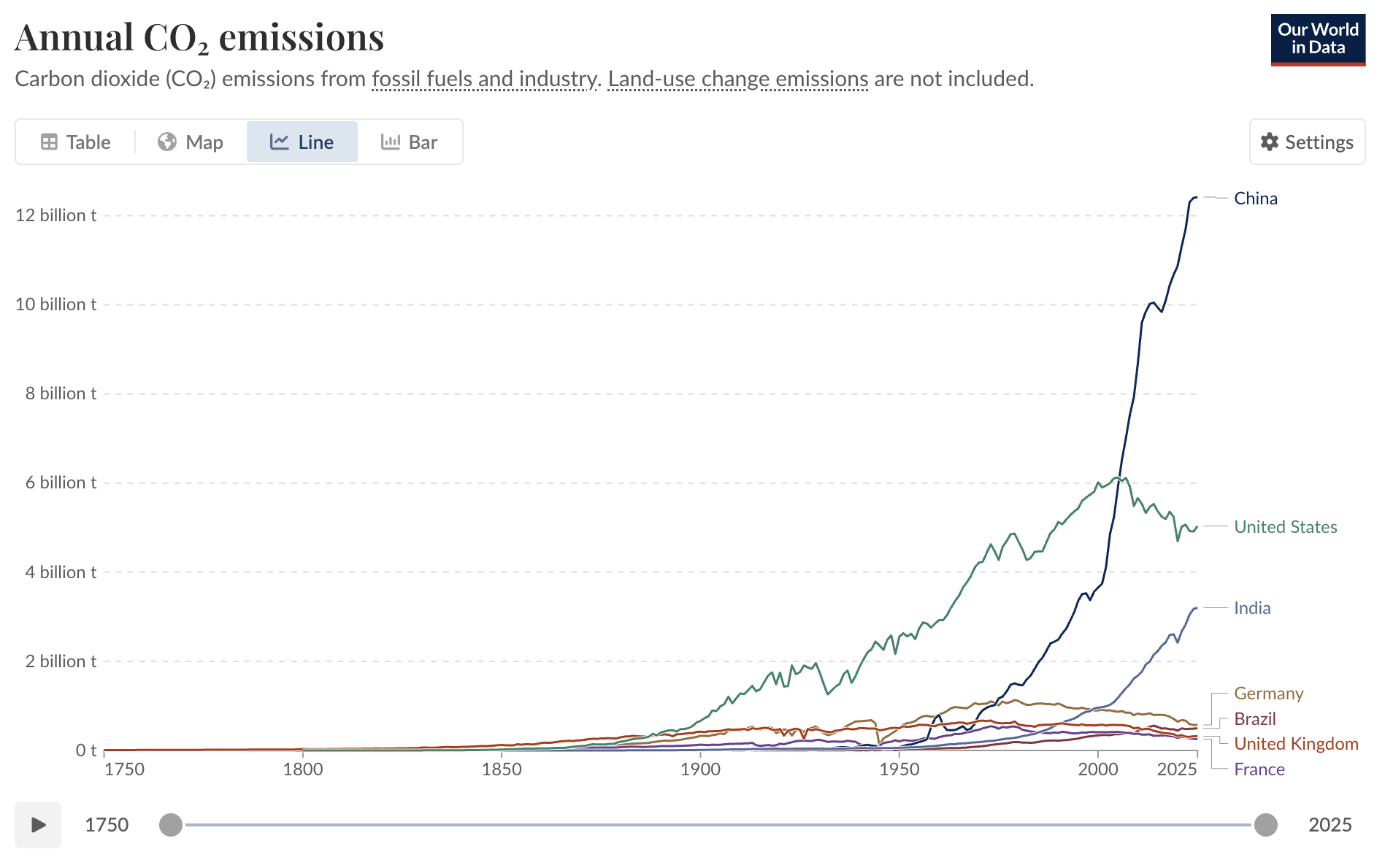
While delegates met in Turkey, President Trump, President Xi Jinping of China, and President Vladimir V. Putin of Russia met in Shenzhen, China, and agreed to “increase the production and supply” of petroleum, as the world has been short of petroleum supply during the Iran conflict. China, the world’s biggest carbon emitter and provider of low-carbon technology, has attended the talks but does not want to be the world’s climate leader. China and India, still considered developing countries, are two of the world’s largest emitters of carbon dioxide, with vast and growing fleets of coal-powered generation.
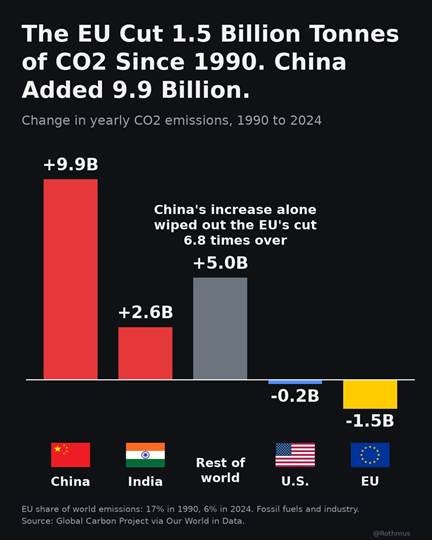
China added 9.9 billion metric tons of carbon dioxide emissions between 1990 and 2024, and India added 2.8 billion metric tons, while the EU shed 1.5 billion metric tons and the United States shed 0.2 billion metric tons. China’s addition of 9.9 billion tons wiped out the European reduction more than 6 times over.

Conclusion
International divisions over fossil fuels and climate financing derailed negotiations at the COP31 climate summit in Turkey, leaving participating countries without an agreed outcome for the first time since 2009. COP31 climate talks blew past their deadline as negotiators from 190 countries struggled over whether their final deal should mention fossil fuels as a primary driver of global warming and whether richer countries should pay to help poorer countries adjust to climate change. The EU and other nations rejected a proposed agreement because oil producers like Russia, Saudi Arabia, and other Arab countries had blocked any mention of phasing out coal, oil, and natural gas. The collapse of COP31 talks without a political agreement left negotiators questioning the future of the process that existed for three decades.
Europe remains the major region to keep charging its residents huge sums to transition to wind and solar power in the name of climate change, but even there the EU bloc has delayed some climate policies amid soaring energy prices and public unrest. China has been building energy capacity of all kinds, and its carbon dioxide emissions increased between 1990 and 2024 by more than 6 times the total reduction in emissions Europeans made during the same period.