

The conflict in Iran and the resulting disruptions in the Strait of Hormuz have driven up oil prices globally and in the United States. But as we look at the price of gasoline and diesel around the country, a distinct pattern emerges: much like the cost of electricity, fuel prices are heavily dictated by state-level energy policies.
In our report, Blue States, High Rates, which we produced with Always On Energy Research, we showed that electricity rates were heavily influenced by state policies, and from the maps below, we see a similar trend — there is a significant correlation between the price of gasoline and the price of diesel, and the parties people vote for.
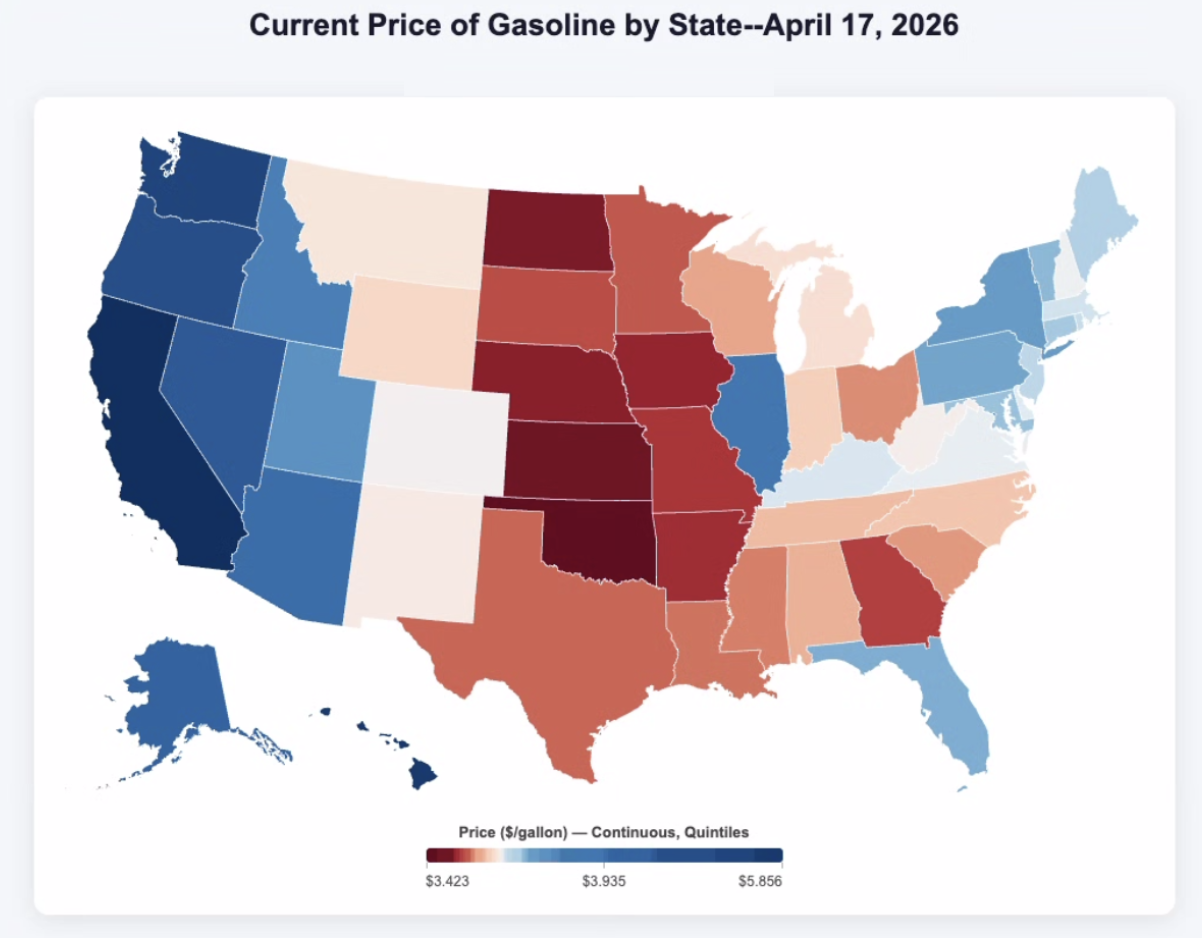
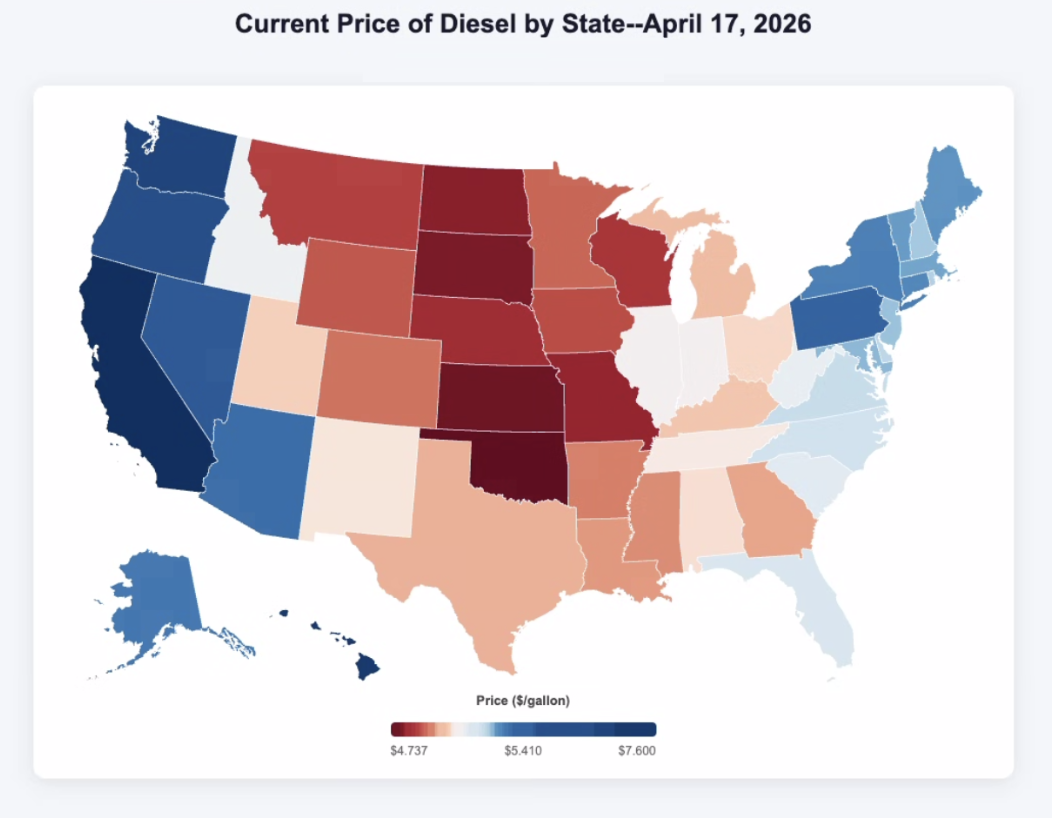
One of the most striking takeaways from these maps is how California’s policies have obviously driven up the price of gasoline and diesel not just in California but also in neighboring states. Arizona and Nevada both rely heavily on fuel piped in from California refineries. As a result, even though their voters didn’t elect politicians pushing these restrictive policies, their residents are still forced to pay the “California premium” at the pump.
How have gasoline and diesel prices changed as a result of the Iran conflict?
With the outbreak of hostilities and a temporary bottleneck in the Strait of Hormuz, oil prices surged from $58 on December 29, 2025, to nearly $113 on April 7, 2026, then back down to $85 on April 17, 2026. That has impacted the price of gasoline and diesel in the United States. On December 28, 2025, the average price of regular gasoline in the United States was $2.83, and as of April 17, 2026, it was $4.08.
This geopolitical shock highlights a crucial, often misunderstood reality about American energy: even though the United States is the world’s largest oil producer and a net exporter of refined petroleum products, we are still a net importer of crude oil.
Why? It comes down to infrastructure. Much of the domestic U.S. refining capacity was redesigned decades ago to process heavy, sour crude imported from countries such as Canada, Mexico, Venezuela, and Saudi Arabia. While we produce massive amounts of light, sweet crude (some of which we export), our refineries still require a steady diet of heavy crude to operate efficiently. When disruptions in the Strait of Hormuz caused global heavy crude prices to spike, U.S. refiners had to fiercely compete for that supply. Combine that with increased global demand for American refined products, and the inevitable result was an increase in domestic gasoline and diesel prices, even though the United States produces more oil than any other country in the world.
The two following maps show the change in gasoline and diesel prices since before the state of hostilities:
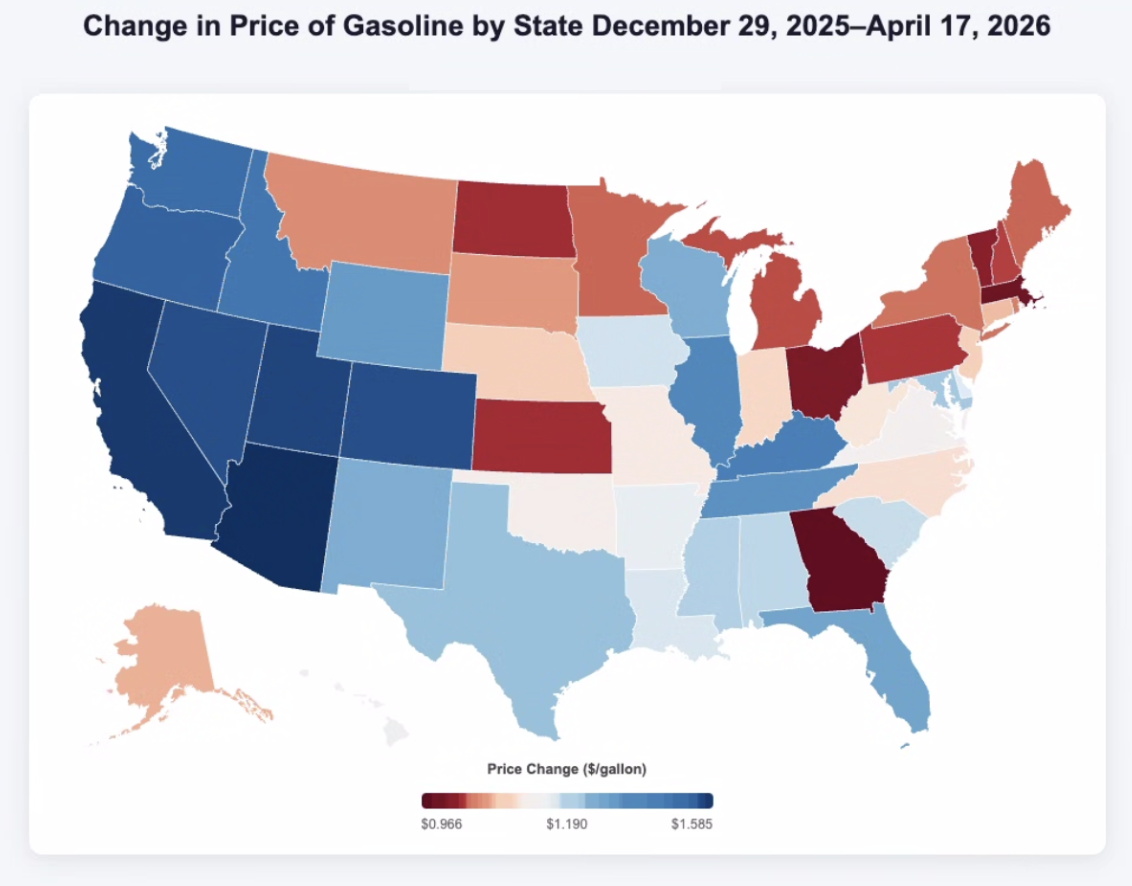
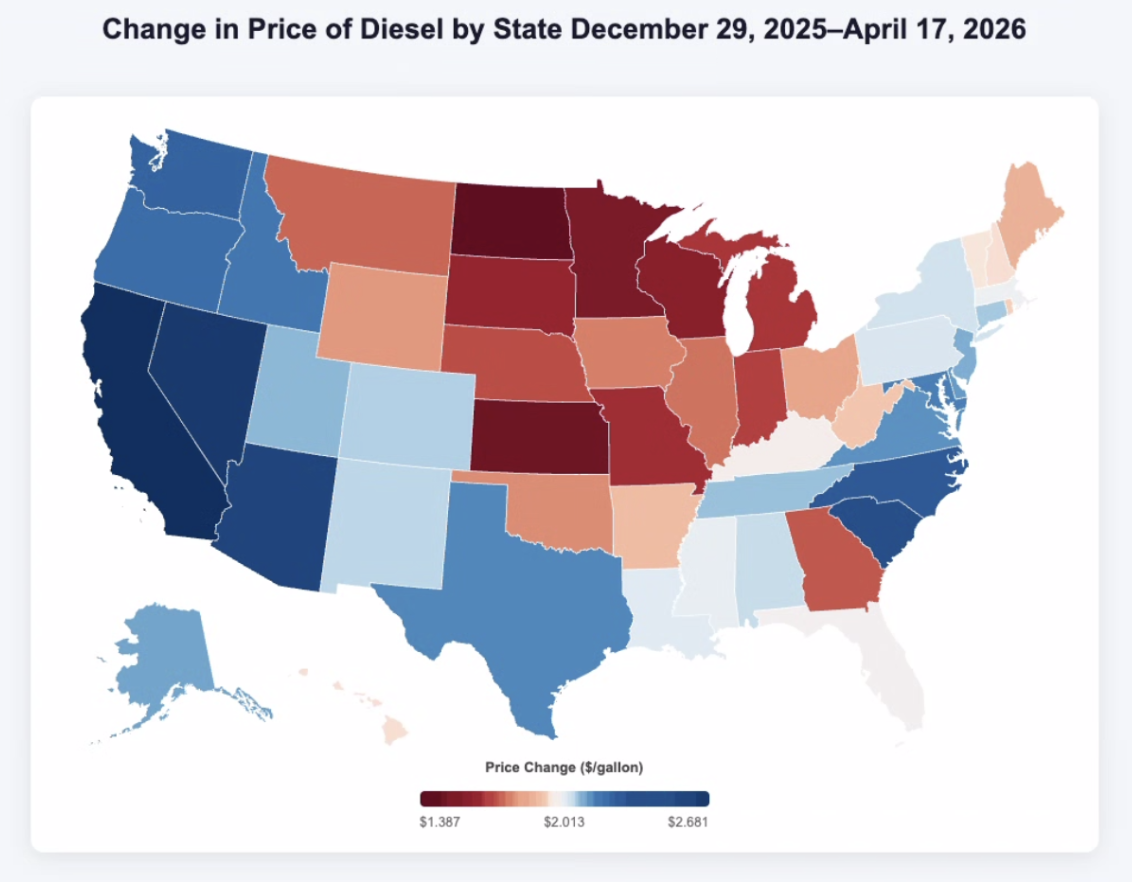
Interestingly, the pain at the pump is not evenly distributed. While both maps show this important trend, the diesel maps show it more clearly: the Midwest, from Montana down to Oklahoma and Arkansas, and back up to Ohio, hasn’t seen nearly the jump in diesel prices as the coasts, including the Gulf Coast. While the coasts bear the brunt of the international supply shock, Canadian imports have served as a crucial geographic buffer, keeping fuel prices significantly lower in the interior United States.
Gas taxes
It’s worth noting that several states paused or reduced their gas taxes. Georgia was the first state to act when Republican Gov. Brian Kemp signed a 60-day suspension of the state’s motor fuel taxes, which are 33 cents per gallon on gasoline and 37 cents per gallon on diesel, in late March 2026. Indiana followed on April 8, 2026, when Republican Gov. Mike Braun issued an executive order for a 30-day suspension of the state’s 7% gasoline sales tax in a temporary “gas tax holiday” aimed at blunting the impact of higher prices. Utah implemented a partial reduction by cutting its fuel tax by six cents per gallon, bringing the gas tax down to 32 cents per gallon for the remainder of 2026. While not a full pause, it still lowers costs at the pump.
Gas Prices Before the Conflict
Prior to the outbreak of hostilities in Iran, the strong correlation between fuel prices and state political leanings was already clearly evident. In November, the ten states with the lowest average gasoline prices were all red states. These ranged from $2.56 per gallon in Oklahoma to $2.75 per gallon in Kentucky, all well below the national average of $3.09 per gallon. In contrast, blue states dominated the highest-price rankings. California posted the nation’s highest average at $4.64 per gallon, roughly 50% above the national average, followed by Hawaii at $4.47, Washington at $4.18, and Oregon at $3.80.
The lower prices in red states are due to their proximity to major oil-producing regions (such as the Permian Basin) and refining infrastructure, as well as fewer restrictive policies and hidden taxes. Blue states, by comparison, impose higher excise taxes and additional costs from programs such as cap-and-trade, low-carbon fuel standards, and other regulatory fees that drive up pump prices. This pre-conflict baseline demonstrates that state-level energy policies have long shaped fuel affordability across the country, independent of global events, much like the patterns observed in electricity rates. The divide set the stage for the uneven impacts that followed the disruptions in the Strait of Hormuz.
Conclusion
Global events can jolt energy markets, but they do not write the price tag on the pump. That is still decided by the policies lawmakers choose at the state level. The Iran-related shock simply magnified a pattern that was already in place: red states and the interior Midwest enjoyed noticeably lower prices, thanks to geography, proximity to production, and lighter regulatory burdens. Blue-state policies, especially California’s, exported higher costs across borders. And Canada’s dependable supply proved once again why diversified, pragmatic energy partnerships matter. As prices settle, the lesson remains clear. Voters who want more affordable gasoline and diesel should look first to the energy policies on their own ballots.

