

As Iran vows to block oil shipments until the U.S.-Israeli attacks end, Saudi Arabia is moving to fill its East-West pipeline to capacity. According to Saudi Aramco, the world’s largest oil exporter, “in the next couple of days,” it would be shipping about seven million barrels of oil per day through 750 miles of pipelines to a terminal on the Red Sea, which would bypass the Strait of Hormuz entirely. Before the Iran conflict and the effective closure of the strait, the pipeline system carried about 2.8 million barrels a day. Because oil tankers need to be repositioned to the West Coast for loading, it is taking time to reach full capacity. The company is currently meeting the requirements of “the majority” of its customers by tapping into its storage facilities in Asia, the Mediterranean, and Northwest Europe.
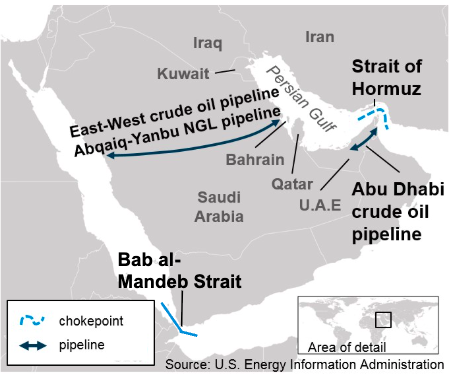
According to the Wall Street Journal, Aramco’s East-West pipeline network is also tied to domestic refining hubs in the region, feeding its refineries close to two million barrels a day. The refineries on the West Coast are fully operational and supply both Saudi domestic markets and international buyers of refined fuels. With the exception of the closure of the Ras Tanura refinery due to a small fire caused by an attack by Iran, no Aramco refineries have been closed, and that refinery is in the process of returning to operation.
The company’s network of spare capacity of more than two million barrels a day provides flexibility to meet customer demand both domestically and overseas. According to Saudi Aramco CEO Amin Nasser, the company has a maximum sustained capacity of 12 million barrels per day, which gives it a lot of optionality in where to concentrate its production. Aramco is prioritizing Arab Light, along with some Arab Extra Light, via the East-West pipeline to “meet targets.”
Reuters reports that, according to Nasser, “Even with our ability to export through the western region, you’re talking about close to 350 million barrels of disruptions that will come off the market.” He noted that global oil inventories were at a five-year low and that the closure of the strait would lead to faster drawdowns, so it is critical that shipping in the strait be resumed. He said that the company would be able to restore production to 10 million barrels per day within days of the strait’s reopening.
Another pipeline that bypasses the strait is operated by the United Arab Emirates. It is a 1.8-million-barrel-per-day pipeline that links onshore oil fields to the Fujairah export terminal in the Gulf of Oman. However, according to the Energy Information Administration, increased use of the pipeline for day-to-day operations has limited the excess capacity available to reroute additional volumes around the Strait of Hormuz.
The disruption of navigation in the Strait of Hormuz has raised shipping and insurance costs, prompting President Trump to offer additional insurance through the International Development Finance Corporation, providing up to $20 billion in rolling reinsurance to cover oil tankers and other commercial vessels transiting the Strait of Hormuz. According to JPMorgan analysts, however, that insurance coverage is “too small for the risk,” estimating that roughly 329 tankers currently in the Gulf could require up to $352 billion in total insurance protection. President Trump also offered to have the U.S. Navy escort oil and gas tankers through the Strait of Hormuz when it becomes safe to do so and after the United States removes Iran’s navy. However, U.S. forces are still focused on limiting Iran’s missile and drone capabilities.
The International Energy Agency (IEA) has recommended the release of 400 million barrels of oil from its strategic reserves over about a two-month period, the largest such action in the agency’s history, to try to suppress energy prices. The release would be more than double the 182 million barrels released in 2022 following Russia’s invasion of Ukraine. Spain’s energy minister said countries would have up to 90 days to release that volume. The markets, however, do not see it as being effective since it is not the supply of oil that is the issue, but the flow, the rate at which those barrels can be drawn down and delivered. The IEA recommendation would be too slow, geographically misplaced, and would not fix the physical shortfall.
Analysis
The oil price increases the Iran war has caused are leading the U.S. and others to take action to immediately increase oil supply, including Saudi Arabia increasing the amount of oil shipped through its East-West pipeline, the U.S. insuring tankers traveling through the Strait of Hormuz, and the IEA releasing millions of barrels from its strategic reserves. Although it will be difficult to meet consumers’ needs in the short term, high oil prices signal to the industry to increase production to meet international demand. This situation underscores the importance of removing restraints on energy production, refining, and exports in the U.S., which stand in the way of U.S. companies providing enough oil to mitigate supply shocks.
For inquiries, please contact wrampe@ierdc.org.

