

The United States imposed new sanctions against Iran’s trading partners as Iran threatens to halt all oil exports through the Strait of Hormuz and the Persian Gulf. The new measures add to extensive sanctions already targeting Iran’s banking, energy, aviation and cryptocurrency sectors. The escalating economic confrontation keeps pressure on energy markets, as Iran threatened to fine or confiscate tankers that have violated its rules for navigating through the Strait of Hormuz.
U.S. Treasury Secretary Scott Bessent promised the new sanctions would be the toughest direct and secondary sanctions ever imposed upon Iran. He warned that “any nation that serves as a financial artery of a withering regime should expect to share in its isolation,” which was intended as a warning for foreign governments transacting with Iran. Bessent added: “Iran’s enablers purchase and transport its petroleum. They facilitate the flow of its finances through exchange houses and free trade zones.”
Politico reports that the U.S. Treasury Department broadened the types of secondary sanctions it may impose on countries that facilitate the flow of money to Iran and imposed fresh direct sanctions on dozens of entities linked to Iran. The Trump administration announced new sanctions on 60 individuals, entities, and vessels that enable the Iranian regime’s illicit procurement, cyber operations, and petroleum and petrochemical product revenue generation networks. It also ended certain exemptions to existing Iran sanctions that permitted the flow of remittance payments to the country and allowed Iranians to access U.S. cultural and academic institutions, according to Politico.
The new campaign, “Operation Economic Outcast,” however, does not immediately impose penalties against financial institutions located in China and other countries that facilitate trade with Iran for oil and other commodities. And Secretary Bessent did not give a timeline for compliance or identify which countries trading with Iran may be targeted, saying he would give them time to comply with the new directive, as analysts believe it will take time for nations to unwind financial agreements they may have with Iran. President Trump will call foreign leaders with “specific requests” about cutting their economic ties to Iran’s government. U.S. officials from the Treasury and State departments and the Pentagon will also talk to their counterparts around the world, seeking “immediate action” to cut off economic ties to Iran.
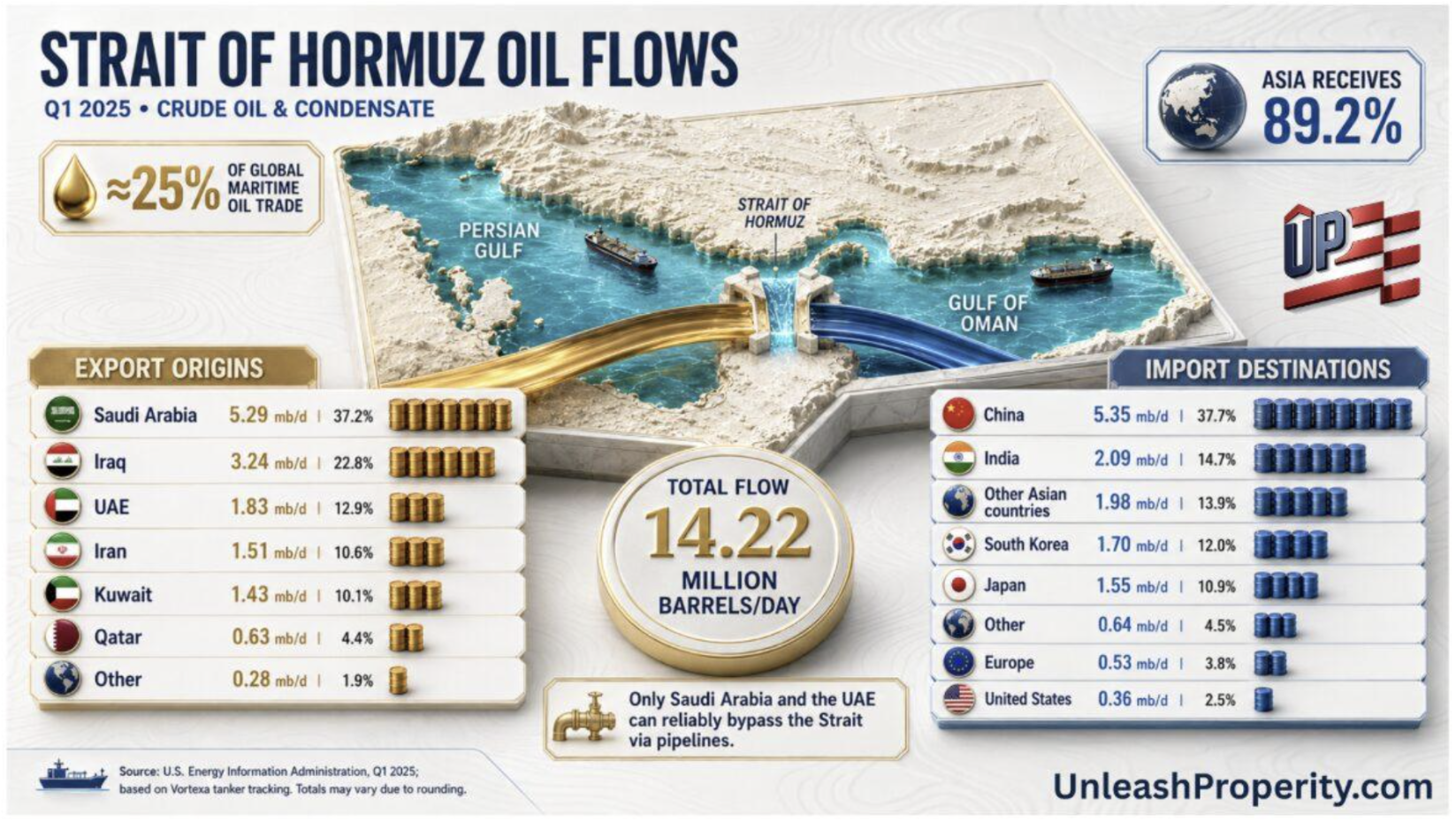
Bessent previously urged cooperation from China, the biggest buyer of Iranian oil and its largest trading partner, although the U.S. blockade of Iran’s ports had already cut Iranian oil flows to China. According to China, its cooperation with Iran falls within international law and should not be interfered with or disrupted. As the chart below shows, almost 90% of the oil flowing through the Strait of Hormuz goes to Asia, with China receiving the largest share. Iran promised to retaliate against expanded U.S. sanctions, expressing confidence that major trading partners would resist the pressure from the United States.

Despite Iran’s tough talk in response to increased sanctions, Reuters reports that, according to a Pakistani government source, Iran expressed a general willingness to resume peace talks during meetings between Iranian and Pakistani officials on August 24, while expressing concern about the sanctions. That source said the United States would reverse those decisions before or during a new round of negotiations. According to the Pakistani military, Pakistan made “significant progress” in the latest talks with Iran, which focused on preventing further escalation and reopening the Strait of Hormuz. They exchanged views on regional peace and how to reach a negotiated settlement.
Conclusion
While the Trump administration announced new sanctions on 60 individuals, entities, and vessels, it did not explicitly name any country as a target for expanded sanctions. Treasury Secretary Scott Bessent suggested that “quiet diplomacy” would be the best way to persuade countries to cut trade ties with Iran, part of “Operation Economic Outcast.” According to analysts, however, China’s cooperation is key to putting pressure on Iran as it is Iran’s largest oil importer and trading partner. Iran promised to retaliate against expanded U.S. sanctions and said it was confident major trading partners would resist new U.S. sanctions pressure. Pakistan, however, is reporting that discussions with Iran indicate a general willingness to resume peace talks.
For media inquiries, please contact press@ierdc.org.

