

U.S. Production and Resources
U.S. Consumption
Coal Plant Statistics
Emissions
Environmental Issues
U.S. Coal Imports and Exports
International
Executive Summary
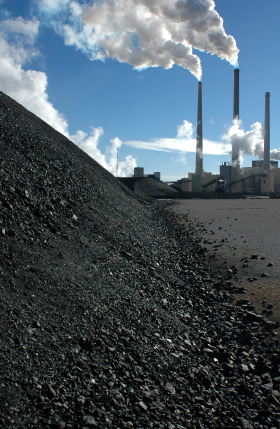
The United Sates is a global leader in coal, both in production and reserves. Environmental issues and a push toward natural gas-fired power plants in recent years have limited new coal-fired generating units, but new coal plant construction is still progressing. The Energy Information Administration and other forecasters predict a robust coal market in the U.S. to meet growing electricity demand and to fuel the emergence of a coal-to-liquids industry. Surges in U.S. coal exports this year indicate that U.S. coal is important to the global market, as well as to the domestic market, and that other countries, both developed and developing, are investing in coal-fired technology.
U.S. Coal Production and Resource Statistics
- In 2007, coal production totaled 1.15 billion short tons [1]. By 2030, the Energy Information Administration projects coal production to total 1.46 billion short tons, an increase of over 25 percent [2].
- The largest coal producing State is Wyoming with 446.7 million short tons produced in 2006. Over half the states in the U.S. (26 States) produce coal. The coal is transported by truck, train, and barge to consumption areas [3].
- Coal reserves in the U.S. totaled 491 billion short tons as of January 1, 2007, the most in the world. At current consumption levels, the U.S. has 381 years of coal. See the international section below for other countries with large coal reserves [4].
U.S. Coal Consumption Statistics
- In 2007, coal consumption totaled 1.13 billion short tons, of which 93 percent was used for electricity production, 7 percent in the industrial sector, and 0.3 percent in the residential and commercial sectors [5]. By 2030, the Energy Information Administration projects coal consumption to increase to 1.55 billion short tons, of which 91 percent would be used for electricity generation, 4 percent for coal-to-liquids production, 5 percent in the industrial sector, and 0.3 percent in the residential and commercial sectors [6]. In 2007, coal represented 22 percent of total U.S. supply; in 2030, it is projected to represent 25 percent of the total.
- In 2007, 51 percent of U.S. electricity was generated by coal-fired power plants. EIA predicts that coal-fired generation will supply 54 percent of the electricity in 2030. Generation from coal-fired units is expected to increase by over 800 billion kilowatt hours (42 percent) by 2030– the largest increase of any generating fuel due to its low capital and fuel costs relative to other generating technologies [7].
U.S. Coal Plant Statistics
- The U.S. has 313.6 gigawatts of coal-fired capacity, which is 31 percent of the total generating capacity in the United States. During the past two decades, little new coal-fired capacity has been added due to the addition of over 250 gigawatts of natural gas-fired combined cycle and turbine units [8]. The EIA projects that 100 gigawatts of new coal-fired power plants will be built by 2030 to meet increased electricity demand, more than any other fuel type capacity [9].
- The Department of Energy’s National Energy Technology Laboratory (NETL) reported that at the end of June 2008, 29 coal-fired plants were under construction (16,534 megawatts), 5 were near construction (1,962 megawatts), 18 were permitted (8,415 megawatts), and 58 were announced (37,438 megawatts) for a total of 64,349 megawatts, all to be on-line within 10 years. A plant near construction has obtained approval and received the majority of its permits, has begun site preparation, and is contracting for vendors and Engineering, Procurement and Construction contractors. A plant in the permitted phase has two or more permits approved or fuel or power contracts have been negotiated. A plant in the announced phase is in the early stages of development and maybe filing for permits. While plants under and near construction are likely to come on line, NETL warns that regulatory uncertainty and industry cost increases are impacting development decisions for all projects. For example, their year 2002 report of announcements reflected a schedule of over 36,000 megawatts to be installed by 2007, but only 12 percent (about 4,500 megawatts) were actually achieved [10].
- The U.S. has a coal-to-natural gas plant in Beulah, North Dakota. The Great Plains Gasification Plant converts lignite coal to pipeline quality synthetic natural gas. The Synfuels plant began operating in 1984 and produces more than 54 billion cubic feet of natural gas annually, consuming over 6 million tons of coal each year [12].
- While there are no coal-to-liquids plants currently in the U.S., the technology exists, was used widely during World War II by Germany, and is currently producing petroleum products from coal in South Africa. The Energy Information Administration projects that coal-to-liquids production in the U.S. will begin by 2015 and by 2030, it will produce 240,000 barrels per day of petroleum products, consuming 29 million short tons of coal [14].
Emissions
- Combustion of coal produces pollutants such as sulfur dioxide (SO2), nitrogen oxide (NOx), particulate matter, and carbon monoxide. The Clean Air Act Amendments of 1990 (CAAA) instituted a cap and trade program that requires power plants to meet certain targets for SO2 and NOx emissions. As a result, emissions of sulfur dioxide from coal-fired electricity generation declined from 15.9 million short tons in 1989 to 9.8 million short tons in 2006, a reduction of 39 percent. On a per kilowatt basis, SO2 emissions from coal-fired plants declined from .05 tons in 1989 to .03 tons in 2006. NOx emissions from coal-fired generators declined from 8.0 million short tons in 1989, to 3.3 million short tons in 2006, a reduction of 59 percent. On a per kilowatt basis, NOx emissions from coal-fired power plants declined from .026 tons to .011 tons. Power plant owners mainly complied with the CAAA by using lower sulfur coal or by adding desulfurization and selective catalytic reduction equipment to their units. Both the lower sulfur coal and the technology to remove SO2 and NOx were available to the power companies when the CAAA became law [15].
- The Environmental Protection Agency’s (EPA) Clean Air Interstate Rule (CAIR) was set up to further limit SO2 emissions in 28 eastern states and the District of Columbia to 3.6 million tons beginning in 2010 and 2.5 million tons in 2015, and NOx emissions to 1.5 million tons in 2009 and 1.3 million tons in 2015 [16]. The U.S. Court of Appeals for the D.C. Circuit on July 11, 2008, issued a decision that struck down CAIR’s emission allowance trading program, holding that unrestricted trading might result in no emission reductions in an upwind state, thereby preventing EPA from fulfilling its responsibility under the Clean Air Act (CAA) to prohibit sources in one state from contributing to nonattainment in another state [17].
- The Clean Air Mercury Rule was set up to limit mercury emissions to 38 tons in 2010 and 15 tons in 2018. To reduce mercury, power companies can change their fuels, change the dispatch or the configuration of their units, or add mercury specific controls, such as selective catalytic reduction equipment or activated carbon injection systems [18]. The Clean Air Mercury Rule was vacated on February 8, 2008, because the court found that mercury is a toxic air pollutant which must be regulated under different provisions of the Clean Air Act, generally requiring the use of the best available control technology (BACT) [19].
- Carbon dioxide emissions in 2007 totaled 5984 million metric tons of CO2, of which coal represented 36 percent. The majority of carbon dioxide emissions from coal (over 90 percent) were emitted from coal-fired electric generators [20].
- U.S. CO2 emissions are expected to total 6,851 million metric tons of CO2 in 2030, of which coal is expected to represent 41 percent, with 92 percent of coal’s share coming from coal-fired electric generators [21].
- Carbon dioxide emissions from coal-fired power plants could be controlled in the future when carbon capture and sequestration (CCS) technology becomes commercially viable. CCS technology captures CO2 emissions at their point of production and injects them in geological formations in the earth. In 2003, the U. S. Government and private industry began funding the FutureGen project to control carbon emissions from coal-fired power plants. The Federal Government withdrew its support early in 2008 for a restructured project where Government funds would be used for the CCS portion of the plant only [22]. Carbon capture and sequestration technology is expected to add about $1 billion to the cost of a new plant and increase power plant efficiency losses [23].
Environmental Issues
- It is becoming harder for new coal plants to get regulatory permits due mainly to their emissions of carbon dioxide. In the United States, of 151 proposals for coal-fired plants in early 2007, more than 60 had been dropped by the year’s end, many blocked by state governments. Dozens of others are stuck in court challenges [24].
- Kansas is an example of a state blocked project to build a coal plant. In October 2007, a state environment official rejected Sunflower Electric Power’s permit to build two 700-megawatt, coal-fired generators on the basis of carbon dioxide emissions — the first such rejection in the U.S. The state legislature rescinded the decision with bills that would have allowed the plants to proceed. However, Kansas’ Governor, Kathleen Sebelius, vetoed the legislation. And while this Kansas plant is a first, at least 16 other coal plants across the U.S. have been denied for other reasons, including investor uncertainty about future U.S. climate legislation as well as higher construction and labor costs [25].
- Another plant in jeopardy is the proposed Longleaf plant in Georgia , which is tied up in litigation. The plant, proposed by LS Power and Dynegy, would have been the first coal-fired plant built in Georgia in over 20 years, in a state where coal is the primary fuel for electricity generation. In late June, Fulton County Superior Court Judge Thelma Wyatt Cummings Moore overturned the decision by state regulators to issue the plant an air permit, saying state environmental officials failed to take the plant’s carbon dioxide emissions into consideration. In her decision, Moore said the plant would annually emit large amounts of air pollutants, including eight to nine million tons of carbon dioxide [26].
- Some U.S. banks are including “Carbon Principles” in their screening of coal-fired plant investments. Citigroup, J.P. Morgan, Morgan Stanley, and Bank of America expect a federal greenhouse-gas-emissions cap in the next few years that are expected to make conventional coal-fired power plants riskier investments. These “Carbon Principles” push utilities to explore other alternatives to regular coal plants (e.g. natural gas), and urges them to build coal-fired power plants that are carbon capture and sequestration ready, although that technology is not yet commercially available [27].
- Xcel Energy has plans to close two small Colorado coal-fired power plants (combined capacity of 229 megawatts) by 2012 and replace them with a 200 megawatt advanced solar plant. The plan will help Xcel meet Colorado’s renewable portfolio standard calling for 20 percent of the state’s electricity to come from renewable resources by 2020. It will also help Xcel comply with Gov. Bill Ritter’s 2007 mandate to cut utility-sector carbon dioxide emissions by 20 percent below 2005 levels by 2020. By volunteering to shut down the two coal plants, Xcel becomes the first utility in the country to help meet greenhouse gas reduction goals through power plant closures. The company is expected to begin soliciting bids on design and construction of the new solar plant later this year. Xcel also has plans to build as much as 850 megawatts of wind energy within its service territory by 2015 [28].
- A recently approved coal plant by The Environmental Protection Agency (EPA) is the Desert Rock power plant on the Navajo Nation. The plant will use supercritical coal technology and meet standards defined by the International Energy Agency for carbon capture and storage ready, allowing it to be retrofitted for future deployment of the technology when it becomes commercially available. The 1,500 megawatt plant will be located near Farmington in northwestern New Mexico and will serve parts of Arizona, New Mexico, and Utah. It will use Navajo Nation coal resources [29]. The plant, however, is being contested by State officials and environmentalists [30].
- Montana’s Crow Nation and Australian-American Energy Company (AECC) announced plans on August 8, 2008, to jointly construct a $7 billion coal-to-liquid (CTL) fuels plant in southeastern Montana. AAEC has completed its initial feasibility study for the project and will begin the environmental permitting process later this year, with construction expected to begin in 2012 and production to begin in 2016. The project is expected to use 38,000 tons of coal per day to produce 50,000 barrels of CTL fuel per day. Ultimately, plant production could be ramped up to reach 125,000 barrels per day. It is designed to capture carbon dioxide for geo-sequestration and supply to enhanced-oil recovery projects [31].
U.S. Coal Exports and Imports
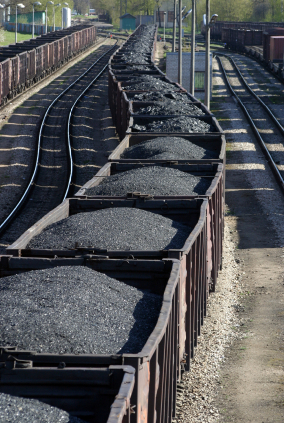
- Coal exports increased by almost 10 million short tons in 2007, reaching 59.2 million short tons, the highest level in 10 years. The U.S. exported 18.4 million short tons to Canada and 27.1 million short tons to Europe in 2007 [32]. The coal export surge continued in 2008, where they jumped almost 51 percent in the first six months versus the same period in 2007. Total coal exports for the first 6 months of 2008 stood at 38.6 million short tons, versus 25.6 million short tons for the first six months of 2007. The export increase can be attributed in part to continuing strong demand in Asia, particularly China and India, as well as a weak U.S. dollar, which makes American coal a better value to overseas buyers [33].
- Coal imports totaled 36.3 million short tons in 2007, about the same level as in 2006 [34]. Colombia dominates the U.S. coal import market, accounting for 73.9 percent of 2007 imports [35]. Coal imports declined 4 percent for the first half of 2008, marking a turnaround from the first six months of 2007, when imports had increased slightly from the previous year [36].
- The EIA and other forecasters, however, project that U.S. coal exports will decline and that the U.S. will become a net importer of coal after 2015. EIA projects that coal exports will decline to 35 million short tons by 2030 and that coal imports will increase to 112 million short tons [37]. However, if coal-fired power plants in the U.S. are blocked by State and local governments for environmental reasons, U.S. coal will most likely be shipped abroad, reversing this forecast, and continuing the trend of the U.S. being a net exporter of coal.
International
- World coal consumption in 2005 was 6,483 million short tons, representing 26 percent of global total primary energy consumption. China consumed 2,333 million short tons and the U.S. consumed about half of China’s consumption at 1,125 million short tons [38].
- World production of coal in 2005 was 6,490 million short tons, with China producing the most at 2,430 million short tons, and U.S. producing 1,132 million short tons [39].
- In 2030, world consumption is expected to increase by 65 percent to 202 quadrillion Btu, with China increasing its consumption by 120 percent to 103 quadrillion Btu. The U.S. is expected to increase its consumption by 31 percent, reaching 30 quadrillion Btu in 2030. Coal is expected to represent 29 percent of total global primary consumption in 2030 [40].
- World recoverable coal reserves as of January 1, 2003, totaled 998 billion short tons. Recoverable reserves are those quantities of coal which geological and engineering information indicates with reasonable certainty can be extracted in the future under existing economic and operating conditions. Four countries represent 67 percent of the world’s coal reserves: the U.S. (27 percent), Russia (17 percent), China (13 percent), and India (10 percent) [41].
- Worldwide CO2 emissions are expected to be 42 billion metric tons by 2030, up over 50 percent from its 28 billion metric ton level in 2005. Coal represented 41 percent of global CO2 emissions in 2005 and is expected to represent 44 percent in 2030 [42].
- Countries in Europe and Asia are expanding coal capacity despite climate change issues. China has built as much new coal capacity in each of the past three years as Britain’s total consumption. India has plans to add eight “ultra-mega” plants that will increase its current coal capacity by 50 percent. The Ukraine switched to domestic coal after Russia cut off natural gas supplies in a price dispute two years ago. Germany is planning 16 new coal plants despite carbon emissions trading in Europe [43].
- A small Canadian company is planning to build a coal-to-liquid petroleum fuels plant that will produce 40,000 barrels per day over 50 years starting in 2014. The project is expected to cost C$4.5 billion. Coal reserves in northwestern Alberta will be turned into diesel fuel and naphtha — a heavy oil product used for paving roads and for diluting bitumen from the oil sands— employing proven processes that have been in commercial use around the world for more than 30 years. The venture is expected to break even with oil prices at $50-$60 per barrel and generate returns at $80. The plans include the sale of carbon dioxide into the enhanced oil recovery market. More than 85 percent of CO2 produced by the project will be captured for sequestration in deep saline aquifers or in depleted oil or gas pools [44].
Citations
1. Energy Information Administration (EIA), Annual Energy Review 2007 (AER), Table 7.2, http://www.eia.doe.gov/emeu/aer/pdf/pages/sec7_7.pdf.
2. Energy Information Administration, Annual Energy Outlook 2008 (AEO), Table A15, http://www.eia.doe.gov/oiaf/aeo/aeoref_tab.html.
3. Energy Information Administration, State Energy Profiles, http://tonto.eia.doe.gov/state/state_energy_profiles.cfm?sid=WY .
4. Energy Information Administration, Annual Energy Review 2007, Table 4.11, http://www.eia.doe.gov/emeu/aer/pdf/pages/sec4_23.pdf.
5. Energy Information Administration (EIA), Annual Energy Review 2007, Tables 1.3 and 7.3, http://www.eia.doe.gov/emeu/aer/pdf/pages/sec7_9.pdf.
6. Energy Information Administration, Annual Energy Outlook 2008 (AEO), Tables A1 and A15, http://www.eia.doe.gov/oiaf/aeo/aeoref_tab.html
7. Energy Information Administration (EIA), Annual Energy Review 2007, Table 8.4b, http://www.eia.doe.gov/emeu/aer/pdf/pages/sec8_18.pdf , and EIA, Annual Energy Outlook 2008 (AEO), Tables 6 and A8, http://www.eia.doe.gov/oiaf/aeo/aeoref_tab.html.
8. Energy Information Administration (EIA), Annual Energy Review 2007, Table 8.11a, page 260, http://www.eia.doe.gov/emeu/aer/elect.html.
9. Energy Information Administration (EIA), Annual Energy Outlook 2008, Table A9, http://www.eia.doe.gov/oiaf/aeo/aeoref_tab.html.
10. National Energy Technology Laboratory, Tracking New Coal-Fired Power Plants, June 30, 2008, http://www.netl.doe.gov/coal/refshelf/ncp.pdf.
11. Energy Information Administration, http://tonto.eia.doe.gov/state/state_energy_profiles.cfm?sid=ND.
12. U.S. Department of Energy, Fossil Energy, http://www.fossil.energy.gov/programs/powersystems/gasification/gasificationpioneer.html .
13. http://www.energyquest.ca.gov/transportation/coal.html.
14. Energy Information Administration, Annual Energy Outlook 2008, Tables A11 and A15, http://www.eia.doe.gov/oiaf/aeo/aeoref_tab.html .
15. Energy Information Administration, Annual Energy Review 2007, Tables 8.11a and 12.7a, http://www.eia.doe.gov/overview_hd.html.
16. Energy Information Administration, Assumptions to the Annual Energy Outlook 2008, page 86, http://www.eia.doe.gov/oiaf/aeo/assumption/pdf/electricity.pdf
17. National Mining Association, http://www.nma.org/newsroom/miningweek/miningweekarchive/pdf2008/mw071808.pdf .
18. Energy Information Administration, Assumptions to the Annual Energy Outlook 2008, page 86, http://www.eia.doe.gov/oiaf/aeo/assumption/pdf/electricity.pdf.
19. National Mining Association, http://www.nma.org/pdf/misc/021308_camr.pdf .
20. Energy Information Administration, U.S. Carbon Dioxide Emissions from Energy Sources 2007 Flash Estimate, http://www.eia.doe.gov/oiaf/1605/flash/flash.html .
21. Energy Information Administration, Annual Energy Outlook 2008, Table A18, http://www.eia.doe.gov/oiaf/aeo/aeoref_tab.html
22. http://www.energy.gov/news/5912.htm, http://www.fossil.energy.gov/news/techlines/2008/08030-CO2_Capture_Projects_Selected.html.
23. COAL: Worldwide, dirty fuel not retiring anytime soon, Climate Wire, 08/06/2008, http://www.eenews.net/cw/2008/08/06/7.
24. New York Times, Europe Turns Back to Coal, Raising Climate Fears, April 23, 2008, http://www.nytimes.com/2008/04/23/world/europe/23coal.html?scp=4&sq=coal%20power%20plants&st=cse .
25. Coming in from the Coal, October 19, 2007, http://www.grist.org/news/2007/10/19/Kansas/index.html , and The Washington Post, Gristmill: What’s not the matter with Kansas, July 10, 2008, http://www.washingtonpost.com/wp-yn/content/article/2008/07/15/AR2008071500930.html.
26. Stephanie Cohen, “Coal At A Crossroad,” MarketWatch, August 8, 2008.
27. Wall Street Journal, February 4, 2008, http://blogs.wsj.com/environmentalcapital/2008/02/04/wall-street-tells-big-coal-not-so-fast/?mod=WSJBlog , April 2, 2008, http://blogs.wsj.com/environmentalcapital/2008/04/02/bank-of-america-more-heat-on-coal/ and August, 13, 2008, http://blogs.wsj.com/environmentalcapital/2008/08/13/burning-cash-coal-friendly-banks-under-fire/
28. E&E News, August 21, 2008, http://www.eenews.net/eenewspm/2008/08/21/2 .
29. New York Times, New Mexico Power Plant Permitted, August 1, 2008, http://www.nytimes.com/2008/08/01/us/01brfs-POWERPLANTPE_BRF.html?_r=1&ref=us&oref=slogin and Desert Energy Project Website, http://www.desertrockenergyproject.com/index.htm.
30. Greenwire, COAL: Extension granted for appeals of N.M. power-plant permit , August 22, 2008, http://www.eenews.net/Greenwire/2008/08/22/8 .
31. National Mining Association, http://www.nma.org/newsroom/miningweek/miningweekarchive/pdf2008/mw081508.pdf
32. Energy Information Administration, Annual Energy Review 2007, Table 7.4, http://www.eia.doe.gov/emeu/aer/pdf/pages/sec7_11.pdf.
33. National Mining Association, http://www.nma.org/newsroom/miningweek/miningweekarchive/pdf2008/mw081508.pdf.
34. Energy Information Administration (EIA), Annual Energy Review 2007, Table 7.1, http://www.eia.doe.gov/emeu/aer/pdf/pages/sec7_5.pdf.
35. Energy Information Administration (EIA), U.S. Coal Supply and Demand, http://www.eia.doe.gov/cneaf/coal/page/special/feature.html.
36. National Mining Association, http://www.nma.org/newsroom/miningweek/miningweekarchive/pdf2008/mw081508.pdf
37. Energy Information Administration, Annual Energy Outlook 2008 (AEO), Tables 13 and A15, http://www.eia.doe.gov/oiaf/aeo/aeoref_tab.html.
38. Energy Information Administration, International Energy Annual, http://www.eia.doe.gov/iea/wecbtu.html and http://www.eia.doe.gov/iea/coal.html.
39. Energy Information Administration, International Energy Annual, http://www.eia.doe.gov/iea/coal.html .
40. Energy Information Administration, International Energy Outlook 2008 (IEO), Tables A2 and A7, http://www.eia.doe.gov/oiaf/ieo/ieorefcase.html and http://www.eia.doe.gov/oiaf/ieo/ieorefcase.html .
41. Energy Information Administration, International Energy Outlook 2007, page 50, http://www.eia.doe.gov/oiaf/archive/ieo07/index.html.
42. Energy Information Administration, International Energy Outlook 2008, Table A13, http://www.eia.doe.gov/oiaf/ieo/ieorefcase.html.
43. COAL: Worldwide, dirty fuel not retiring anytime soon, Climate Wire, 08/06/2008, http://www.eenews.net/cw/2008/08/06/7.
44. Turning coal into liquid fuel, Gary Park, Petroleum News, August 3, 2008, www.petroleumnews.com.

