

Key Takeaways
The British government has approved the Jackdaw gas field in the North Sea, which will begin production immediately and supply natural gas to homes by the end of the month, reducing the country’s dependence on imported energy.
The field received approval in 2022 but became mired in legal battles with climate activists, who challenged its permits and forced the developers to resubmit applications to account for carbon dioxide emissions from burning and extracting the gas.
Jackdaw will be the first new oil and gas extraction in Britain’s North Sea since the government imposed a moratorium on new drilling in 2024.
The field is expected to produce 6% of Britain’s gas at peak output and heat 1.4 million homes, reducing the country’s reliance on imported liquefied natural gas and adding £2.9 billion ($3.88 billion) to its economy.
Another decision is slated for later this year on the offshore Rosebank oil project.
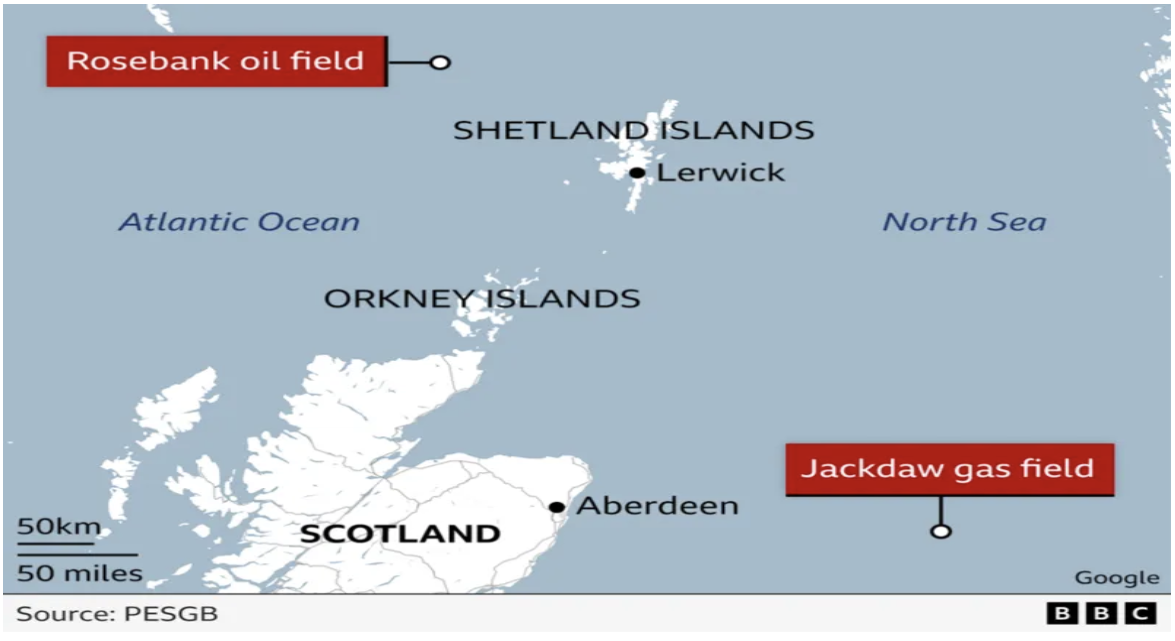
Britain approved a gas drilling project in the North Sea to reduce the country’s dependence on imported energy and protect households from price volatility. The approval of the Jackdaw field, 150 miles east of Aberdeen off the coast of Scotland, is an economic lifeline for Britain’s oil and gas industry and will create needed jobs. Jackdaw can operate because it was granted its petroleum license in 2022, before the government imposed a moratorium on new drilling in 2024. According to Adura, a joint venture between Shell, the British oil giant, and the Norwegian energy company Equinor, work on the field could begin immediately after approval. President Trump has pressured various British leaders to open the North Sea to new oil and gas drilling and praised Prime Minister Andy Burnham’s decision on social media.
Jackdaw is expected to produce 6% of Britain’s gas at peak output and heat 1.4 million homes, reducing the country’s reliance on imported liquefied natural gas and adding £2.9 billion ($3.88 billion) to the UK economy. However, the decision will not lower household energy bills because gas produced in the North Sea is sold at the same price as gas on the international market. Because Jackdaw is 99.9% complete, gas is expected to flow into homes within weeks. (Jackdaw’s drilling license was approved in June 2022.) The field is expected to operate for up to 11 years at its planned peak production of 40,000 barrels of oil equivalent per day. In Britain, 85% of homes and businesses use boilers for hot water and central heating, and 30 million vehicles run on petroleum.
The government also announced a new Energy Wealth Fund with an initial £2 billion ($2.7 billion) investment, using oil and gas revenues from Jackdaw to fund renewable energy, showing Britain remains committed to its climate targets despite backing a new gas project. This is an attempt to quiet criticism from anti-fossil fuel groups, which have consistently opposed any oil and gas development but still hold sway in the British government. While some of the UK’s imports come via pipeline from Norway, the rest is shipped across oceans as liquefied natural gas. Britain gets LNG from producers in Qatar, Peru, and Trinidad and Tobago that have a higher carbon footprint than domestic natural gas because of the energy required to cool and transport the LNG. According to the government, bringing Jackdaw into production was compatible with Britain’s legally binding target of reaching net zero emissions by 2050.
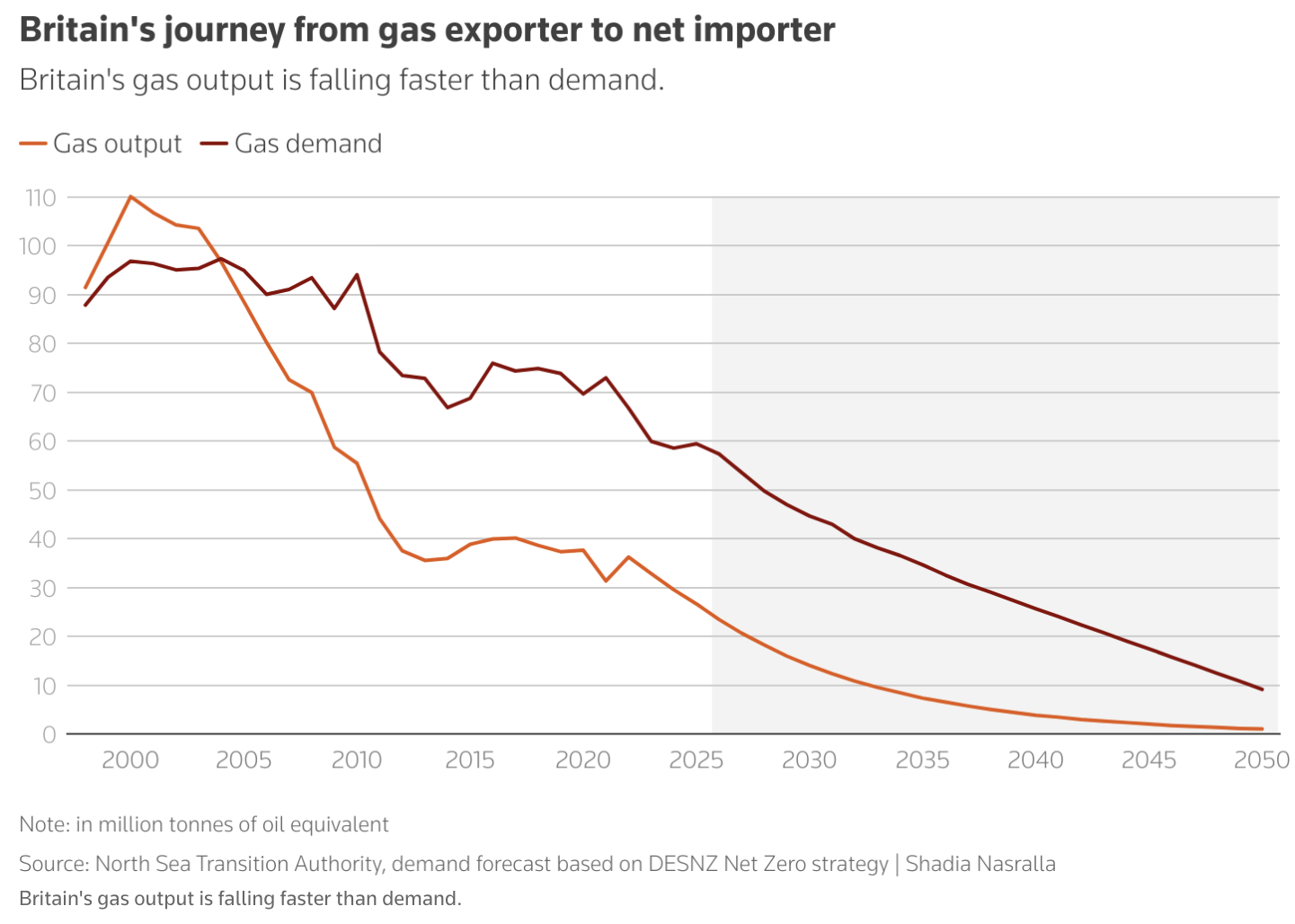
Britain was once an energy powerhouse, with massive oil and gas discoveries in the North Sea. Oil and gas production in the British North Sea dates back to the 1960s, generating tens of billions of pounds in tax revenue over decades. However, production in the North Sea steadily declined as the basin aged and climate advocates pushed the government toward net-zero policies that led to higher taxes, reduced access, and tougher regulations for oil and gas drilling. Approval of Jackdaw ends years of legal and political battles as the government balances its climate goals with energy security concerns. Climate activists successfully challenged Jackdaw’s permits in court and forced the developers to resubmit applications that account for carbon dioxide emissions from burning oil and gas, as well as extracting them.
The government will decide on the larger Rosebank field, off the coast of Shetland in the North Atlantic, later this year. Rosebank contains an estimated 300 million to 500 million barrels of oil and is expected to produce 70,000 barrels of oil equivalent per day, equivalent to a relatively small-sized deepwater production platform in the U.S. Gulf of America. The government approved its drilling license in September 2023.
Conclusion
The British government has approved the Jackdaw gas field in the North Sea, which will begin production immediately and supply natural gas to homes by the end of the month, reducing the country’s dependence on imported energy. The field was approved in 2022, but climate activists, caught up in legal battles, challenged its permits and forced the developers to resubmit applications to account for carbon dioxide emissions from burning the gas and extraction. Jackdaw will be the first new oil and gas extraction in Britain’s North Sea since the government imposed a moratorium on new drilling in 2024. It is expected to produce 6% of Britain’s gas at peak output, heat 1.4 million homes, reduce the country’s reliance on imported liquefied natural gas, and add £2.9 billion ($3.88 billion) to the economy.
For media inquiries, please contact press@ierdc.org.

