Introduction
Putting America First requires trade metrics that accurately reflect industrial strength, strategic independence, and the value of American workers and manufacturers. However, for decades, official trade figures that treat discounted raw materials from allies the same as imported finished goods from adversaries have misdirected Washington’s attention and obscured how international commerce truly affects American manufacturing.
While trade deficits are often a flashpoint when foreign nations undercut domestic manufacturing, the headline deficit with Canada tells a deceiving story. A closer look reveals a trade arrangement that overwhelmingly favors American production, energy independence, and industrial power. Unlike geopolitical rivals and adversaries that export finished consumer goods, a significant share of U.S. imports from Canada are in the form of raw, unprocessed commodities that are the feedstock for American production and manufacturing. Notably, oil, natural gas, potash, and increasingly, critical minerals account for most of these materials, and the U.S. has historically imported them at significant discounts relative to benchmark prices. Once America imports these low-value raw inputs, American workers provide the processing and refining that turn them into high-value, domestically manufactured consumer goods, driving U.S. job creation and industrial output.
Securing discounted Canadian crude oil, natural gas, potash, and critical minerals breaks our dependence on hostile foreign cartels like OPEC+, supports American farmers and workers, and secures discounted supply chains needed for American manufacturing dominance. Looking only at the total Canadian import bill risks overlooking where jobs and economic prosperity are ultimately created.
For energy, fertilizers, and raw or unfinished metals, the value captured from importing relatively low-cost Canadian production also improves the overall U.S. trade balance globally by allowing the U.S. to sell finished goods at a premium. In the end, these imported, low-cost Canadian inputs fuel U.S. high-value exports to the rest of the world. Given these raw goods’ contribution to American exports, it is worth considering whether to adopt an alternate perspective on the U.S.-Canada trade balance.
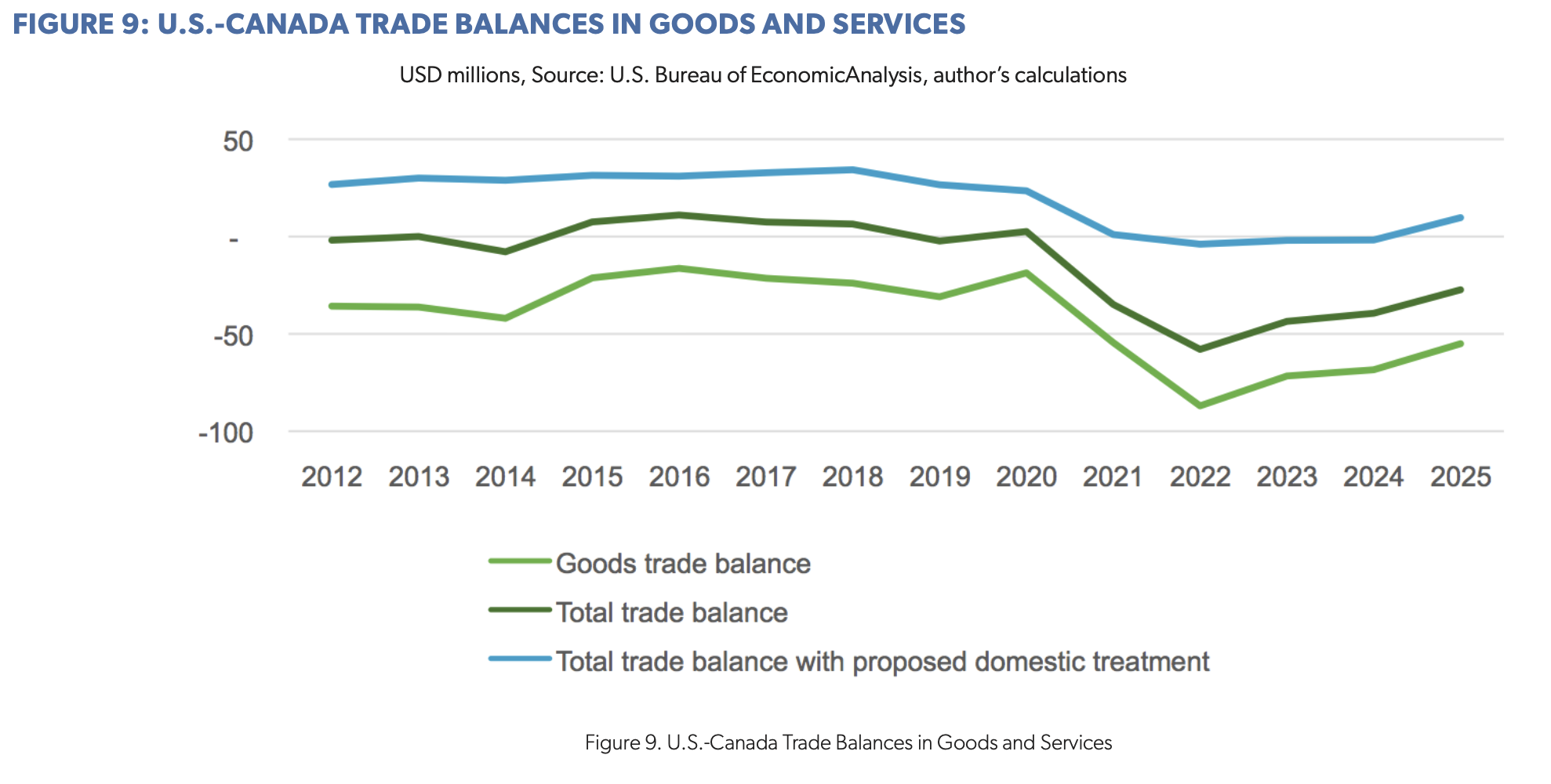
Historically, U.S. customs law has treated foreign inputs as “originating” in the imported country when substantial transformation occurs, such as when raw goods are refined or manufactured into high-value finished goods. Preferential Trade Agreements, such as the United States-Canada-Mexico Agreement (USMCA), codify the substantial transformational analysis into detailed rules of origin (ROO) that require certain percentages of content to come from the trade region (i.e., Regional Value Content or RVC), shifts in tariff classifications, and, increasingly, use certain percentages of goods (e.g., steel and aluminum) and labor valued at certain rates. Rebalanced and reciprocal trade policy needs to go an additional step forward. Specifically, U.S. trade frameworks should recognize that America’s ability to produce a trade surplus is built on the oil, natural gas, potash, and critical minerals relationship between Canada and the U.S. The U.S. should designate these Canadian inputs that undergo substantial transformation in U.S. manufacturing facilities, which are typically operated by the same or related companies that perform the raw materials’ production, as domestic goods under U.S. laws and regulations. Rather than allowing U.S. trade figures to continue to mask the positive impacts of certain Canadian imports, trade figures should treat these as domestic goods. Acknowledging this reality would virtually eliminate the trade deficit with Canada and refocus trade policy on creating more opportunity and growth for American workers.
Crude Oil
The U.S. remains a major importer of crude oil despite rising domestic production. Historically, OPEC nations have been the U.S.’s main source of oil. However, over the past 25 years, growing production from Canada has displaced U.S. imports of OPEC oil, improving American energy security. In recent years, over 60 percent of crude oil imports into the U.S. have been from Canada.
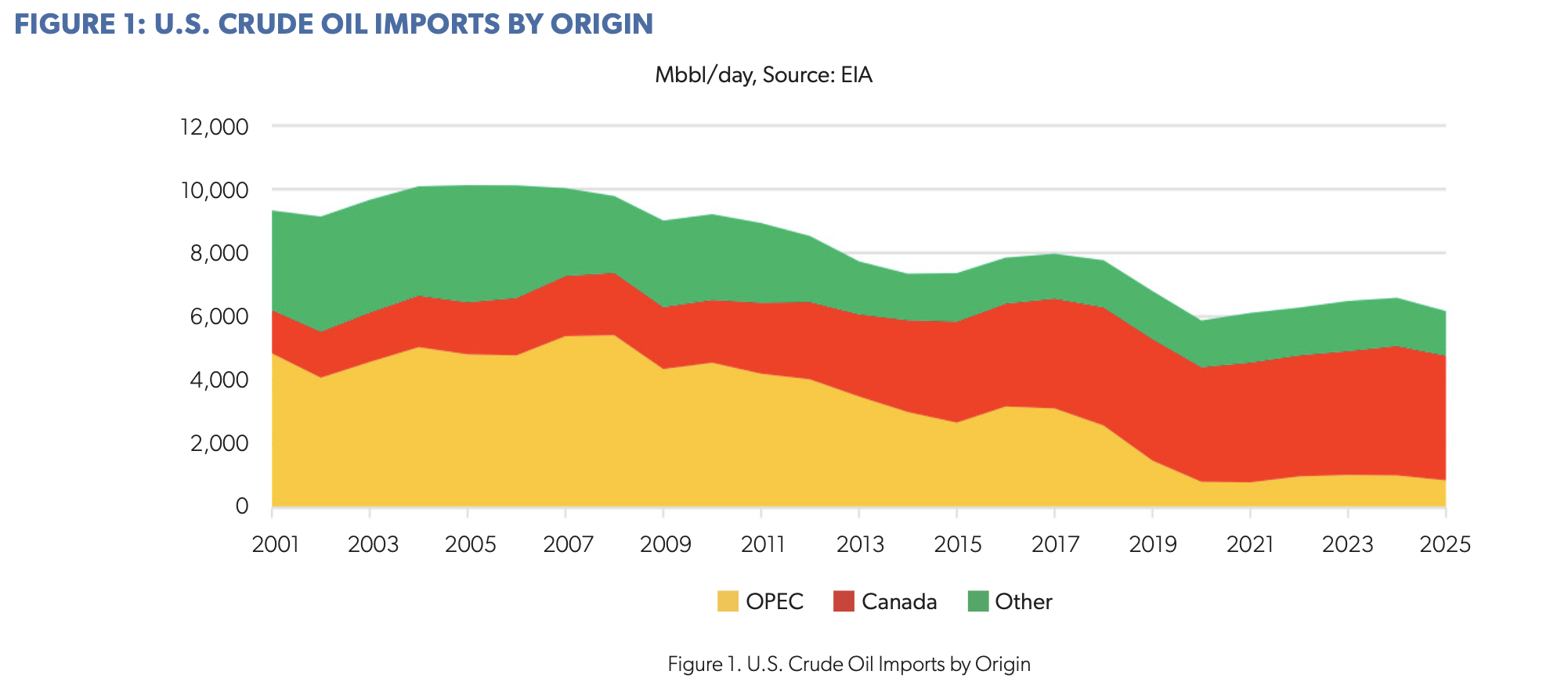
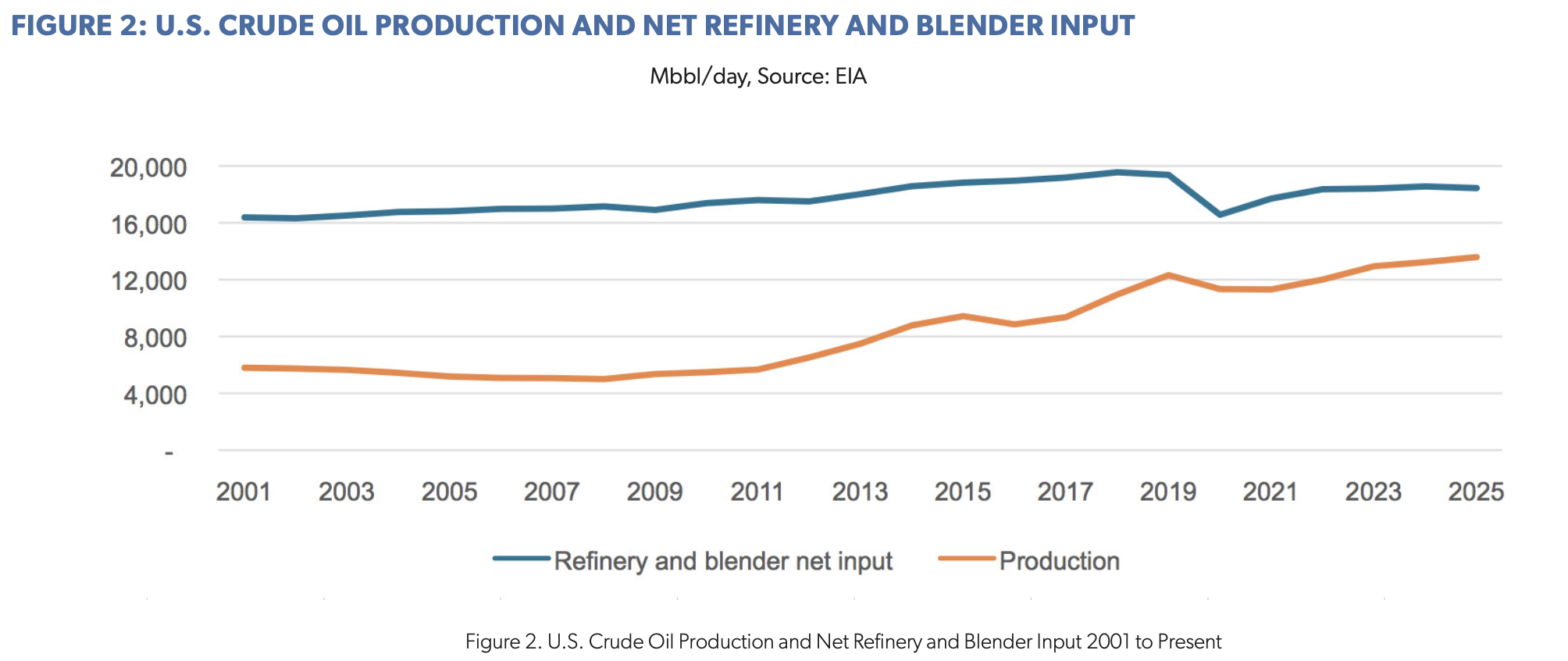
Although the U.S. is the world’s largest oil producer, its refineries still process 5 million barrels per day more oil than can be supplied domestically. Reliance on imported crude varies by region; overall, 36 percent of American refinery receipts are imported. Import origin is largely dependent on transportation infrastructure; regions with direct pipeline access to Canadian oil, such as the Midwest, tend to be far less reliant on OPEC imports.
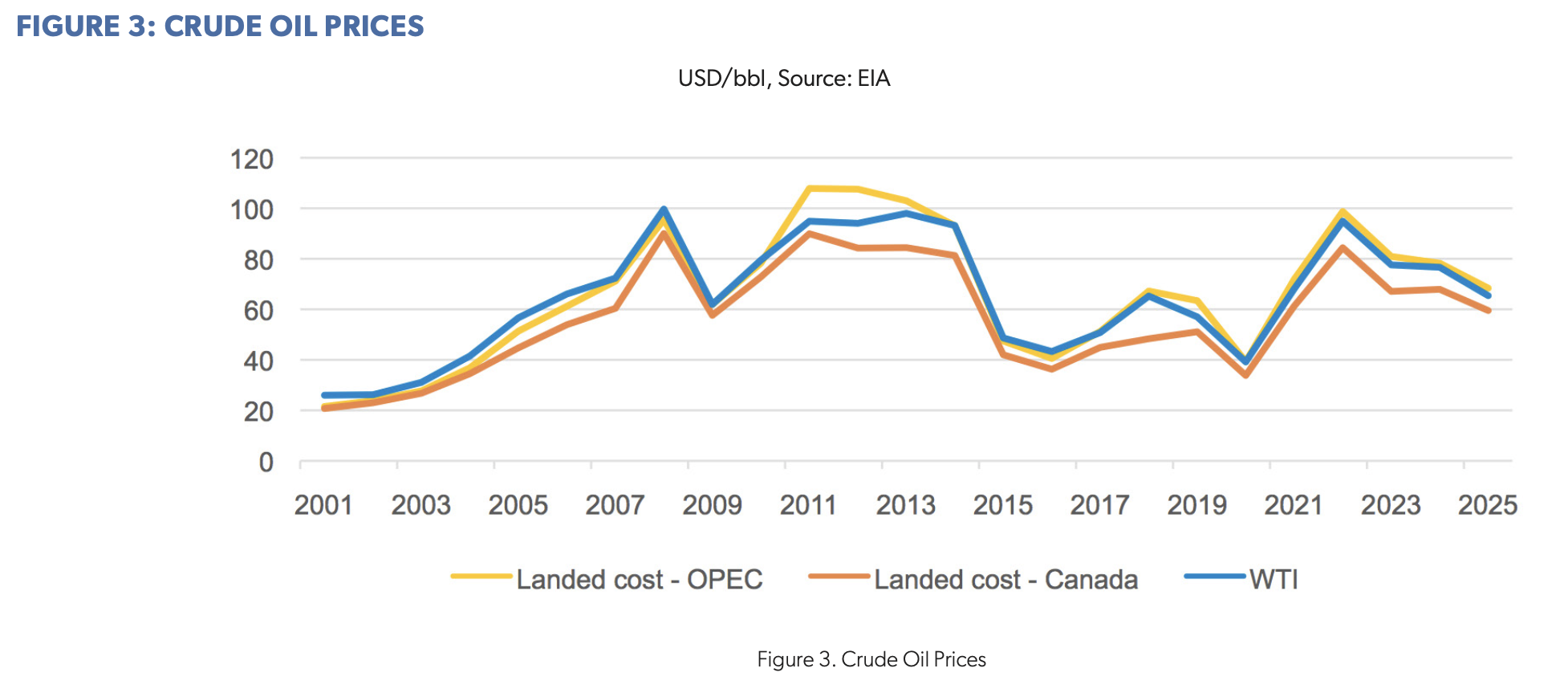
America’s heavy reliance on Canadian oil improves the U.S. overall trade balance because of two factors: its low cost and abundant supply.
Canadian crude has traded at a persistent discount to WTI due to its quality and limited export pipeline capacity. Over the past 10 years, Canadian oil has been brought into the U.S. at an average discount of 13 percent to West Texas Intermediate and 16 percent to OPEC-sourced crude.
Meanwhile, without Canadian crude imports, the U.S. would continue to run a trade deficit in oil on a volumetric basis., Because many U.S. refineries are configured to process heavy oil more efficiently, the U.S. has been able to export its higher-value light, sweet crude globally while refining cheaper Canadian oil domestically, thereby supporting lower fuel costs for Americans.
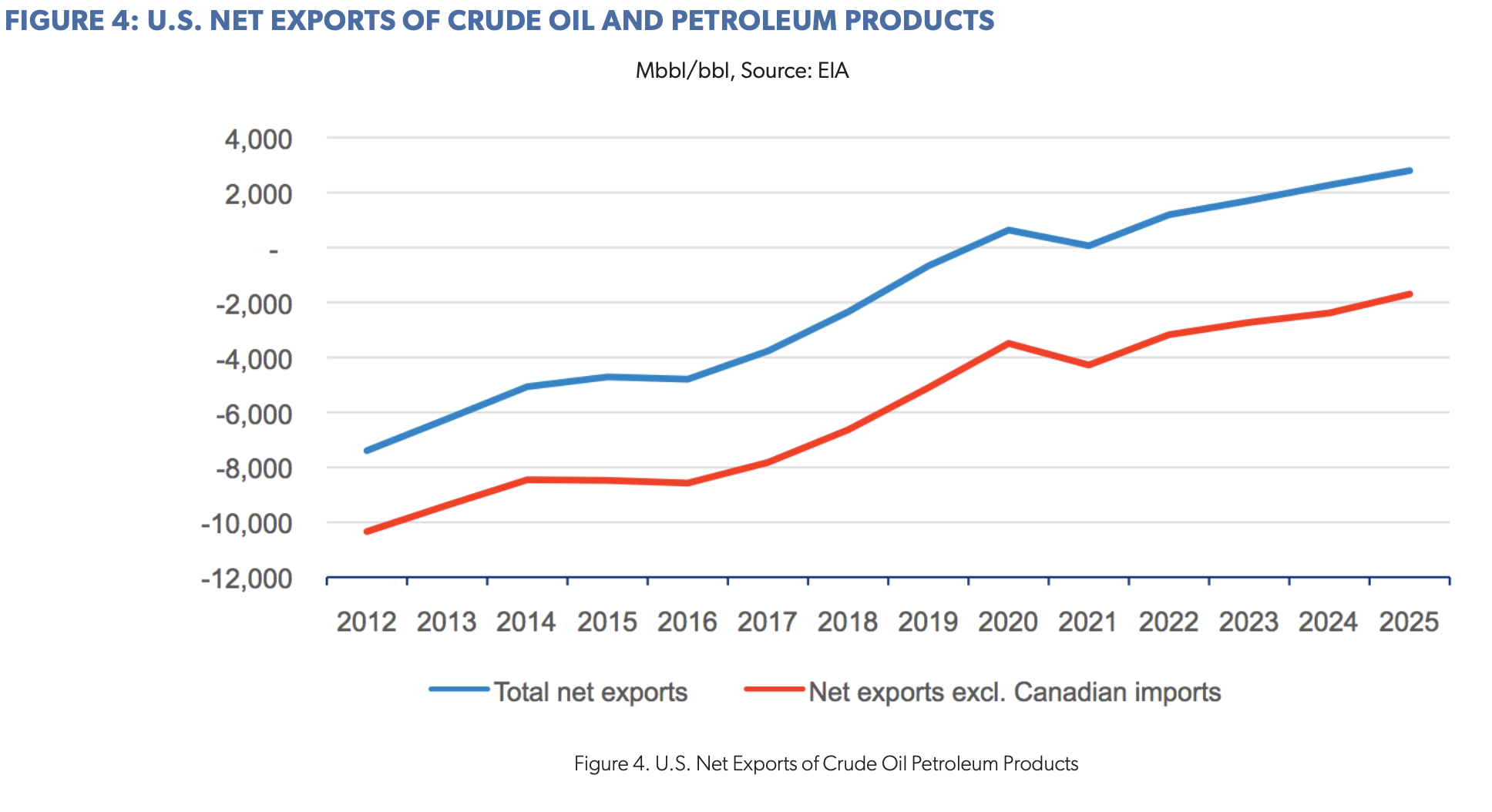
Due to the low cost of Canadian oil, the U.S. has been able to capture an average of $21 billion per year in trade surplus with the rest of the world via its petroleum exports.
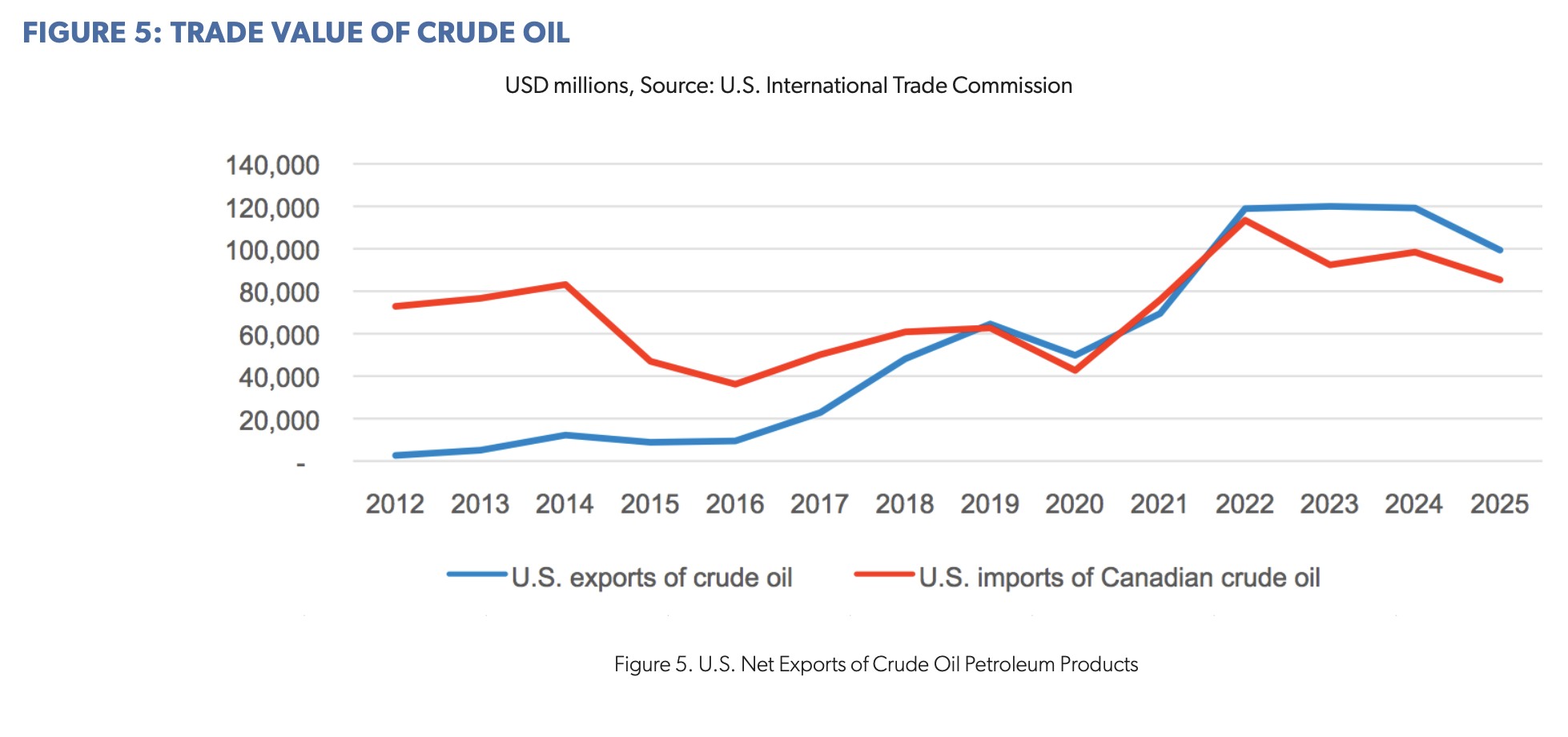
Crude oil is, by far, the U.S.’s largest Canadian import. Over the past five years, oil imports averaged $93 billion, or roughly one quarter of total imports from Canada. Ideally, all Canadian crude would receive a domestic designation. At a minimum, the U.S. should adopt a domestic designation for oil produced by Canadian producers that have invested in operating U.S. refinery capacity. In addition to sharply narrowing the U.S.-Canada trade balance, this would mitigate the growing risk of Canada diversifying its crude oil sales away from the U.S., which would undermine American energy security and increase feedstock costs.
Canadian energy producers with a U.S. refining presence have a vested interest in ensuring their oil continues to flow south. Recently, the political climate in Canada has created a growing appetite to reduce reliance on American buyers of its crude oil. This has been reflected in recent announcements for approximately 1.3 million barrels per day of new Canadian pipeline capacity to the West Coast and 500,000 barrels per day to Canadian refineries in Ontario.,, The domestic designation would simultaneously incentivize additional investment in the American refining sector.
A domestic designation for all 4.5 million barrels per day of Canadian crude brought into the U.S. would eliminate the U.S.’s trade deficit with Canada. The more selective domestic designation would apply to nearly one million barrels per day of Canadian crude and reduce the Canada-U.S. trade deficit by over $20 billion annually. In 2025, this domestic designation alone would have reduced the trade deficit with Canada by 77 percent.
Natural Gas
A domestic designation for Canadian natural gas is also a worthwhile proposal. American liquefaction capacity has exploded in the past 10 years, and the U.S. has overtaken Qatar and Australia to become the world’s largest exporter of LNG.
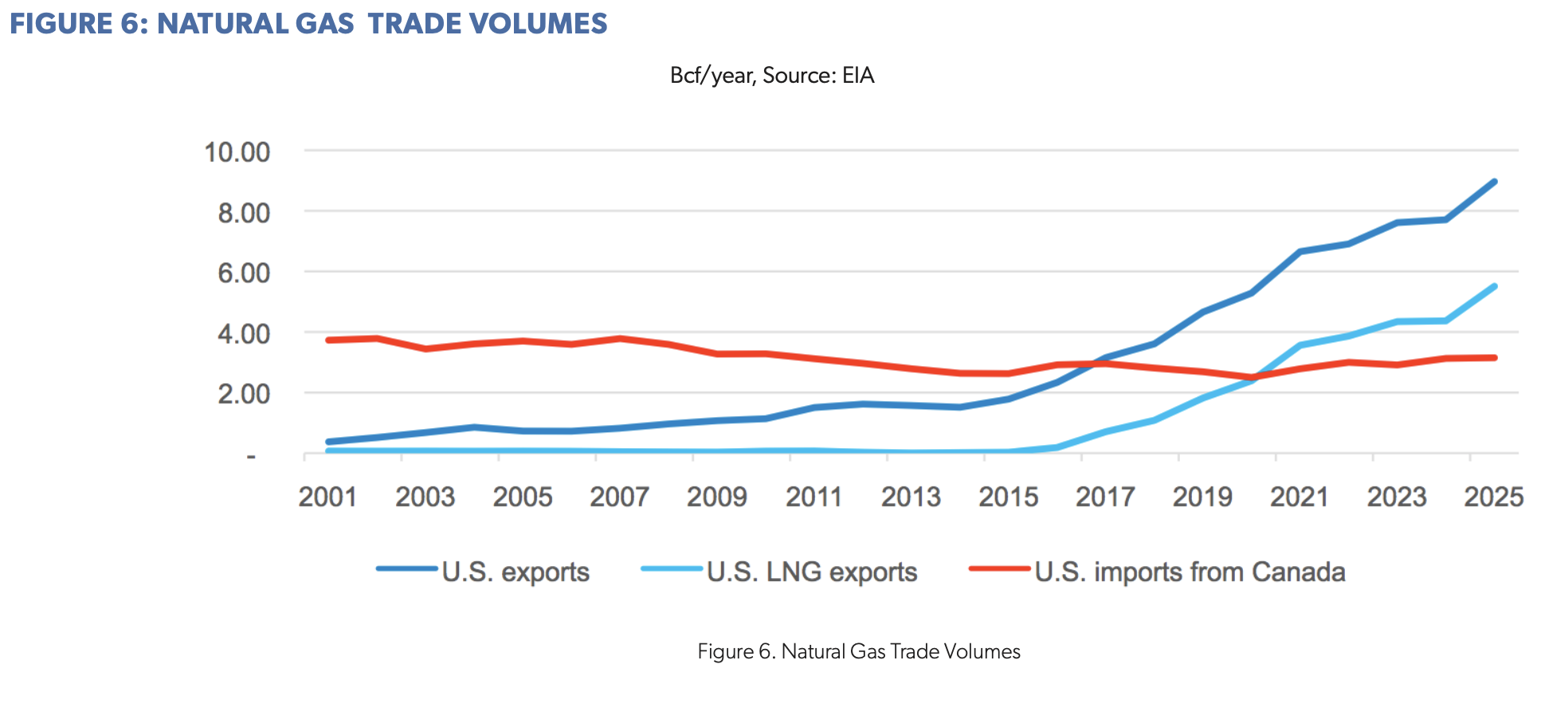
As with crude oil, Canadian natural gas imports improve the U.S. global trade balance. From 2021 to 2025, Canadian import volumes were equivalent to 70 percent of LNG exports, or about a quarter of U.S. power plant consumption., By importing cheaper Canadian gas by pipeline, American LNG facilities can export more gas abroad and capture a significant premium over domestic prices. Over the past five years, U.S.-exported LNG has cost an average of 2.5 times as much as imported Canadian natural gas. This generated a trade surplus worth an average of $4.7 billion annually.
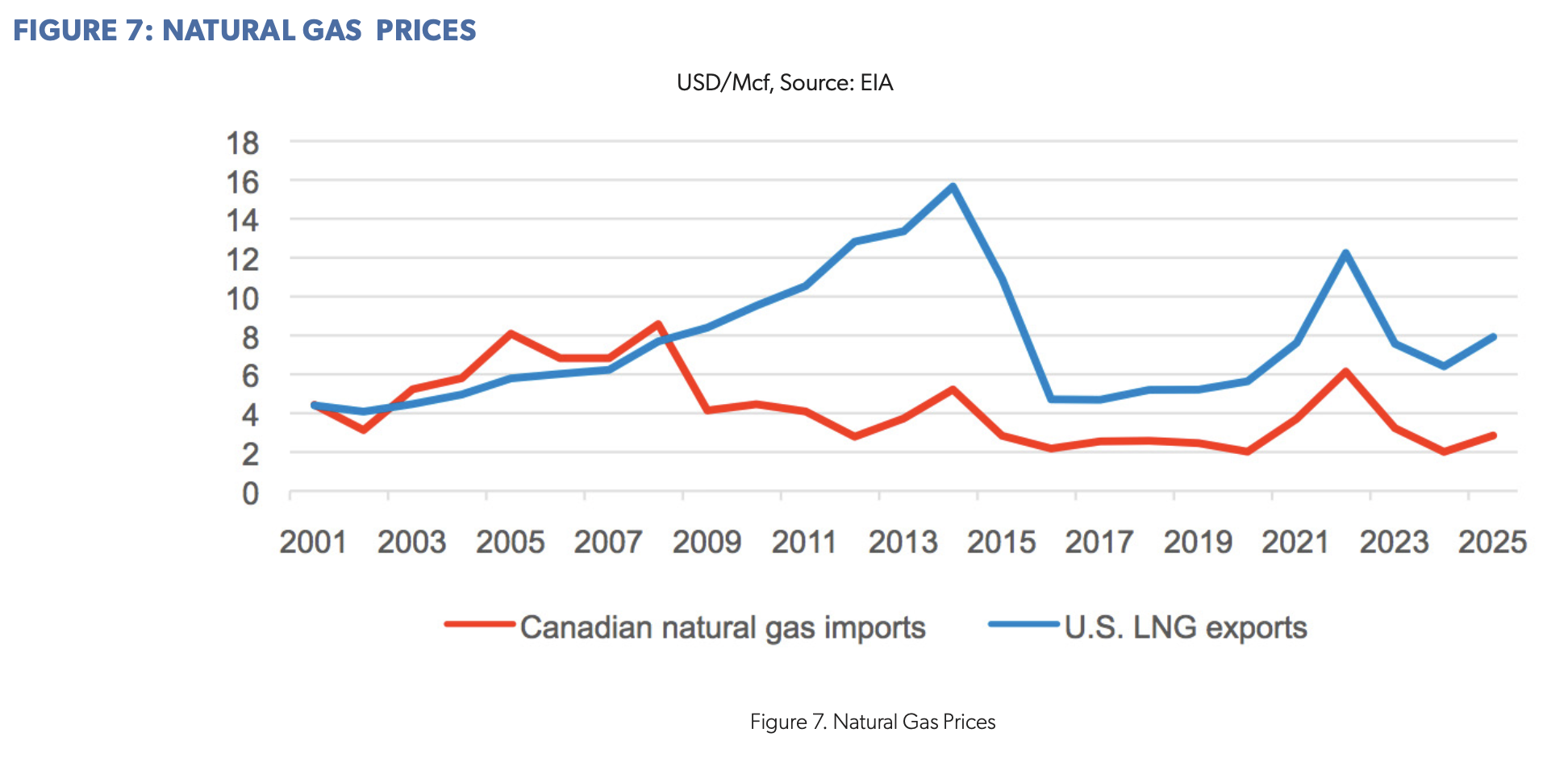
Given the improvement in total exports enabled by Canadian imports, rather than continuing to add an average of $9.4 billion to the U.S.’s trade deficit with Canada, there should be a domestic designation for imported natural gas due to its role in enabling the U.S.’s lucrative LNG exports.
Potash
U.S. farmers rely on potash as an essential, non-substitutable agricultural fertilizer to maximize staple crop yields and minimize plant disease. Corn, wheat, and soybean production rely heavily on potash; corn is the largest consumer, accounting for 53% of total U.S. demand.
The U.S. has very limited domestic potash deposits and relies heavily on imports. Only a handful of countries have meaningful potash production, including Canada, Russia, Belarus, and China. As the world’s largest (and arguably, most geopolitically reliable) potash producer, Canada is the source for 85% of U.S. imports.
Given its crucial role as an input to major crop production, potash is yet another commodity that should be deemed domestic for trade purposes, reducing the U.S.-Canada trade deficit by a further $3 billion/year.
Raw and Unfinished Metals
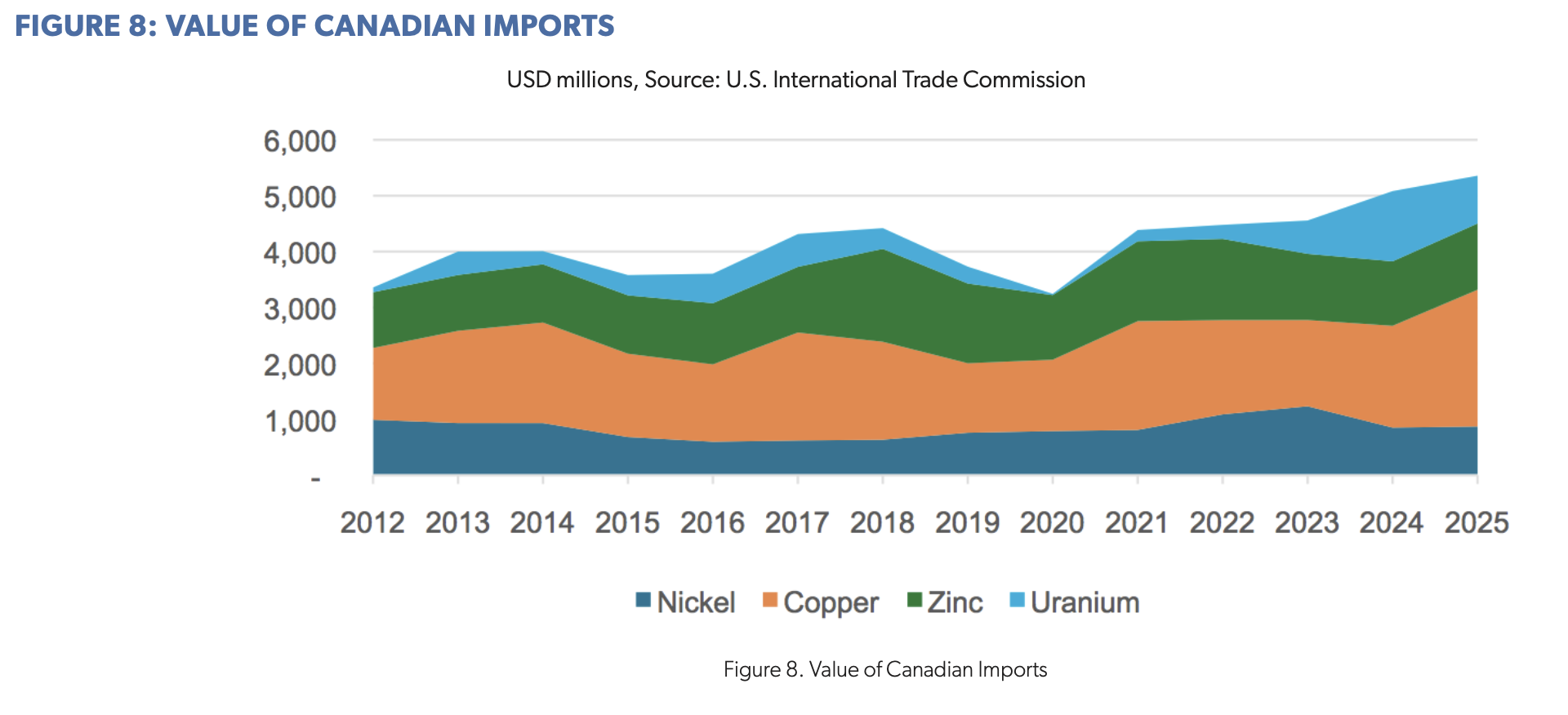
The U.S. presently has limited refining and smelting capacity for crucial metals like nickel, copper, and zinc, leaving it dependent on foreign manufacturers for processing.,, These metals are crucial inputs to key manufactured goods, such as stainless steel, superalloys for aerospace manufacturing, and batteries. Rather than continuing to rely on facilities abroad, the U.S. is seeking to incentivize domestic metals processing capacity. Since the U.S. does not have sufficient deposits or mines to meet its own needs, allowing raw metals from Canada to receive a domestic designation would help ensure that any new processing capacity is adequately supplied.
U.S. nuclear power facilities, meanwhile, are highly dependent on imported uranium. About 93 percent of uranium purchases for civilian nuclear power reactors were imported. While Canada was the largest supplier of uranium (32 percent by volume), Kazakhstan, Uzbekistan, and Namibia collectively accounted for 40 percent of imports. Applying a domestic designation to Canadian uranium could incentivize U.S. power generators to ensure their supplies come from countries that share Western values and can offer supply security.
An additional $1.3 billion could be scrubbed immediately from the U.S.’s trade deficit with Canada if unrefined nickel, copper, zinc, and uranium were considered domestic, though this figure would grow significantly as U.S. processing capacity is built out.
Conclusion
Outdated metrics that penalize imported raw materials from Canada the same way as finished goods produced by our adversaries don’t reflect reality. As we have shown, in key commodity sectors, importing raw Canadian inputs directly fuels domestic manufacturing, lowers energy costs, and drives high-value American exports to global markets.
Securing discounted Canadian crude oil and natural gas strengthens U.S. energy dominance while breaking our reliance on foreign cartels like OPEC. At the same time, dependable imports of Canadian potash protect staple crop production for American farmers, and raw minerals such as nickel, copper, zinc, and uranium supply the essential feedstocks needed to expand domestic refining and nuclear capacity.
By updating our trade accounting to grant a domestic designation to raw Canadian inputs that undergo substantial transformation in U.S. facilities, policymakers can scrub tens of billions of dollars from the trade deficit. Combined with America’s structural surplus in services, these policy adjustments virtually eliminate the bilateral trade deficit with Canada. Correcting this metric allows Washington to refocus its trade policy on what matters most: protecting critical supply chains, expanding domestic industrial capacity, and securing high-paying jobs for American workers.