Introduction
America is ready to build again but millions of Americans are waking up to a stark reality: the federal government has thrown up massive bureaucratic roadblocks that are hindering construction and progress. One of the most far-reaching examples is the National Environmental Policy Act (NEPA). Its drafters intended a modest law that would evaluate and disclose the environmental impacts of projects undertaken, funded, or approved by the federal government. What they produced instead is one of the most consequential procedural barriers to the construction of highways, bridges, dams, and other major infrastructure projects in American law.
NEPA and other major environmental laws – including the Clean Air Act, Clean Water Act, and Endangered Species Act – were enacted as a direct response to growing public concern over visible pollution and environmental damage resulting from rapid postwar industrial growth. These laws marked a shift from earlier conservation-focused efforts to a centrally planned approach to pollution control, public health protection, and ecosystem regulation using federal regulatory power.
Almost immediately upon enactment, NEPA began deviating from its original intent through early court rulings, enforcing strict compliance, regulations expanding its scope, and an avalanche of lawsuits by environmental groups that exploited procedural vulnerabilities for delays. This has led to multi-year reviews, ballooning costs, and litigation-proofing that often prioritized delay over outcomes.
The result: despite requiring no actual mandates, its procedural hurdles increase the time it takes for projects to get off the ground, adding unnecessary costs associated with these projects and disincentivizing investment. In many cases, NEPA has been weaponized by concentrated interests to veto new development altogether.
For example, when the Trump administration tried to get the Keystone XL pipeline project back on track in 2018, a district judge blocked construction because he claimed that the State Department conducted an inadequate NEPA review (Sullivan, 2018). NEPA permitting for Gateway West, a 1,000-mile transmission line between Idaho and Wyoming built to “create more ability to carry clean energy,” took 10 years and two environmental impact statements (EISs) (Murakami, 2022).
The first installment of the Breakthrough Institute’s “NEPA Nightmares” series highlights how relatively minor challenges under NEPA can pose a major barrier to projects (Chiappa, 2024). Featuring the New England Clean Energy Connect transmission line, NEPA litigation by the Natural Resources Council of Maine and the Appalachian Mountain Club delayed construction for five months. According to the article, “They targeted a minor permit-a NEPA analysis from the U.S. Army Corps of Engineers covering just 1.9% of the project. The group alleged it would cause harm ‘…not only to aquatic resources but also the surrounding forest and wildlife.’ The Court determined that neither the Corp’s 164-page analysis nor the Maine Department of Environmental Protection’s 239-page analysis found that to be true. The plaintiffs lost the case and the ensuing appeal.”
In response to these realities, the potential for meaningful reform has become increasingly likely, especially amid growing concerns about meeting the energy demands of data centers. Recognizing that the U.S. needs more energy quickly and that NEPA is one of the significant regulatory barriers standing in the way, President Trump has passed executive orders seeking to align NEPA procedure with its statute (Rampe, 2025), and Congress has debated on how to reform NEPA (House Committee on Natural Resources, 2025). Overcoming gridlock and remaining focused on pursuing energy abundance will be crucial to removing NEPA as a significant barrier to production and development.
How Did We Get Here?
Signed into law in 1970 (EPA Journal, 1988)—the first year that Earth Day was celebrated—NEPA declared “a national policy which will encourage productive harmony between man and his environment” (42 U.S. Code § 4321). To help achieve this goal, NEPA requires federal agencies to study and disclose the environmental impact and alternatives of a proposed action in a “detailed statement” prior to determining whether to proceed (42 U.S. Code § 4332). The act limits the scope of this requirement to “major Federal actions significantly affecting the quality of the human environment,” but many of the qualifiers in this definition have been stripped of any meaning.
The U.S. Eighth Circuit Court of Appeals removed any substance from the word “major” in the 1974 case Minnesota Public Interest Research Group v. Butz (FindLaw, 1974). Regarding logging in a small area of Minnesota’s Boundary Waters Canoe Area, the court ruled that the possibility of having a “minor federal action significantly affecting the quality of the human environment” went against the intent of NEPA. Thus, the court declared that the cost or amount of time needed for an action (which the defendants argued was encompassed by the word major) does not play a role in determining whether an action is covered by NEPA—the only question that needs to be answered is whether it affects “the quality of the human environment.”
But this qualifier was also neutralized by the same case. The court found that “NEPA is concerned with indirect effects as well as direct effects” on the human environment, adding that “[t]here has been increasing recognition that man and all other life on this earth may be significantly affected by actions which on the surface appear insignificant.” From this reasoning, one could extrapolate any potential human impact from any action affecting the environment, ranging from altering possible hiking grounds to reducing the habitat of a species that some people enjoy eating. As Economist Eli Dourado explains, “Using this reasoning, it is difficult to see how the word ‘human’ could ever impose any limitation to NEPA” (Dourado, 2022).
When considering the virtually limitless scope of NEPA, the federal government’s control of over 30% of the nation’s land, and intervention in nearly every sector of the economy, it becomes apparent how a law mandating certain procedures could have an impact disproportionate to the text of the law (GAO).
While the text of NEPA itself is relatively short (Council on Environmental Quality), it does not give the full picture. NEPA also established the Council on Environmental Quality (CEQ), a government organization that “develops policies which bring into productive harmony the Nation’s social, economic, and environmental priorities, with the goal of improving the quality of Federal decisionmaking” (Federal Register). Although the CEQ was created as an advisory body with the purpose of coordinating (specifically, “review and appraise”) federal agency action regarding the goals of NEPA (EHSO), President Jimmy Carter issued Executive Order 11991 in 1977 to give the CEQ the responsibility of issuing “regulations to Federal agencies for the implementation of the procedural provisions” of NEPA and required agencies to comply with these regulations (The American Presidency Project, 1977). NEPA’s current categorization of reviews began as CEQ regulations that were later put in the text by the FRA. For instance, the environmental assessment (EA) did not appear in the original statute, and was implemented to “replace… comparable existing agency procedures,” such as the Army Corps of Engineers’ “survey” and the Forest Service’s “environmental analysis” (Federal Register, 1978).
If an agency action does not have a “reasonably foreseeable significant effect on the quality of the human environment,” or if its effect is unknown, the agency will complete an EA (33 CFR 333.15). EAs are supposed to be “concise” reports on the evidence and reasoning behind an agency’s finding that its action does or does not have a significant impact (40 CFR § 1502.7). If there is no impact, then the agency can proceed with the project. However, if a significant impact is found, then the agency has to proceed with an EIS, a lengthy and comprehensive document that incorporates a 30-day public comment process (40 CFR § 6.203) inviting discussion on “alternatives or impacts and on relevant information, studies, or analyses with respect to the proposed agency action” in tandem with its notice of intent (42 USC Chapter 55). A federal action can avoid NEPA if it receives a categorical exclusion (CE), which results when a “Federal agency has determined [that it] normally does not significantly affect the quality of the human environment” (U.S. Department of the Interior). For the Department of the Interior (DOI), some of its CEs include personnel training and the issuance of manuals (U.S. Department of the Interior, 2020).
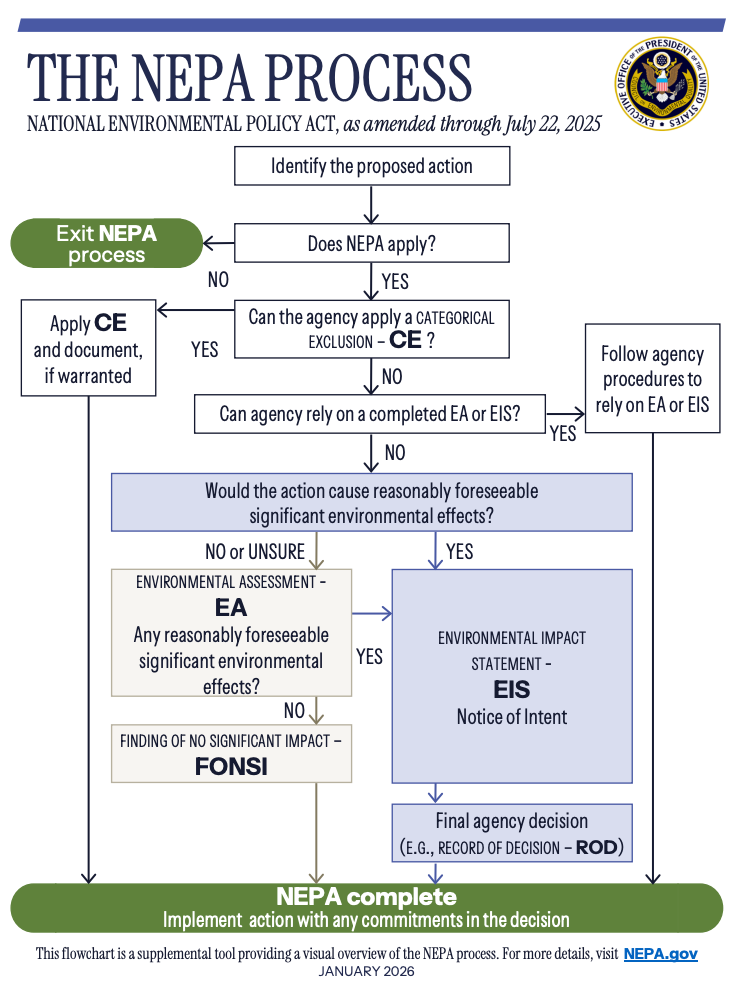
The CEQ’s 1978 Implementation of Procedural Provisions in response to Carter’s executive order added the new classifications discussed above, while also developing extra steps the federal agencies have to take when writing an EIS. For the Regulatory Transparency Project, Mark C. Rutzick lists the additional steps the CEQ required as “six sequential administrative stages” that increase the time commitment and cost of NEPA compliance (Rutzick, 2018). These steps are “1) publish, after public comment, a preliminary review called ‘scoping’ to identify potentially relevant environmental issues; 2) develop ‘reasonable alternatives’ to the proposed action (even alternatives that are illegal); 3) publish a draft EIS for public review and comment; 4) review and respond in writing to the public comments on the draft EIS; 5) publish a final EIS; and 6) announce the agency’s decision in a subsequent separate document called a ‘record of decision.'” Rutzick also notes that a project requires a supplemental EIS “if new information arises relevant to the agency decision” after the initial EIS is published.
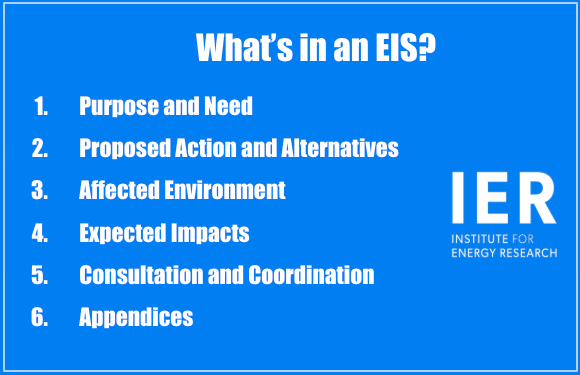
These regulations expanded NEPA to align with President Carter’s goal of “protecting the environment,” which came at the expense of development on federal lands in all states, with an especially detrimental impact on Alaska (Bird, 2023). A costly example of this type of expansion comes from the addition of “cumulative effects” as a consideration of NEPA reviews. First issued by the CEQ in 1978, cumulative effects analysis involves considering how the impact of one action alters the quality of the environment in relation to “other past, present, and reasonably foreseeable future actions” (Schultz). To conduct this type of analysis, federal agencies need to investigate previously taken and ongoing actions and their effects to determine what role they could play in amplifying the impact of the action currently under consideration, while also examining what role the action could play in buttressing the impact of additional future actions. The difficulty of conducting this type of review was acknowledged by the CEQ in a 1997 report: “Analyzing cumulative effects is more challenging [than analyzing direct and indirect effects] because of the difficulty of defining the geographic (spatial) and time (temporal) boundaries” (CEQ, 1997).
Another word absent from the statutory text of NEPA is “mitigation,” which involves avoiding, minimizing, rectifying, reducing or eliminating, and compensating for an environmental impact (Federal Register, 1978). The 1978 CEQ final regulations mention mitigation throughout, requiring EISs to highlight “appropriate mitigation measures” and declaring that “[a] monitoring and enforcement program shall be adopted and summarized where applicable for any mitigation” in the record of decision. By requiring mitigation to bring the natural environment back to its pre-impact state, the CEQ added more steps to NEPA and perpetuated the idea of nature as an equilibrium disturbed by production and development, rather than a realm that constantly and inevitably changes in response to an array of factors, including human activity. In 2011, the Obama CEQ provided guidance for how agencies can use mitigation to lessen environmental impacts discussed in environmental reviews, including to the degree necessary to avoid writing an EIS through a mitigated Finding of No Significant Impact (FONSI) (Sutley, 2011).
Although mitigation does help federal agencies lower the threshold of impact below what is required by an EIS, it has the practical effect of making NEPA substantive. As Nicholas C. Yost, general counsel of the CEQ in the Carter administration, wrote for the American Bar Association, “Acceptance of binding mitigation is, in effect, traded for bypassing preparation of a full EIS… having the effect of making NEPA substantive as well as procedural in a substantial proportion of the matters arising under it” (Yost).
Giving the CEQ regulatory authority also opened the floodgates for future presidential administrations to enact more requirements for NEPA reviews based on their priorities. In 1994, President Clinton signed executive order 12898 to “make achieving environmental justice part of [each agency’s] mission by identifying and addressing, as appropriate, disproportionately high and adverse human health or environmental effects of its programs, policies, and activities on minority populations and low-income populations” (Congressional Research Service, 2021). A memorandum accompanying the order explicitly mentions NEPA, directing agencies to analyze environmental effects “when such analysis is required” by the law. In 1998, the Clinton administration issued its “Final Guidance For Incorporating Environmental Justice Concerns in [the Environmental Protection Agency’s (EPA)] NEPA Compliance Analyses,” which served “as a guidance to incorporate environmental justice goals into EPA’s preparation of [EISs and EAs] under NEPA” (EPA, 1998). The guidance called on the agency to consider factors associated with demographics, geography, economics, and human health and risk while evaluating “1) whether there exists a potential for disproportionate risk; 2) whether communities have been sufficiently involved in the decision-making process; and 3) whether communities currently suffer, or have historically suffered, from environmental and health risks or hazards.” By mixing its “environmental justice goals” with the guidelines for environmental reviews, the Clinton administration further blurred the line between substance and procedure in NEPA.
More recently, the Obama (The White House) and Biden (The White House, 2022) administrations required NEPA reviews to consider the impact of greenhouse gas emissions and climate change. In a 2016 final guidance issued by the Obama administration, the CEQ directed agencies that their “analysis of climate change impacts should focus on those aspects of the human environment that are impacted by both the proposed action and climate change,” noting that “[c]limate change can make a resource, ecosystem, human community, or structure more susceptible to many types of impacts and lessen its resilience to other environmental impacts apart from climate change” (Goldfuss, 2016). While the effects of climate change on any particular project and vice versa are almost always negligible, the CEQ explicitly rejected this reasoning, declaring that “a statement that emissions from a proposed Federal action represent only a small fraction of global emissions is essentially a statement about the nature of the climate change challenge, and is not an appropriate basis for deciding whether or to what extent to consider climate change impacts under NEPA.” The Biden administration sought to build on the Obama CEQ’s guidance through its own order focused on “highlighting best practices for analysis grounded in science and agency experience” (Federal Register, 2023), but it was withdrawn when President Trump took office for the second time (U.S. Small Business Administration Office of Advocacy, 2025).
By expanding the scope of what agencies need to consider in their NEPA reviews, the CEQ lengthens the time required to produce these reviews and exposes projects to litigation. Lawsuits are handled in federal courts under the Administrative Procedure Act (APA), where federal agencies are sued regarding claims including failure to prepare a NEPA document, improper reliance on CEs, and inadequate analysis of effects (Hite, 2025). The APA allows courts reviewing agency actions to “compel agency action unlawfully withheld or unreasonably delayed,” which could occur if an agency neglected a NEPA review, and “hold unlawful and set aside agency action, findings and conclusions” based on whether they violate a set of standards, such as being arbitrary, capricious, or unsupported by substantial evidence (Gaffney, 2024). Because NEPA does not provide a statute of limitations, courts generally default to a six-year limit under the APA (Hite, 2025).
To assist courts with judging whether NEPA reviews violate the standards listed above, the Supreme Court has determined that courts should “insure that the agency has taken a ‘hard look’ at environmental consequences” (Kleppe v. Sierra Club, 1976) (Justia, 1976) and ensure the agency’s review aligns with the “rule of reason” (Department of Transportation v. Public Citizen, 2004) (Justia, 2004), which makes “the usefulness of any new potential information to the decisionmaking process” the standard by which a court can declare a review insufficient.
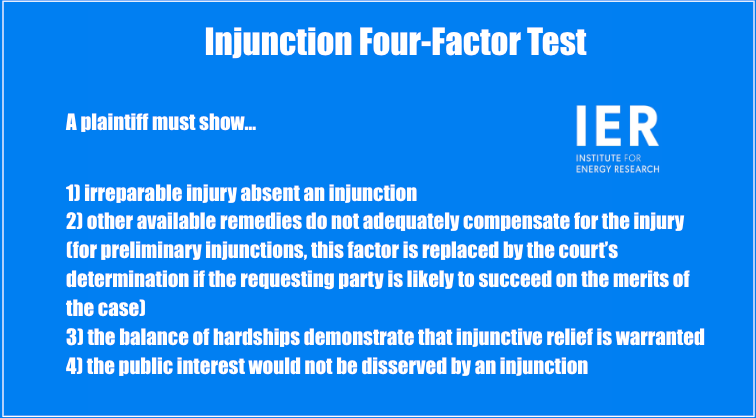
When it comes to remedies for NEPA violations by federal agencies, courts can order an agency to revisit the analysis contributing to its decision; however, vacatur is the “ordinary” approach under the APA, leading to the nullification of either the environmental document or agency decision (Hite, 2025). Courts can also issue temporary restraining orders to prevent an agency from causing “imminent harm” to a plaintiff as the court considers whether to issue a preliminary (before the ruling) or final injunction against an action, a determination based on the “traditional four-factor test” (Wagner, 2009).
Even though less than 1% of federal agency actions are subject to an EIS, those actions involve critical energy and infrastructure projects that improve the everyday lives of Americans through cheaper gas and electricity and easier travel (Schifman, 2026; Petersen et al., 2025). Since President Trump took office, his administration and the courts have issued new rulings that should diminish some of NEPA’s potency.
What Changed Under the Trump Administration?
Near the end of his first term, President Trump issued amendments to the CEQ’s NEPA regulations that “streamlined” the process by modifying some definitions and implementing page and time limits (Petersen et al., 2025). For instance, it targeted terms like “direct,” “indirect,” and “cumulative,” proposing to remove them so that agencies instead focus “on considering whether the proposed action causes an effect rather than on categorizing the type of effect,” and established limits of 75 pages and one year for EAs and 150 pages and two years for EISs, unless the EIS was a “proposal of unusual scope or complexity,” in which case the limit was 300 pages (Federal Register, 2020). When President Biden took office, he reversed parts of the Trump CEQ’s amendments, reverting the aforementioned terms back to their previous definitions (Petersen et al., 2025).
However, the time and page limits remained thanks to Congress passing the Fiscal Responsibility Act of 2023, which put them in the statute. Alongside these limits, the law attempted to streamline the NEPA process by only requiring the consideration of “reasonably foreseeable” environmental impacts (in contrast to the previous requirement that agencies consider “the environmental impact of the proposed action”), limiting the range of alternative agencies need to consider to those “that are technically and economically feasible, and meet the purpose and need of the proposal,” and adding a section providing instructions for agencies deciding on the level of review (Otum et al., 2023). Agencies are now allowed to oversee applicant-prepared EISs and, if multiple agencies are involved in a review, the agencies are ordered to designate a lead agency to “supervise the preparation of an environmental document” and manage the process (42 U.S. Code § 4336a).
Although the first Trump administration amended the binding rules enacted by Carter’s CEQ with rules of its own, the CEQ’s iron grip began to loosen shortly after his election to a second term. In the November 2024 case Marin Audubon Society v. Federal Aviation Administration, a three-judge panel of the U.S. Court of Appeals for the District of Columbia held that the CEQ lacks the statutory authority to bind federal agencies under NEPA (Knight et al., 2024). The case involves the Federal Aviation Administration and the National Park Service, which are required to work together to develop plans to regulate tour flights over national parks (D.C. Circuit Court, 2024). When the agencies issued their plan for four Bay Area Parks, they determined that an environmental analysis under NEPA was not necessary because it “would cause minimal additional or no environmental impact” compared to the previously existing interim plan, since “the Plan would maintain the existing number of flights, currently flying under interim operating authority, but would reduce their environmental impacts through the prescribed mitigation measures.”
The Court ended up siding with the petitioners, agreeing that the Agency’s use of an interim baseline for its decision was “arbitrary and capricious.” More important for future agency actions, however, in a decision deemed “unexpected” (Taber, 2025), the Court declared that “[n]o statute confers rulemaking authority on the CEQ,” a point that the Court claims “both sides in this case took for granted” (D.C. Circuit Court, 2024). To make its argument, the Court cited pre-1977 court decisions that found the CEQ’s role to be “merely advisory” and explained why the inclusion of CEQ guidances in the Code of Federal Regulations and the Supreme Court’s statement in Andrus v. Sierra Club (1979) that CEQ regulations are “entitled to substantial deference” are insufficient for declaring otherwise.
Although both sides asked for a rehearing in the case, the Court declined in February 2025 because, according to Tabor, the panel struck down the Federal Aviation Administration’s decision on valid grounds, and its discussion of the CEQ’s authority to issue legislation did not affect the case’s finding (Taber, 2025). With the CEQ’s lack of statutory legitimacy granted additional credence via the Washington D.C. Court of Appeals’ ruling, the Trump administration was further empowered to act boldly against NEPA’s underbelly of CEQ rulings alongside its broader deregulatory agenda.
Upon taking office for the second time, President Trump issued his “Unleashing American Energy” executive order calling for the Chairman of the CEQ to propose rescinding CEQ’s NEPA regulations (The White House, 2025). With the final rule executing this order going into effect in January 2026, the Trump administration formalized the “CEQ’s consultative role,” acknowledging that, with the repeal of the binding rules, “agencies will better be able to tailor the NEPA process to their programs and authorities and will not be bound by a one-size-fits-all process” (Federal Register, 2026). Notably, the final rule argued that President Trump revoked the CEQ’s power to issue binding regulations via his executive order, sidestepping the question of whether the CEQ had the authority to issue these regulations in the first place and thus potentially helping the administration avoid future legal headaches.
To assist the agencies, the CEQ published a “non-binding informational resource” for following NEPA, providing “a framework that agencies may consider and adapt to their missions” (CEQ, 2025). According to Harvard Law School’s Federal Environmental Justice Tracker, the DOI, Department of Energy, Department of Defense, Department of Transportation, Department of Agriculture, Department of Commerce, and Federal Energy Regulatory Commission published interim final rules that reflect this template “[i]n general” (Harvard Law School, 2026). For instance, in late February, the DOI rescinded 80% of its prior NEPA regulations and published most of the remaining rules in a Handbook of Implementing Procedures (U.S. Department of the Interior). In its final rule on this change, the DOI noted that its “regulations were originally designed to supplement CEQ’s NEPA regulations,” but now the “foundation for the updates to its NEPA procedures is NEPA itself” (Federal Register, 2026). The tracker claims that the new agency procedures potentially exclude “more projects from NEPA review,” limit “opportunities for public comment” and “the scope and types of environmental effects agencies are required to analyze,” make “the publication of draft [EISs] optional,” encourage “the use of accelerated ’emergency’ procedures for certain projects,” prevent “agencies from conducting new research to complete their reviews,” and “eliminate any mention of environmental justice” (Harvard Law School, 2026).
Of course, executive orders can be overturned quickly with the beginning of a new administration, and, with the status of CEQ’s regulatory authority uncertain absent a Supreme Court determination, it is reasonable to expect a future administration to restore the CEQ’s power to issue binding rules, or to have the agencies implement stricter rules themselves, even if a presidential candidate sought to ride a permitting-reform wave during an election (Aton, 2024). Fortunately, the Supreme Court provided some support explaining the scope of NEPA by deciding to push back against an overly broad interpretation of NEPA’s requirements in its Seven County Infrastructure Coalition v. Eagle County, Colorado ruling (U.S. Supreme Court, 2025).
Involving the Surface and Transportation Board permitting an 88-mile railway to connect the Uinta Basin to the national freight rail network, petitioners found “numerous NEPA violations arising from the EIS,” an allegation supported by the D.C. Circuit Court. As IER President Tom Pyle explained, “Although the STB wrote a 3,600-page environmental impact statement that considered the project’s significant environmental effects, the D.C. Circuit ruled that the review neglected the effects of upstream oil drilling and downstream oil refining that could result from the railway being built because it merely ‘noted,’ instead of analyzed, these events” (Pyle, 2025).
In the majority opinion reversing the decision, Justice Kavanaugh declared that the D.C. Circuit Court failed to provide the STB with “substantial judicial deference required in NEPA cases” and that the environmental effects it ruled the STB should have considered were “projects separate in time or place from the construction and operation of the railroad line” (U.S. Supreme Court, 2025). The opinion recognized the distinction between the STB permitting the railroad, a project it had control over, and the future upstream and downstream effects of commerce undertaken via the railroad, projects that are “subject to the approval processes of other federal, state, local, and tribal agencies.” Additionally, the Supreme Court reemphasized “that NEPA is a purely procedural statute” only requiring an agency “to prepare an adequate report… not meander on for hundreds or thousands of pages”—an acceptance that the congressionally instituted page and time limits on NEPA reviews cannot achieve their intended purpose if courts continue to allow lawsuits to proceed against reviews for lacking certain considerations. In terms of what reviews they do consider, the Court discussed the importance of providing agencies with discretion “so long as they fall within a broad zone of reasonableness,” granting them leeway to determine the scope and “the depth and breadth of [their] inquiry.”
The Supreme Court’s opinion in Seven County revealed that the view that NEPA “has transformed from a modest procedural requirement into a blunt and haphazard tool employed by project opponents” has penetrated all three branches of the federal government (U.S. Supreme Court, 2025). As the Trump administration’s final rule on removing NEPA’s implementing regulations puts it, “With this Supreme Court decision, all three branches of government at the highest possible levels-Congress, the President, and the Supreme Court-have called for, authorized, and directed NEPA reform” (Federal Register, 2026). Perhaps more importantly, NEPA reform has also gained at least some support from both sides of the political aisle, as evidenced by the passage of the Standardizing Permitting and Expediting Economic Development Act (SPEED Act) by the House of Representatives in December 2025 (H.R.4776, 2025). Although the tides seemed to have turned against how NEPA has been implemented, congressional gridlock and concentrated interests make the potential for legislative reform uncertain.
What is the SPEED Act?
Although environmentalist Democrats and their interest group allies continue to oppose permitting reform (Duckworth, 2021; Foster, 2025), NEPA reform has gained increased popularity among a larger population of Democrats due to its documented impact on renewable energy projects. According to a 2023 study by Michael Bennon and Devon Wilson of Stanford University examining “355 major transportation and energy infrastructure projects that completed a federal environmental study between 2010 and 2018,” solar energy projects had the highest litigation rate at nearly two-thirds and 38% of wind energy projects were litigated (Bennon & Wilson, 2023). Aidan Mackenzie of the Institute for Progress explains this result: “Utility-scale solar and wind, however, require far more land disturbance [than oil and gas], both per megawatt produced and per project… So it’s no surprise that NEPA affects fossil fuels and clean energy differently—it would be surprising if they were treated equally by the same statute” (Mackenzie, 2024). With 85% of Democrats endorsing federal government support of wind and solar, it is only natural that some politicians will seek to seize the moment as energy abundance gains in popularity (Kennedy & Kikuchi, 2026).
In proposing the SPEED Act, its cosponsors – Rep. Bruce Westerman (R-AR) and Rep. Jared Golden (D-ME) – cited the importance of cutting “red tape” and being “nimble” so that the U.S. can invest in energy, infrastructure, and environmental quality concurrently, claiming that “[t]he bill will shorten permitting timelines and reduce the frequency of frivolous litigation” (House Committee on Natural Resources, 2025).
The bill takes strides toward neutering the ability of project opponents to use the NEPA process to delay and add costs to projects by limiting what goes into NEPA reviews and the opportunity for lawsuit abuse. To start, the SPEED Act makes NEPA’s procedural purpose explicit, adding that the “Act does not mandate particular results, and only prescribes a process” (H.R.4776, 2025). It ensures agencies keep the scope reviews limited to “only those effects that share a reasonably close causal relationship to, and are proximately caused by, the immediate project under consideration” and disallows evaluating “effects that are speculative, attenuated from the project or action, separate in time or place from the project or action, or in relation to separate existing or potential future projects or actions.”
The SPEED Act also limits NEPA reviews to situations where either equivalent environmental reviews by state or tribal authorities have not already occurred, or the agency has not conducted a similar review through other statutes. It alters NEPA to state that environmental reviews are not required when “the agency determines the proposed agency action is an action for which such agency’s compliance with another statute’s requirement serves the function of agency compliance with this Act with respect to such action,” or “the proposed agency action relates to a project or action that has already been reviewed pursuant to a State environmental review statute or a Tribal environmental review statute, ordinance, resolution, regulation, or formally adopted policy.” Moreover, agencies do not have to do new research unless it “is essential to a reasoned choice among alternatives.”
Building on the Supreme Court’s Seven County ruling, the Act declares that a court “shall afford substantial deference to the agency” and “may not substitute its judgement for that of the agency regarding the environmental effects” involved with the agency decision. If a court finds “that a final agency action does not comply with the requirements of this Act,” the only remedy available “is to remand, without vacatur or injunction, the final agency action to the agency.” When remanding the action, the court must include “specific instruction to correct the errors or deficiencies found by the court,” and provide a schedule for agencies to correct the errors within at most 180 days.
Recognizing the threat of litigation to projects, it delimits who can file lawsuits. Under the SPEED Act, NEPA claims must be published within 150 days of the final agency action becoming public, “filed by a party that has suffered or imminently will suffer direct harm from the final agency action,” and cannot “challenge the establishment of a categorical exclusion.” If there was a public comment period (which is now required only to accompany the EIS notice of intent after the Trump administration’s rescission of NEPA regulations) (Levitt, 2025), the claim must be “filed by a party that submitted a substantive and unique comment during such public comment period by the noticed comment deadline” while being “sufficiently detailed to put the applicable Federal agency on notice of the issue,” and concern the “same subject matter” touched on in the comment.
To further help the SPEED Act narrow the scope and reach of NEPA, three congressmen, Rep. Andrew Clyde (R-GA), Rep. Scott Perry (R-PA), and Rep. Chip Roy (R-TX), proposed amendments, all of which failed to pass the House alongside the Act (Epstein, 2025). Rep. Clyde’s amendment prevents “aesthetic, recreational, or emotional interests unaccompanied by material physical or property harm” from being included in NEPA’s definition of “direct harm.” Rep. Perry’s amendment requires agencies to only consider effects over which they “have jurisdiction by law and share a reasonably close causal relationship to, and are proximately caused by, the immediate project or action under consideration.” Rep. Roy’s amendment seeks to redefine what NEPA classifies as a “significant effect” for the purpose of EISs. Under his definition, it “means a proximate and concrete harm that is discreetly caused by the proposed agency action and that materially impairs human health or property.”
Although the SPEED Act passed the House in late 2025, its status is currently up in the air. Democratic lawmakers took offense to President Trump’s decision to pause the leases for all offshore wind projects under construction in the U.S., viewing it as unfairly targeting renewable energy (U.S. Department of the Interior, 2025). This decision prompted Sen. Sheldon Whitehouse (D-RI), Ranking Member of the Senate Environment and Public Works Committee, to pause permitting negotiations “until the attack on clean energy ends and we can have some assurance that a solid bipartisan bill, which we were working on, would actually get implemented fairly by this administration” (Livingston, 2026). Whitehouse and Sen. Martin Heinrich (D-NM), Ranking Member of the Senate Natural Resources Committee, released a joint statement in March that they would reopen permitting negotiations after receiving signs of “a positive direction from the Trump administration” (U.S. Senate Committee, 2026). However, Whitehouse later claimed that Democrats could pause talks again if the Trump administration appeals the federal court preliminary injunctions allowing the projects to proceed (Brugger, 2026). Permitting reform may play a role in the upcoming reconciliation bill (Picon, 2026), but Democrats may choose to wait until after the midterm elections.
Policy Recommendations
Despite positive steps taken on NEPA by the Trump administration and the Supreme Court’s recognition in the Seven County case that NEPA does not open the door to lawsuits against federal agency actions, some believe that strong and lasting NEPA reform still requires an act of Congress. As Philip Rossetti wrote on the outlook for NEPA after the Seven County decision, “Only Congress can correct [the core issue of NEPA’s vagueness], since only they have the authority to narrow the scope of NEPA-even if SCOTUS has narrowed how courts ought to respond to NEPA-related cases” (Rossetti, 2025). He notes that “[t]here is also the question of policy: How will current or future administrations promulgate their permitting decisions, and what will they consider adequate compliance with NEPA absent clarification from Congress?”
Previous efforts at reform, like limiting the time and pages of NEPA reviews, signal a desire to streamline the NEPA process; however, they could result in even longer reviews if rushed review processes lead to more errors or oversights that spur lawsuits, especially if NEPA remains vague.
Clearly, litigation reform needs to be at the forefront of any attempt to reform NEPA. The opportunity for interest groups to pursue lawsuits against important projects over trivial concerns reduces the U.S.’s economic competitiveness by creating higher costs and uncertainty. According to the Breakthrough Institute, although agencies won more than 80% of NEPA appeals cases from 2013 to 2022, an average of 4.2 years elapsed between publication of an EIS or EA and the conclusion of the challenge at the appellate level (Chiappa et al., 2024). Notably, non-governmental organizations initiated 72% of total challenges, including 74% of energy cases, with ten organizations responsible for 35% of total challenges.
These numbers indicate that supposedly local and specific environmental challenges are being delegated to larger organizations bent on disrupting project completion for ideological reasons. For instance, the Sierra Club’s Environmental Law Program celebrates its “lawyer-organizing” for the sake of leading “the charge against climate change and polluters” (Sierra Club). Organizations like the Sierra Club do not need to win their case to harm a project; they just need to delay it long enough that the project becomes uneconomic. Based on this metric, the average of 4.2 years for project litigation means that they have been remarkably successful.
Preventing NEPA from becoming an insurmountable barrier to energy and infrastructure development requires Congress to recognize the strategies opponents use and to rewrite the statute to prevent its abuse. Reforming NEPA should bring it back to its original intention of creating “awareness” (Federal Highway Administration) of environmental concerns among agencies and the public, rather than including the public in agency decisions (CEQ, 2021). This reform would go a long way toward resolving the uncertainty resulting from NEPA; however, truly creating the conditions for project certainty requires repealing the law and re-evaluating the paradigm surrounding federal environmental review and the level of public involvement in general.
1) Repeal NEPA
When President Nixon signed NEPA into law as his first act of the 1970s, he heralded it as representative of the decade where “America pays its debt to the past by reclaiming the purity of its air, its waters, and our living environment,” adding “that the decade of the seventies will be known as the time when this country regained a productive harmony between man and nature” (The American Presidency Project, 1970). Nixon’s view of environmental protection creates a sharp distinction between human involvement and environmental quality. In Nature Unbound: Bureaucracy vs. the Environment, the authors refer to this view as the “balance of nature ideology” (Simmons et al., 2016). According to the authors, “This belief holds that nature is static and predictable and that it can be returned to an inherent balance.” In reality, the nature we understand and enjoy requires constant human involvement, from creating endangered species habitats to protecting against natural disasters like wildfires. Furthermore, the balance of nature framework places the “purity” of nature on a pedestal, overriding human desires to improve their quality of life through cheaper energy and more efficient transportation.
NEPA is the “Magna Carta” (CEQ) of comprehensive environmental laws, including the Clean Air Act, Clean Water Act, and Endangered Species Act, that make the balance of nature federal policy. While purely procedural at its core, NEPA’s environmental review process inevitably delays actions taken to fulfill substantive goals. If, by delaying the achievement of project sponsors’ and agencies’ goals, NEPA provided superior environmental and human outcomes, it would be a successful law worth upholding. Unfortunately, NEPA yields poor outcomes in both respects by serving as a barrier to conscious human action. As the Property and Environment Research Center wrote in an amicus brief for the Seven County case regarding NEPA’s effect on forest quality, “There are about 80 million acres of federal forests that need restoration, but, due to NEPA and other factors, only 2 million acres are being treated annually… This forest restoration backlog fuels larger and more destructive wildfires that harm forest health, wildlife habitat, air and water quality, and outdoor recreation” (Connor & Soares, 2025).
Because NEPA is based on a flawed ideology that promotes environmental protection over human welfare, it deserves to be repealed. Human lives, not romantic ideas about nature, should govern agency decisions, and NEPA’s procedural requirements make it more difficult and costly for projects that would improve economic and environmental outcomes to move forward.
Even though the repeal of NEPA is currently outside the realm of political respectability, it would be a mistake to think that its repeal would have drastic consequences, either positive or negative. Rather, it would mark a positive step toward reforming our vast environmental law apparatus to better align with the goal of improving human lives. The existence of CEs and the Trump administration’s allowance of “alternative arrangements” for NEPA compliance in light of its declaration of a national energy emergency mean that many actions already avoid writing lengthy environmental documents (Department of the Interior, 2025). Moreover, the aforementioned federal environmental laws still impose substantive requirements on projects regarding their effects on air and water quality and animal life. And projects will still have to contend with state, local, and tribal laws requiring NEPA-like procedures, making these entities bear the consequences of burdensome policies more directly as companies decide where to operate.
Importantly, repealing NEPA would reshape agencies’ relationship to public engagement. While notice-and-comment rulemaking makes sense for actions with national implications that affect a broad array of activities, the projects that suffer the most from the NEPA process are specific to time and place. Given the prominence of anti-development groups bringing claims, the public comment process has the effect of beating down projects rather than being a genuine effort to keep the public informed. Repealing NEPA would allow agencies and sponsors to forgo public comment if they determine that the process would be more harmful than helpful.
Still, project sponsors will likely continue to seek public input even if it is not required. Lawsuits can be brought against projects that violate the rights of individuals and communities, including their health, safety, or property. Wanting to avoid this risk but lacking sufficient knowledge of their projects’ outcomes, sponsors are incentivized to engage with various stakeholders in the community to obtain guidance on potential risks and avoid resolving disputes through judicial means. The primary difference between this outcome and the status quo is that public engagement becomes a localized decision based on specific circumstances, rather than being mandated by Congress, which lacks detailed knowledge of projects and their effects and overrelies on the precautionary principle.
2) Pass the SPEED Act with amendments
Even though signing the SPEED Act into law would not solve the fundamental problem of litigation risk, its implementation would still be a bipartisan permitting victory. At its core, the bill recognizes that NEPA is meant to be about agencies reasonably evaluating environmental concerns arising from their activities, not about requiring them to devote significant time and resources to discovering and evaluating an array of possible alternatives and outcomes. It avoids duplication of effort by allowing compliance with other federal, state, and tribal statutes to serve NEPA’s purposes. Crucially, it sets strict standards for who can file a lawsuit against a project and gives the courts guidance on how they should proceed when they find a NEPA violation, thereby facilitating the courts’ role as a corrective body rather than a prohibitive one.
The three aforementioned amendments would make the SPEED Act even more effective at limiting litigation risk. Rep. Clyde’s and Rep. Roy’s amendments clarify that “human environment” should mean what affects humans in a tangible way. Rep. Perry’s redefinition of the effects that agencies must consider to those over which they have legal authority further avoids the problem of lengthy reviews delaying projects. With these amendments implemented within the SPEED Act, the bill would close certain avenues of attack currently available to project opponents, raising the bar for what litigants must prove to succeed in a NEPA challenge.
3) Pass the FREEDOM Act
Ensuring permitting certainty is essential for large infrastructure and energy projects because of the immense time and investment they require, even without litigation concerns. If project sponsors lack guarantees that their efforts will not go to waste, they become more wary of building. This problem is exacerbated when the threat to project certainty comes from the executive branch.
Introduced in the House in February of this year, the FREEDOM Act attempts to fix this problem by limiting the ability of agencies to disrupt already permitted projects and creating an alternative arrangement for administrative work when agencies miss deadlines, thereby providing “tech-neutral permitting certainty” (Office of Congressman Mike Lawler, 2026). If agencies miss deadlines (which are established based on the difficulty of a project), issue stop-work orders, or revoke permits, courts can require them to provide monetary compensation to project sponsors (Mackenzie, 2026). Furthermore, the FREEDOM Act forbids the government from agreeing with third-party lawsuits and petitioning courts to set aside a permit without the sponsor’s consent.
Passing the FREEDOM Act will assist NEPA reform efforts both practically and politically. By creating a mechanism for a court-appointed contractor to finish environmental reviews when an agency neglects its duty, the Act provides an avenue for projects to comply with NEPA even when the governing administration opposes them. This process reduces the political risk of building new energy and infrastructure projects. As one of the bill’s cosponsors, Rep. Josh Harder (D-CA) points out, “Republicans were frustrated by what they saw the Obama administration do to the Keystone Pipeline, and now Democrats are pretty upset with what they’re seeing the Trump administration do to wind and solar projects – trying to cancel projects that have already been approved” (Hochman, 2026). Politically, passing the FREEDOM Act can help build bipartisan consensus on NEPA reform, giving both sides confidence that future administrations will not stymie streamlined projects to appeal to their base.
4) Reform preliminary injunctions
Although the SPEED Act indirectly addresses the issue of project opponents using preliminary injunctions to stall environmental reviews, it still has a “blind spot,” according to Ben Schifman of the Institute for Progress (Schifman, 2026). As he explains, “In NEPA cases, plaintiffs often seek preliminary injunctions to stop work while a court decides whether the agency actually failed to conduct sufficient environmental review.”
Besides the 150-day deadline the SPEED Act sets for the filing of lawsuits against projects, Schifman notes that the bill also gives district courts 180 days to resolve NEPA claims after the administrative record has been lodged and appellate courts another 180 days to hear appeals. Based on these deadlines and other aspects of the NEPA litigation process, “a preliminary injunction that lasted through the resolution of the case on appeal would be in force for 16 months” under the SPEED Act.
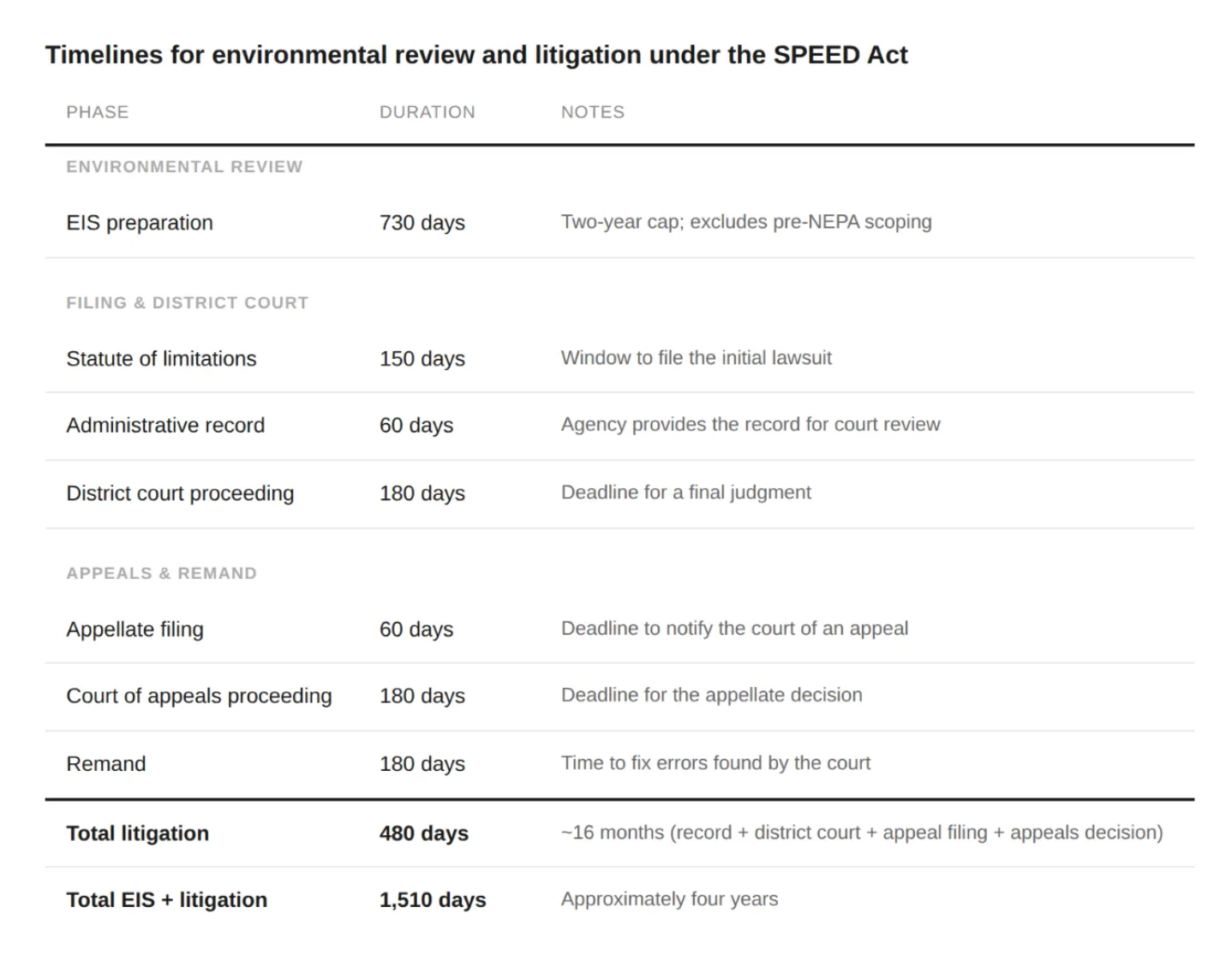
However, history provides evidence to suspect that courts would not follow these deadlines, and “[t]he Supreme Court has characterized such statutory deadlines ‘directives’ rather than rigid jurisdictional limits.” With “existing dockets and competing priorities” and a lack of punitive mechanisms for judges, it will be difficult for courts to uphold these deadlines, assuming they are motivated to do so in the first place.
Therefore, “Congress should adjust the traditional equitable factors to ensure that preliminary injunctions are brought and resolved quickly, and only in cases where plaintiffs have a strong showing of success on the merits,” which would “ensure the preliminary injunctions serve their intended function preventing truly irreparable harm during the pendency of a lawsuit in which a plaintiff is likely to ultimately prevail while limiting those brought for the purpose of delay, disruption, or where the procedural error would not have changed the outcome.”
Schifman’s solutions to preventing preliminary injunctions from unnecessarily stalling projects involve Congress requiring preliminary injunctions to be filed within 30 days of the final agency action, establishing a multiplicative merit standard whereby courts determine the likelihood of a suit’s success based on “the cumulative probability of success across all independent, dispositive issues” compared to simply the plaintiff’s strongest argument – and instituting a prejudicial error standard so that courts do not stall projects over plaintiff concerns unless they are likely to have affected an agency’s decision. With these reforms, Congress would take another weapon out of the arsenal of groups seeking to stall projects via NEPA.
5) Make NEPA litigants pay for frivolous lawsuits
NEPA has become a racket for environmental organizations that receive funding based on their ability to use it to delay projects. However, as noted above, even if these organizations hardly win their suits, the costs and delays they cause align with their goal of making it more difficult to build. Besides the “Big Green, Inc.” (IER) network of organizations that funnel money to lawsuits against projects they oppose, third-party litigation funding also provides a mechanism through which outside investors can bankroll plaintiffs in exchange for a share in any settlement or judgment without paying income tax on these earnings (Stevens, 2026). For foreign nationals and corporations, an exemption from U.S. withholding tax allows them to profit from delaying energy projects tax-free. The ability to profit from NEPA litigation highlights how its procedural steps serve to benefit interest groups rather than achieve genuine environmental progress.
When NEPA litigants pursue frivolous lawsuits against projects, the interests of a small, disassociated minority are advanced over the general public, which would benefit from the project’s completion. Closing loopholes through the reforms advanced in the SPEED Act will force plaintiffs to make more difficult arguments if they want their lawsuits to succeed, but, absent repeal, courts will still have discretion to allow certain suits. Therefore, Congress should adopt a “loser-pays” (USLegal) standard for NEPA challenges that forces unsuccessful litigants to compensate project sponsors for the costs of delaying the agency action. This standard would be a strong disincentive against frivolous lawsuits, internalizing the costs of NEPA litigation in the budgets of interest groups and their funders. For this reform to fully account for costs borne by project sponsors, it must include not only legal fees but also the opportunity costs of lost revenue and delayed investments resulting from the project being in legal limbo. With genuine downsides to unsuccessful litigation, a loser-pays standard would reduce the number of NEPA challenges and better ensure that they arise from specific, genuine concerns rather than general antipathy.
Conclusion
NEPA has had a long history as a substantive barrier for building projects and taking actions within the federal government’s broad scope. According to the Foundation for American Innovation’s NEPA EIS Dashboard, from 2010 to 2026, 2,029 EISs have been completed at an average of 4.4 years from notice of intent to record of decision across all agencies (Foundation for American Innovation, 2026). This timeline, however, “excludes pre-scoping activities, the time between the final EIS and record of decision, and any litigation that follows” (Schifman, 2026). It also cannot account for projects that never got off the ground because sponsors recognized that the costs of complying with NEPA would be too great to overcome.
With recent reforms by Congress and the Trump administration, especially if the SPEED Act is passed, these numbers will likely decrease. In fact, the dashboard shows that the mean and median time from notice of intent to record of decision have decreased from highs of 4.95 and 4.35 years, respectively, in 2016, to new lows of 2.6 and 2.45 years, respectively, in 2026 (Foundation for American Innovation, 2026).
Even with shorter timelines, NEPA still imposes costs on projects, making it more difficult for the U.S. to build the infrastructure needed to meet the future demands of artificial intelligence. If the U.S. wants to remain an economically competitive nation while taking environmental quality seriously, continued action is necessary. NEPA is a barrier we cannot afford to let linger.