

Three years ago, TransCanada proposed the $7 billion Keystone XL pipeline to bring more oil from Canada to the United States. After years of study, the State Department has yet to decide whether or not approve the pipeline. The Keystone XL should be a no-brainer—more jobs and greater access to oil from our closest ally.
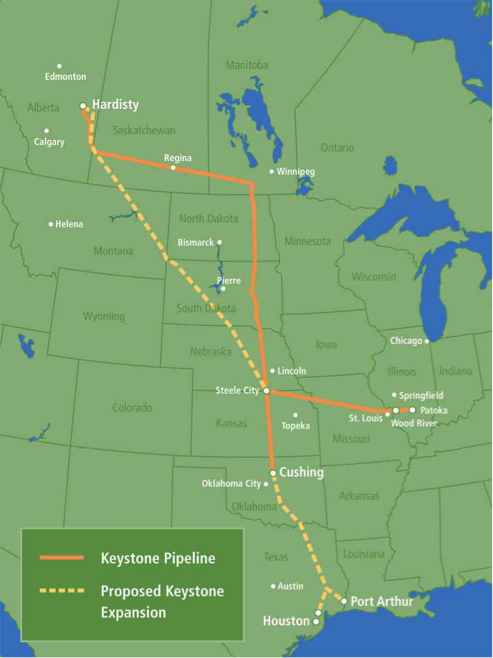
Because the pipeline crosses the border from Canada, the State Department must decide whether the pipeline is in the “national interest.” This should be a simple question. Is it in the “national interest” to get oilfrom Canada, our largest trading partner and most reliable ally, or should we import more oil from more hostile countries? Even without considering the economic arguments, it should be that simple.
The economic arguments for the pipeline are also persuasive. The construction of the pipeline alone will create 20,000 jobs. States along the route are projected to receive an additional $5.2 billion in property tax revenue. A Canadian Energy Research Institute report calculates that existing pipeline operations plus the Keystone XL would generate $359 billion (Canadian dollars) in GDP and create 179,000 jobs in 2035.
But the Keystone XL is not without its detractors. Some people claim that the pipeline will not be safe. This argument seems to ignore the fact that there are more than 50,000 miles of oil pipelines already in the United States. This technology is neither new nor unsafe. Furthermore, the State Department’s recent Environmental Impact Statement found that the pipeline would pose few environmental risks.
The environmental community tries to argue that the Obama administration should reject the Keystone XL because using the oil would increase greenhouse gas emissions. Even if you agree with their argument about global warming, their argument has the obvious flaw that it assumes that if the Keystone XL is not approved the Canadians will not produce the oil. This is highly unlikely. It’s much more likely that they will build a pipeline to the coast where the oil can be moved to the growing economies in Asia, and even to refineries in on the west coast of the United States. Regardless of where the oil will be transported to, there is no reason to believe that if the Keystone XL is rejected that the oil will remain in the ground.
The economic benefits of the Keystone XL pipeline are great and the environmental risks are few. A recent op-ed by the editorial board of Bloomberg gets it just right, “After the public hearings, the U.S. should give TransCanada the green light—and then make sure the company manages pipeline design and construction with care.”

