

Key Takeaways
EV owners, who have escaped U.S. gas taxes that fund road construction and maintenance, may soon have an opportunity to contribute to their construction and upkeep.
The federal gas tax has been 18.4 cents per gallon and the diesel tax 24.4 cents per gallon since 1993, but EV owners buy neither fuel, so they do not contribute to road upkeep.
A bipartisan House highway bill proposes a $130 annual fee for electric vehicles and $35 for plug-in hybrids to ensure all users pay for roads.
Some states already charge electric vehicle owners for road upkeep, with New Jersey’s fee double the proposed federal fee.
Opponents argue that the annual federal fee may be higher than federal gas taxes for some drivers, but others argue that all drivers should pay user taxes for road upkeep.
With global sales of electric vehicles now reaching 25% of total sales, governments will be seeking new means to pay for the roads we all use.
U.S. gas and diesel owners pay a federal tax at the pump when filling up for the construction and maintenance of federal roads and other transportation activities. So far, EV owners have escaped such a tax despite placing more stress on roads than their internal combustion engine counterparts because of their heavy batteries. Since 1993, gas vehicle owners have paid a fuel tax of 18.4 cents per gallon, while diesel vehicle owners have been charged 24.4 cents per gallon. Now, the House of Representatives has a bipartisan highway bill that proposes to add a $130 registration fee for electric vehicles and a $35 fee for plug-in hybrids. The fee would increase by $5 every other year starting in 2029, but would not exceed $150 for electric vehicles or $50 for hybrids. If passed by the Senate, the provision would be part of the five-year Surface Transportation Reauthorization bill, a bipartisan bill that invests in roads, bridges, rail, and other infrastructure.
Opponents to the bill argue that flat EV fees hit low-mileage drivers harder, sometimes costing more than the federal gas taxes paid by the drivers of equivalent gasoline vehicles. Many states, however, have already implemented such user fees on EV owners. Forty states impose higher annual vehicle registration fees on electric vehicles and some hybrid vehicles to help offset lost state gas tax revenue. The state fees range from $50 in Hawaii and South Dakota to $260 in New Jersey. The fees have generally been justified as modest efforts to offset the loss of gas tax revenue from electric vehicles, which advocates claim are more environmentally friendly but still put wear and tear on roads.
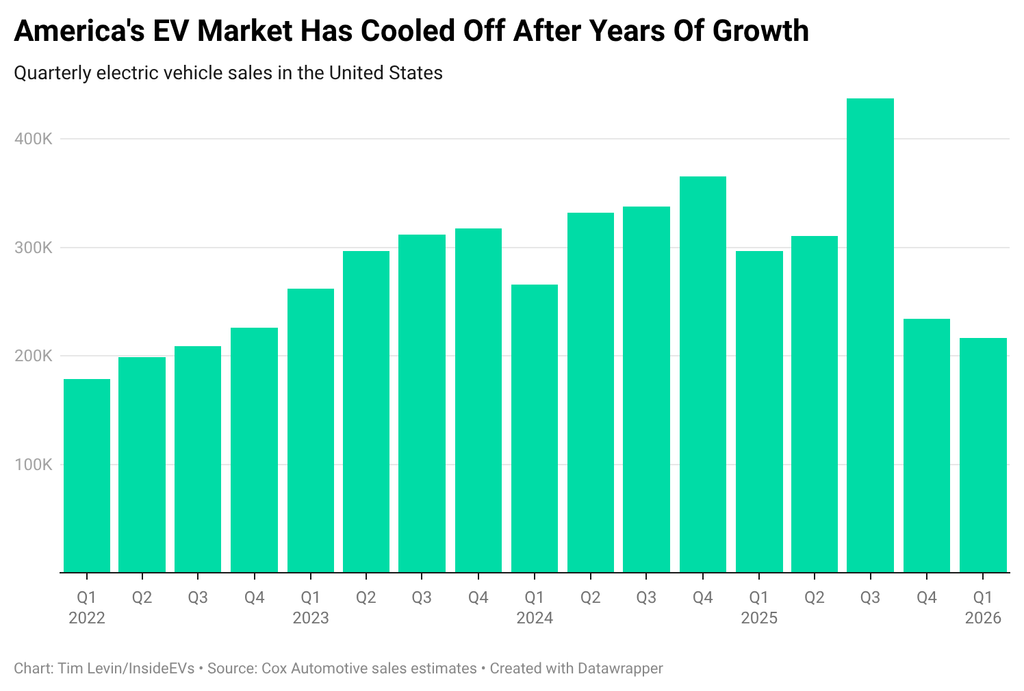
The U.S. market for electric vehicles has been sluggish since the EV tax subsidy of $7,500 expired at the end of September last year. Americans purchased about 216,000 new electric cars in the first three months of 2026, according to Cox Automotive. Sales were down 27% year over year, after dropping 36% in the previous quarter. In terms of quarterly sales volume, the EV market has been set back to levels seen in late 2022.
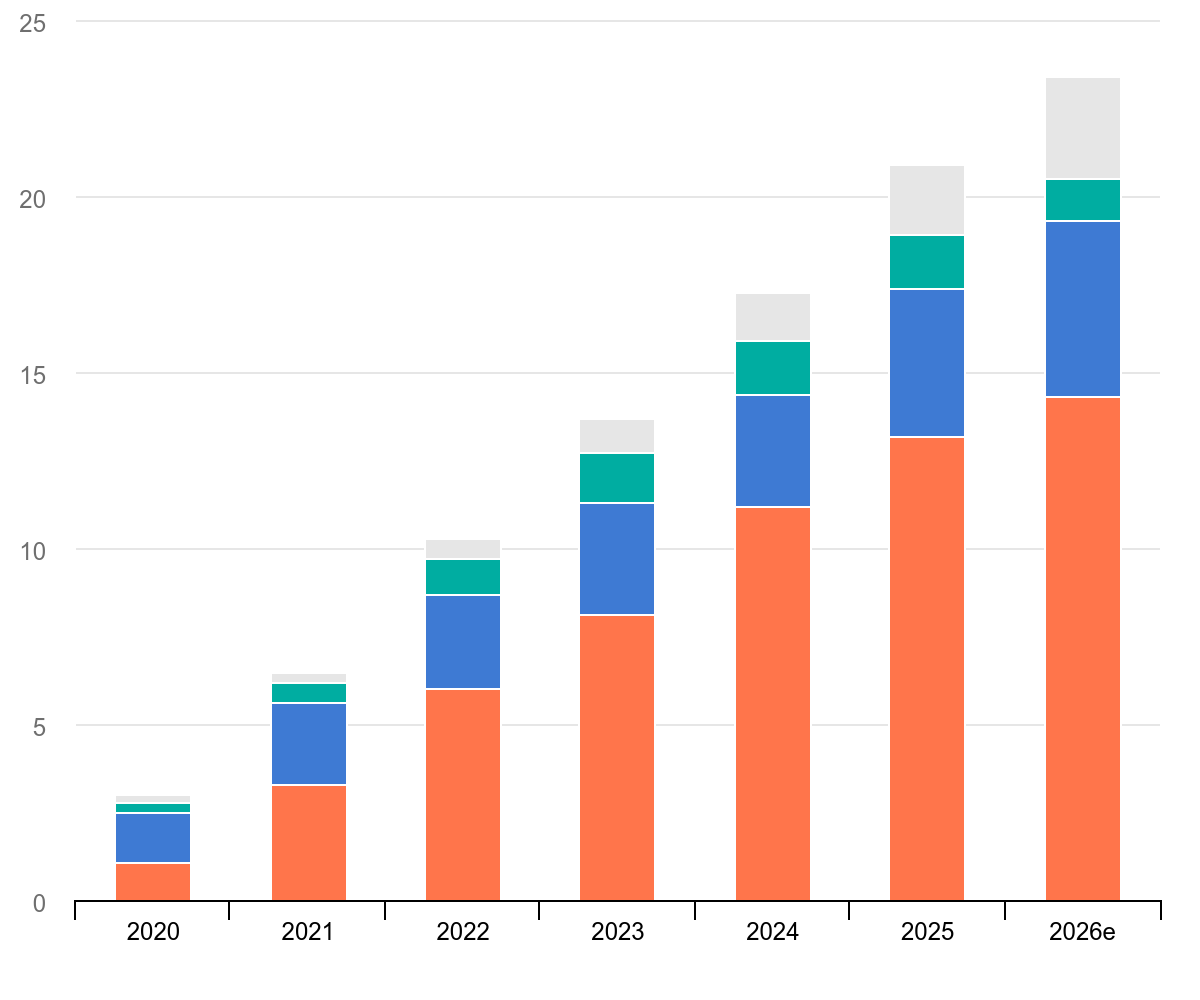
While the U.S. market for electric vehicles has quieted down since the expiration of the EV tax subsidy last year, the global market is booming. According to a report by the International Energy Agency, global EV sales surpassed 20 million last year, about a sevenfold increase from 2020. The EV sales share in the global car market increased to 25%, and about 5% of the global car stock is now electric. The rising trend in global EV sales is expected to continue this year amid surging gasoline prices, driven by the jump in oil prices following the Iran conflict.
The rise in global EV sales is helping the Chinese EV market to expand as more Chinese electric vehicles than gasoline vehicles were exported for the first time in April. Electric vehicles and plug-in hybrids accounted for just over half of the 769,000 vehicles that China shipped abroad in April, with exports of “new-energy” vehicles (electric vehicles and plug-in hybrids) accounting for 52.7% of total exports, according to the China Passenger Car Association. Exports of new-energy vehicles more than doubled to 406,000 units in April. Exports are expected to become the main growth driver for China’s auto industry, as China’s domestic market has slumped, with retail sales of passenger cars in April falling 21.5% from a year earlier to 1.38 million units — a 16% decline from March. EV export growth is expected, particularly in Europe and Latin America. Brands like BYD and Chery are expanding rapidly in Europe.
Analysis
Last year, the United States eliminated subsidies of up to $7,500 for EV purchases and leases, substantially slowing U.S. EV sales. Now, a bill that has bipartisan support has been introduced in the House that would impose an annual federal fee on EV owners. According to the bill’s sponsors, the fee would help fund highway maintenance, which is partly paid for by federal gasoline and diesel taxes. But opponents of the bill see the new EV fee as unfair, arguing it is significantly higher than what most Americans pay in federal fuel taxes. Nonetheless, electric vehicles stress U.S. roads and infrastructure due to the weight of their heavy batteries. Forty states have already assessed fees for electric vehicles to supplement state gas tax revenue.
Globally, EV sales are doing well, surpassing 20 million vehicles last year, about a sevenfold increase from 2020. The EV sales share in the global car market increased to 25%, resulting in about 5% of the global car stock being electric. The rising trend in global EV sales is expected to continue this year amid surging gasoline prices, driven by the jump in oil prices following the Iran conflict. That has helped increase exports of Chinese electric vehicles, which have exceeded exports of gasoline vehicles for the first time in April.

