

Key Takeaways
According to the Rhodium Group, after a two-year decline, U.S. greenhouse gas emissions rose 2.4% in 2025 due to a combination of a cool winter, the growth of data centers, cryptocurrency mining, and higher natural gas prices that helped to increase coal generation by 13%.
The building and electric power sectors saw the largest increase in emissions, with a 6.8% and 3.8% increase, respectively.
While transportation is the largest emitter of greenhouse gas emissions, its emissions were essentially flat, rising only 0.1% from 2024 levels due to the growing adoption of hybrid and electric vehicles that were spurred last year by the EV tax credit.
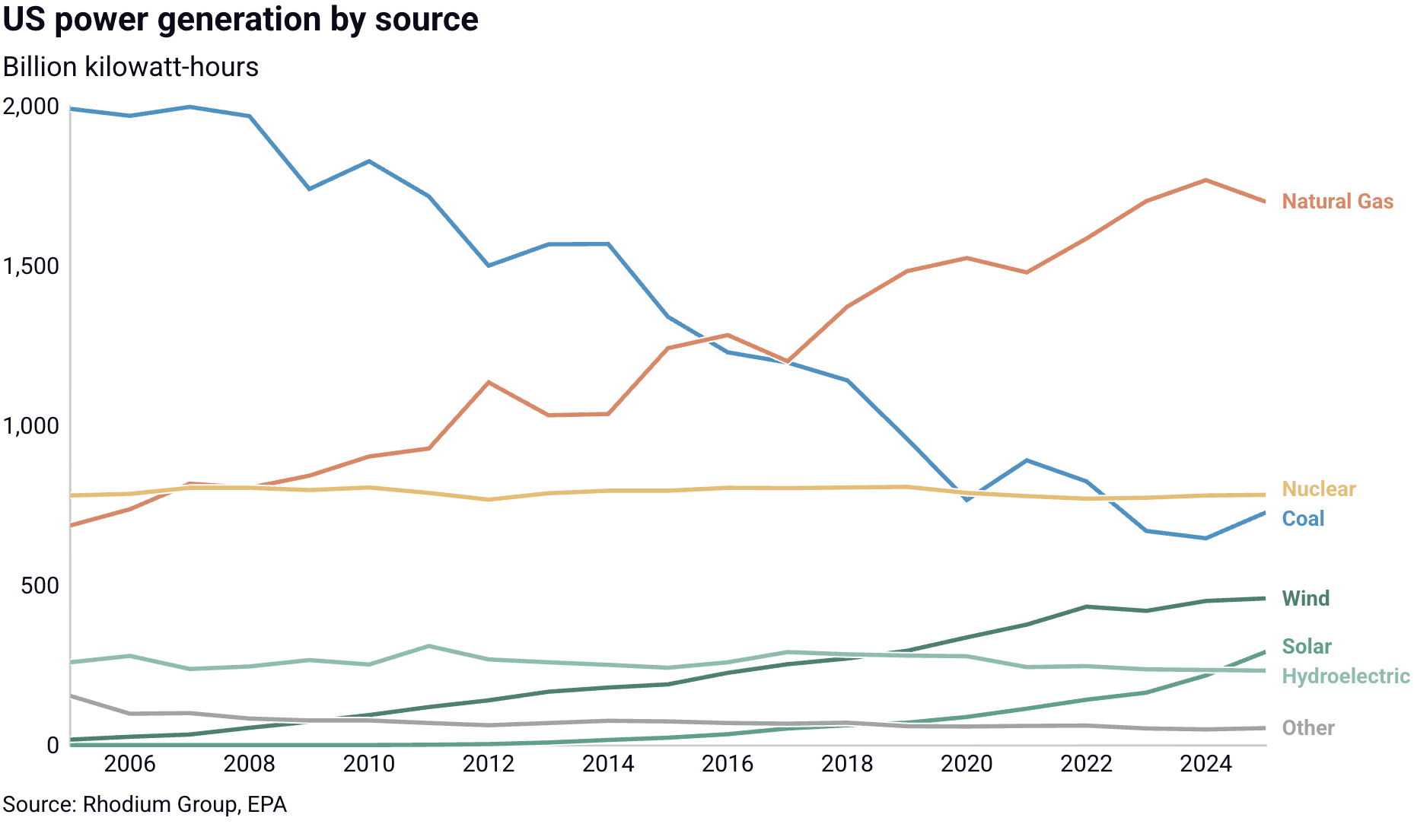
Solar power grew by 34% and surpassed hydroelectricity, while natural gas remained the largest generator of electricity, producing 40%.
The rollback of environmental policies by the Trump administration had not been in place long enough to have an effect on emissions in 2025, according to the Rhodium Group.
U.S. greenhouse gas emissions are estimated to have risen 2.4% in 2025, after two years of decline. However, these emissions are still 6% below pre-pandemic levels in 2019 and 18% below 2005 levels. The Rhodium Group estimated that the United States emitted 5.9 billion tons (5.35 billion metric tons) of carbon dioxide equivalent in 2025, which is 139 million tons (126 million metric tons) more than in 2024. The increase is attributable to a combination of a cool winter, growing usage of data centers, cryptocurrency mining, and higher natural gas prices.
According to the Rhodium Group, the rise in emissions was largely concentrated in the buildings and power sectors. Colder winter weather boosted demand for space heating, pushing emissions from fuel use in buildings up by 6.8%. At the same time, higher natural gas prices and rising electricity demand led utilities to rely more heavily on coal-fired generation, increasing power sector emissions by 3.8%. Emissions from industry edged up 1.3% as industrial activity expanded, while emissions from the oil and gas sector also increased slightly, reflecting higher production levels.
Transportation in the United States, by road, rail, and air, is the largest source of greenhouse gases, with road traffic volumes increasing for the fifth year in a row. Despite the record travel activity, transportation emissions were essentially flat, rising only 0.1% from 2024 levels, due to the growing adoption of hybrid (up by 25%) and electric vehicles (EVs). There was strong EV penetration in the market before the EV tax credit ended at the end of September. Of course, the adoption of EVs helped to increase emissions from the power sector by increasing electric demand.
The Rhodium Group projects economic growth to have averaged 1.9% in 2025. That means that U.S. greenhouse gas emissions grew faster than the economy, breaking a three-year trend of economic growth outpacing emissions growth.
Utility Sector
More electricity generated from coal increased carbon dioxide emissions from electricity generation by 55 million metric tons (3.8%), according to the Rhodium Group. The largest source of increased electricity use was commercial buildings, where data centers, cryptocurrency mining operations, and other large load customers increased electricity demand by 2.4%. This growth was concentrated in Texas, the Mid-Atlantic, and the Ohio Valley regions. Electricity demand from residential buildings rose by 2.2% primarily due to space heating and demand from colder winter weather, but EV electricity consumption is increasingly a major contributor. Industrial power demand, which accounts for a smaller share of total power demand, increased by 1.9% due to increased output in electricity-intensive subindustries.
The main driver of higher coal use was higher natural gas prices, up 58% at Henry Hub in 2025, compared to very low levels seen in 2024, as a result of high space heating demand from colder temperatures and rising liquefied natural gas exports. Generation from coal and natural gas together made up 57% of total generation, down slightly from 58% in 2024. The pace of coal plant retirements slowed, as utilities delayed planned retirements to help meet rising power demand and in response to orders from the Department of Energy. Through November, only 2.5 gigawatts of conventional steam coal capacity had retired, compared with 4.5 gigawatts in 2024 and an average of almost nine gigawatts annually since 2020. Coal generation has declined by 64% since its peak in 2007.
The fastest-growing power generation source in 2025 was solar, whose generation increased by 34% and surpassed hydroelectricity. Federal subsidies are being phased out for renewable energy sources beginning mid-year 2026, which may slow the pace of solar additions. Natural gas remained the largest source of electricity, with a 40% share.
Strong demand for natural gas for electricity generation, heating, and other uses is accelerating pipeline construction in the United States, with the greatest capacity additions since 2008. There are 12 projects with a combined capacity of 18 billion cubic feet per day for new and expanded natural gas pipelines set to be completed in 2026 in Texas, Louisiana, and Oklahoma.
The Group indicated that the list of more than two dozen proposed rollbacks of environmental policies by the Trump administration had not been in place long enough to have an effect on emissions in 2025.
Analysis
The Rhodium Group’s study provides further evidence that energy demand is increasing, especially for commercial buildings. Despite subsidized renewables having a greater responsibility in meeting this demand, coal generation has also increased due to its important role in providing a reliable source of electricity, contributing to higher emissions. To ensure growing electricity demand is met without rising emissions, policymakers should look to reduce permitting barriers and regulations, which make it more difficult to produce and transport natural gas. Anti-pipeline regulations are particularly damaging; as we’ve written previously, “Pipelines are critical to modern life, delivering the energy and resources that power homes, businesses, and industries. Most importantly, they do so with an impressive safety record, thanks to advanced engineering, real-time monitoring, and strict oversight.”
For inquiries, please contact [email protected].

