

Key Takeaways
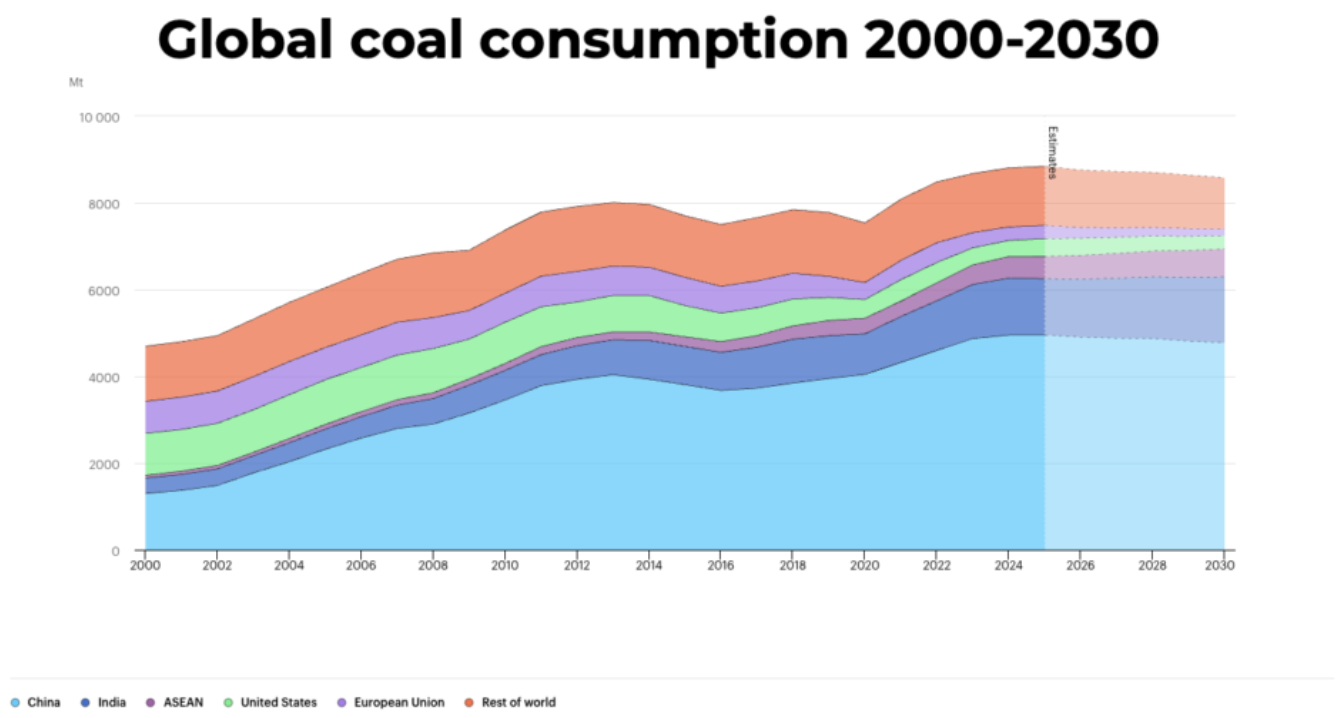
Global coal consumption is expected to hit a new record in 2025, rising 0.5% from 2024 to a record 8.85 billion metric tons this year.
The resurgence is driven by rising production in the United States, with expected coal consumption 8% higher than in 2024, slower global retirements of coal-fired plants, and persistent energy demand in Asia.
Even the European Union is delaying coal phase-outs due to energy shortages, high energy prices, and increasing demand.
While renewable energy and nuclear power are expanding, coal is a critical baseload power source, especially in China and India, illustrating that economic necessity and market forces still outweigh decarbonization efforts.
Nonetheless, the International Energy Agency is still forecasting peak coal demand and has been proved wrong.
The Trump administration has pressed for reliable baseload power and the continued use of coal. In particular, Department of Energy Secretary Chris Wright used emergency authorities to stop the premature retirement of coal plants in Michigan, Pennsylvania, and Washington to avoid power outages and grid reliability issues. In early December, Secretary Wright teased new rules to use fossil-fuel-based backup generators to meet demand growth. As a result, the International Energy Agency (IEA) noted that due to higher output in the United States, global coal demand is expected to reach a new record high in 2025, rising 0.5% from 2024 to a record 8.85 billion metric tons this year. That growth is expected to occur despite growth in renewables, nuclear power, and natural gas.
According to Mining.com, U.S. coal use is expected to increase by 8% in 2025, after a 15-year stretch of annual declines, averaging about 6% annually, beginning during the Obama administration. The growth is not only due to slower retirements of coal-fired plants, but also to higher natural gas prices driven by extreme cold, record liquefied natural gas exports, increased electricity demand from artificial intelligence (AI) data centers and electrification, and federal policy support. Goldman Sachs is now expecting about 40 gigawatts of coal capacity retirements through 2030, down from 66 gigawatts in its prior forecast, with assets remaining online to meet growing power demand until new baseload solutions are more readily available. That means coal will continue to serve as a bridge due to increasing power demand from AI data centers and other electrification trends until sufficient nuclear power generation comes online, which is likely years away.
Recently, President Trump signed a bill to reverse a Biden-era plan against coal mining in Montana. According to the Daily Caller, the bill nixes Biden’s Miles City Resource Management Plan Amendment, which blocked coal development across almost two million acres in Montana and shut down future coal leasing in the Powder River Basin. More than 40% of America’s coal came from the Powder River Basin in 2019, according to the U.S. Energy Information Administration.
In Europe, the desire to move away from coal has been slowed by weak wind conditions, high gas prices, and supply chain issues. Germany, which has the greatest coal power capacity in Europe, became the first country to reopen a previously mothballed coal power plant. Poland has the second most coal-generating capacity in Europe.
The IEA has repeatedly predicted peak coal demand that has not occurred. For example, in 2023, the agency said demand had likely peaked, but coal consumption hit a new record in 2024 and rose again this year, largely because of surging electricity demand in China, India, and other fast-growing economies.
China consumes more coal than the rest of the world combined to fuel its industrial base and provide energy for its residents. China has more coal power plants than the entire electric generating fleet of the United States from all sources, and is still building state-of-the-art coal plants with little regulation affecting their cost. India is the main source of net coal demand growth through 2030, due to growth in electricity demand, cement, steel, and coal-based industrial processes. Coal generates over 74% of India’s electricity, having increased 3.5% in FY25. India’s Ministry of Coal has set a target to increase domestic coal production by 42% over the next five years. Southeast Asia has the fastest growth rate, led by new coal power and metals processing. Asian coal demand combined has offset most declines in coal demand in advanced economies.
But IEA continues its peak global coal outlook, saying coal consumption will plateau and will start a very slow and gradual decline through the end of the decade, as depicted below.
Analysis
Global energy demand is rising, and coal is expected to continue playing a key role in helping meet the power needs of artificial intelligence, manufacturing, and electrification. While the U.S. has moved away from coal in recent years, Energy Secretary Chris Wright’s orders keeping coal plants online is expected to increase coal consumption in 2025, and further Environmental Protection Agency deregulatory actions regarding greenhouse gas and mercury and air toxics regulations, alongside the Big Beautiful Bill’s phase-out of subsidies for solar and wind, could improve the economic potential for U.S. coal plants in future years. For developing countries like India and China, coal generation will continue to increase to meet growing energy demand as these countries lack the same environmental regulations and natural gas capacity limiting coal in the U.S.
For inquiries, please contact [email protected].

