

Key Takeaways
Iran-aligned Houthis have made advances in the Red Sea, capturing ports and an island in the Bab el-Mandeb Strait, putting upward pressure on oil and diesel prices.
The advances make it harder for Saudi Arabia to export oil via its East-West pipeline, which it was using as an alternate route from the Strait of Hormuz.
Saudi’s East-West pipeline was hit by drones fired from Iraq, targeting pumping stations.
Saudi’s oil production dropped to its lowest level since 1990 in August as the Houthis gained more control.
The Houthi advance was with direct guidance from Iran’s Revolutionary Guards seeking a new front in the Iranian conflict, with Iran promising them more help with funding, weapons and senior officer advisors.
U.S. diesel prices averaged more than $6 a gallon for the first time, and gasoline prices averaged $4.30 a gallon on September 11.
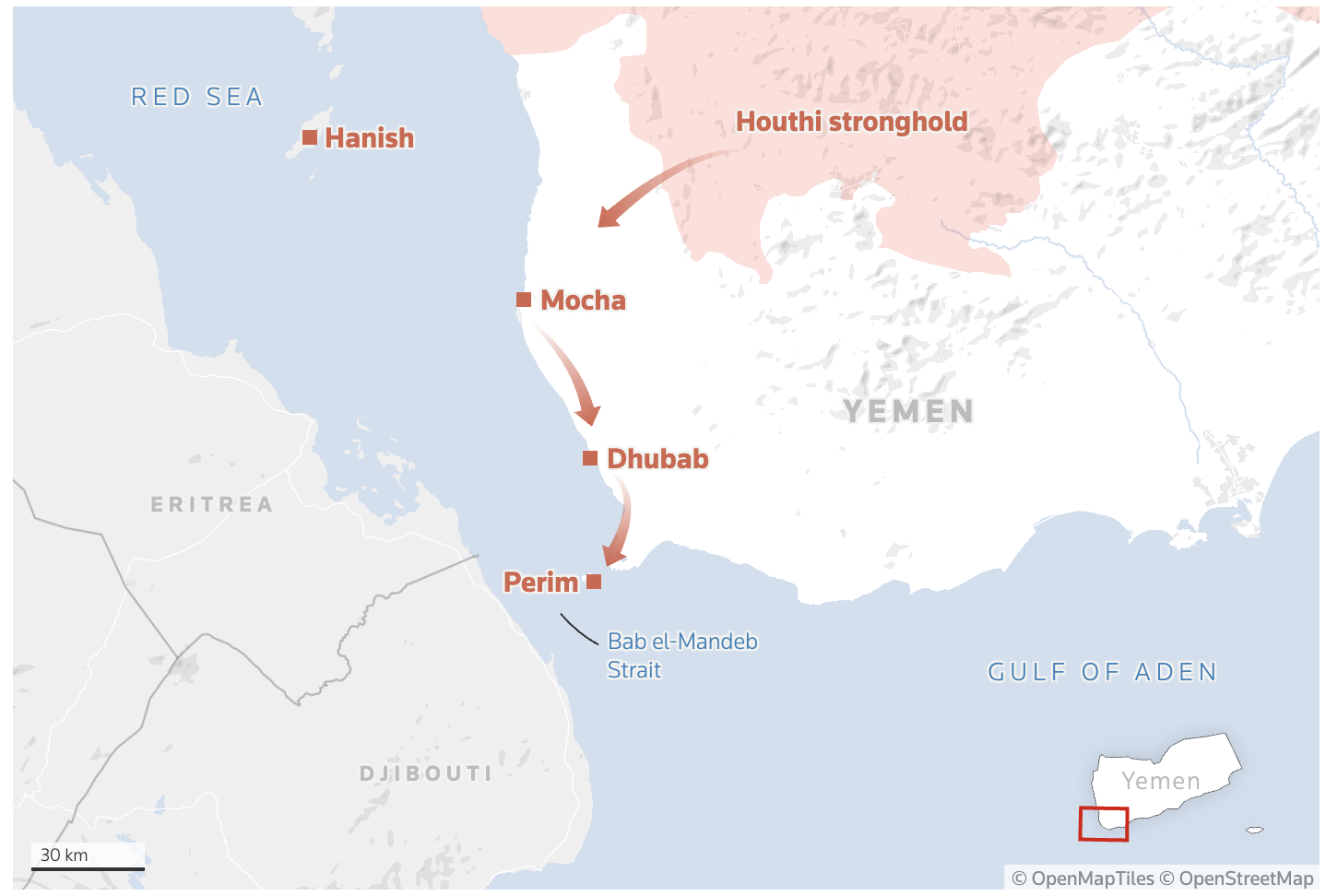
Houthi rebels in Yemen pushed out forces allied with the Yemeni government, which is backed by Saudi Arabia, to seize the city of Mocha and its port–a major setback for Saudi Arabia. The city is near the Bab el-Mandeb Strait, which controls access to the southern end of the Red Sea and could further restrict Saudi oil exports. According to Saudi Arabia, its oil output in August had already dropped to its lowest level since 1990, falling by 2.3 million barrels per day to 6 million barrels per day as the conflict with Iran limited the kingdom’s export routes.
Reuters also reports that the Houthis reached the strategic island of Perim in the Bab el-Mandeb Strait on September 11 as the Saudi-backed Yemeni government pulled out of Perim. The Houthis had also taken the mainland Red Sea coastal town of Dhubab, which faces the island. The Houthi advance down Yemen’s Red Sea coast was with direct guidance from Iran’s Revolutionary Guards, seeking to open a new front in the Iranian conflict. Reuters reports that Iran told the Houthis to escalate their attacks on Saudi Arabia and promised more funding, weapons, and senior officers to help them.
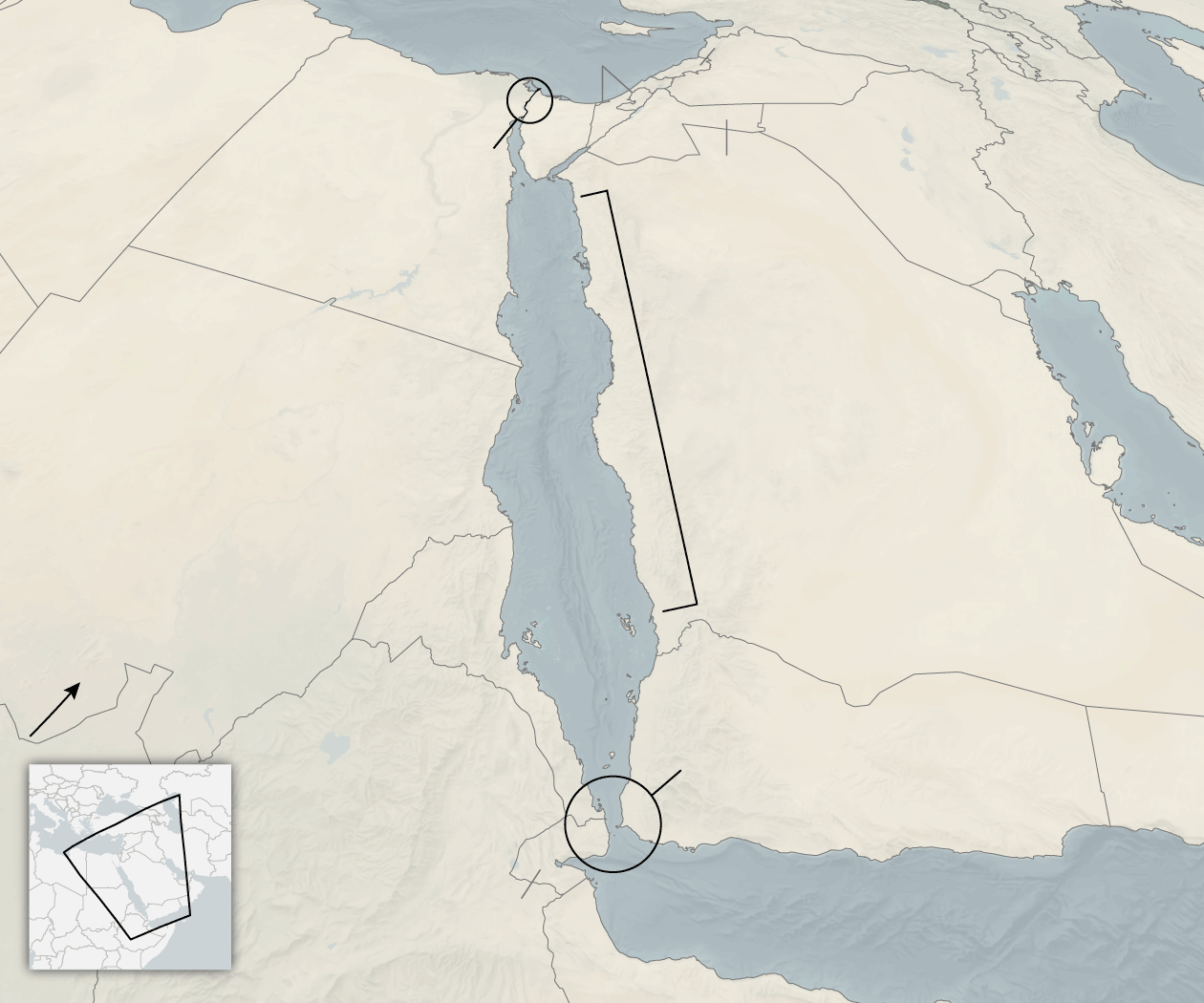
Between 12 and 15% of international seaborne commerce and 30% of global container traffic pass through the Red Sea annually, carrying agricultural products such as grains and fertilizers, raw materials like ores and metals, industrial components like electronics and automotive parts, and energy resources. The trade is worth more than $1 trillion a year. The Saudis have been using the Red Sea, which extends from the Suez Canal in the north to the Bab el-Mandeb Strait in the south, as an alternate shipping route to move their oil exports using its East-West pipeline since the Iran conflict effectively closed the Strait of Hormuz, through which a fifth of global oil used to flow. While the U.S. Navy has been escorting oil tankers through that waterway, oil flows have not returned to pre-conflict levels.
According to Reuters, satellite imagery showed smoke on September 10 near Saudi Arabia’s East-West oil pipeline. The Wall Street Journal reported that Saudi Arabia had to shut down the pipeline, indicating that it had been attacked multiple times by drones fired from Iraq that targeted several pumping stations. The East-West pipeline can carry up to 7 million barrels of oil a day 750 miles from Saudi Arabia’s oil-producing region on the Persian Gulf to the port of Yanbu on the Red Sea. Attacks earlier this year damaged a pumping station and reduced the line’s capacity by about 700,000 barrels a day, but the country restored the pipeline to its full capacity within days.
With the Houthi advances, oil prices surged to $109 a barrel on September 10, as traders contemplated a new bottleneck affecting the global energy market. Brent crude oil, the international benchmark, traded just under $104 a barrel on September 11, after more than a 6% rise. The U.S. price of diesel rose to an average of $6.06 a gallon, a record, and regular unleaded gas rose to $4.30. The average U.S. diesel and gasoline prices are affected by California’s high prices, which averaged $7.98 a gallon for diesel and $5.93 for gasoline on September 11, according to AAA. Some parts of California saw diesel prices as high as $9.99 a gallon as the state’s anti-oil and gas policies put upward pressure on fuel prices. Diesel fuels farm equipment and trucks, trains, ships and heavy equipment that keep global supply chains functioning. U.S. diesel prices have risen almost 60% since the Iranian conflict began on February 28.
Besides the effective closure of the Strait of Hormuz, the market has been squeezed by Russia’s diesel export ban, imposed as several refineries have been attacked by Ukrainian drones. Restrictions on Chinese fuel exports are another factor that further tightened global diesel supply and pushed prices higher. U.S. distillate inventories are 13% below their five-year average, at 106.3 million barrels, despite refiners operating at high utilization rates. Diesel margins are expected to stay elevated and volatile into early next year.
U.S. Treasury Secretary Scott Bessent indicated that the Trump administration will sanction a large bank the week of September 14 as it continues to apply economic pressure on Iran to end the conflict. The United States imposed a number of economic measures against Iran, including a blockade of its ports and targeting its oil exports, shipping networks, weapons procurement channels, financial intermediaries, digital asset exchanges, and aviation links. In August, Secretary Bessent announced “Operation Economic Outcast,” imposing sanctions on nearly 60 entities, individuals and vessels and expanding the scope of secondary sanctions on those doing business with Iran in sectors including shipping, aviation, technology, gold and digital assets.
Conclusion
The Iran-aligned Houthis have made advances in the Red Sea, capturing ports and an island in the Bab el-Mandeb Strait, making it more difficult for Saudi Arabia to export its oil via its East-West pipeline, which it was using as an alternate route from the Strait of Hormuz. Saudi’s oil production dropped to its lowest level since 1990 in August as the Houthis gained more control. The Houthi advance was with direct guidance from Iran’s Revolutionary Guards seeking to open a new front in the Iranian conflict, with Iran promising them more help with funding, weapons and senior officer advisors. The Houthi advance helped push oil prices to the high $ 100s a barrel, then drop a bit. U.S. diesel prices averaged more than $6 a gallon for the first time, and gasoline prices averaged $4.30 a gallon on September 11.

