

Key Takeaways
The New England Clean Energy Connect, a new transmission line that started running in mid-January, was not able to supply power from Hydro-Quebec during Winter Storm Fern because Quebec needed the power for its own use.
New England had to fire up its oil generators after receiving permission from the Energy Department to run its fossil fuel generators at maximum levels.
New England closed its last coal plant in September 2025, so oil generated almost 40% of the region’s power on Sunday during the height of the storm.
The contracts with Hydro-Quebec are supposed to bring low-cost hydroelectricity to 20% of Massachusetts’ homes that would lower ratepayer bills by $50 million each year and help with rising energy demand from AI data centers and increased electrification.
The New England Clean Energy Connect, the region’s new power line, has been ineffective since late Saturday, as Hydro-Quebec kept the electricity it produced for its own needs. Residents of Quebec mainly use electricity for heating. The new 145-mile, $1.6 billion transmission line through western Maine was promised to consistently deliver more than 1,000 megawatts of power. Hydro-Quebec, however, needed that power. The province also imported more power from New England via an older transmission line during the storm. As a result, New England had to fire up its old oil turbines to fill the gap, producing almost 40% of the region’s power on Sunday during the height of the storm. Hydro-Quebec will have to compensate the New England utilities for not meeting its commitment, though the penalty is unknown.
A Massachusetts “clean” energy law passed in 2016 resulted in three utilities — Eversource, National Grid, and Unitil — entering into long-term contracts with Hydro-Quebec for its hydropower. Those contracts also helped finance the construction of the line. The Massachusetts bill also required utilities to enter into long-term contracts with offshore wind companies. The contracts with Hydro-Quebec were supposed to bring low-cost electricity to 20% of Massachusetts’ homes that would lower ratepayer bills by $50 million each year. The line took nearly ten years to be built, and during the last three years, Hydro-Quebec suffered from drought that forced the company to import electricity from New England. Previously, it had exported electricity to New England via an older transmission line.
The grid operator for New England received permission from the Energy Department to run many of its fossil generators at maximum levels through January 31. Such permission was also granted to Texas and other states that were in the track of the storm. The Federal Power Act allows for such approvals during war or weather emergencies. New England closed all its coal plants, which many other states used to get through the storm and ensuing weather. Its last coal plant was closed, a move celebrated by the media, in September 2025. With natural gas used for heating as well as electric generation in New England, utilities had to turn to oil.
The New England Clean Energy Connect
The new transmission line was up and running on January 16, about a week before the storm hit. The line has 20-year fixed price contracts with the state’s utilities in Massachusetts. Its completion is important as Massachusetts chose to pass a law to reach zero carbon dioxide emissions by mid-century. Energy demand is also expected to increase in New England, as it is expected to do elsewhere in the country, because of artificial intelligence data centers and increased electrification. To reach completion, the project suffered through a number of location designs and lawsuits, causing the almost-ten-year project length from start to completion. Despite fawning media articles about the promise of new electricity from the new line, it was not able to deliver when most needed during winter storm Fern.
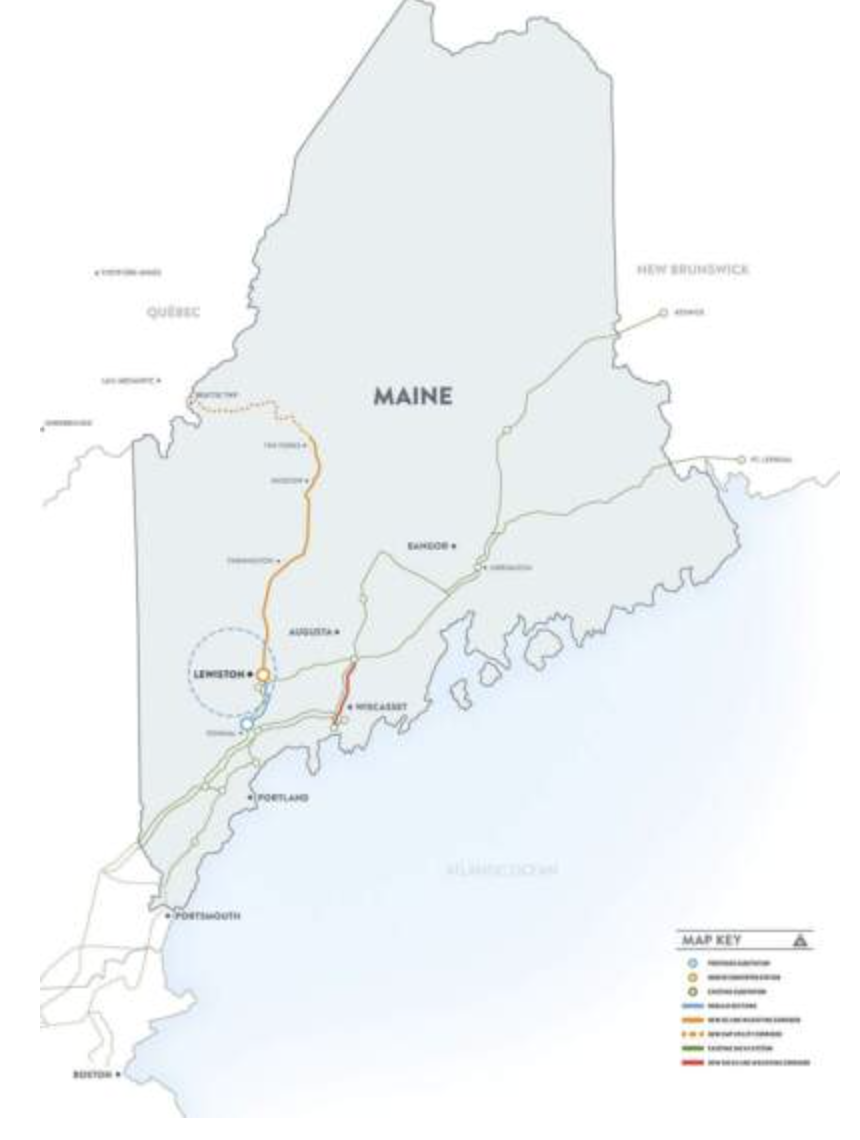
In 2016, Governor Charlie Baker signed a law authorizing Massachusetts to solicit bids for a transmission line to Quebec. According to WBUR, while the state first planned on a line going through New Hampshire, the project fell apart in 2018 due to permitting delays and public concern over building a power line through undeveloped forest. The Baker administration then directed electric utilities in the state to sign 20-year contracts with the Clean Energy Connect project’s developers, Central Maine Power — a subsidiary of the energy company Avangrid — and Hydro-Quebec, the main power generator and utility in Quebec. The project required clearing a 150-foot-wide corridor through 54 miles of forest in western Maine, with much of the same pushback as the New Hampshire proposal, resulting in lawsuits and regulatory delays.
WBUR reports that, in 2021, a ballot referendum in Maine revoked a key permit for the project, which had already begun construction. Advocates and opponents of the transmission line poured more than $90 million into the campaign, and nearly 60% of Maine voters rejected the project, stalling the project and causing the developers to sue. In April 2023, a Maine jury verdict allowed construction to resume. The year-and-a-half delay caused the project’s price tag to increase by more than $500 million for Massachusetts ratepayers. However, the project is still expected to lower bills by $18 to $20 per household.
Analysis
New England’s reliance on Canadian energy transported via the New England Clean Energy Connect transmission line came back to bite them during Winter Storm Fern, forcing them to rely on oil. Even though the project is supposed to lower New England’s electricity bills and help the region meet demand, politicians cannot become complacent about the need for the region to produce its own reliable energy during periods of disruption. To help mitigate the effects of future storms, affordability and reliability must overtake lowering emissions as the primary energy policy goals for the New England states.
For inquiries, please contact [email protected].

