

Key Takeaways
There is an increasing likelihood of a “super El Niño” this year, which could significantly impact electricity generation from weather-dependent wind, solar, and hydroelectric power.
El Niño is a natural climate cycle, but with rapidly increasing amounts of electricity generated by wind and solar because of state mandates and subsidies, its impact will be much greater.
An El Niño tends to reduce precipitation, which can also affect hydroelectric power output.
Wind and solar power must have back-up, which means another system is required, whether that power is provided by coal, natural gas, nuclear, or by storage batteries.
Batteries do not generate electricity; they store excess power from other sources and are very expensive.
Significant policy-driven changes have led to more weather-dependent energy sources, and utility planners must recognize the increased challenges to the reliability and affordability of these policies.
When there is less sun and less wind, solar and wind power output will drop. The same is true of hydropower. If there is less rain and snow and the water behind dams falls, hydropower output will be lower. In February 2021 in Texas, a major storm reduced wind power output, prompting the state to rely on natural gas and coal, yet many consumers still lost power. In 2024, a major hailstorm outside of Houston dismantled a large solar panel facility. And studies show that output from solar, wind, and hydropower has fallen in certain regions during El Niño years, as cloud cover, wind patterns, and rainfall change. El Niño is a natural climate cycle, typically recurring every two to seven years and lasting for about a year.
Texas Storms
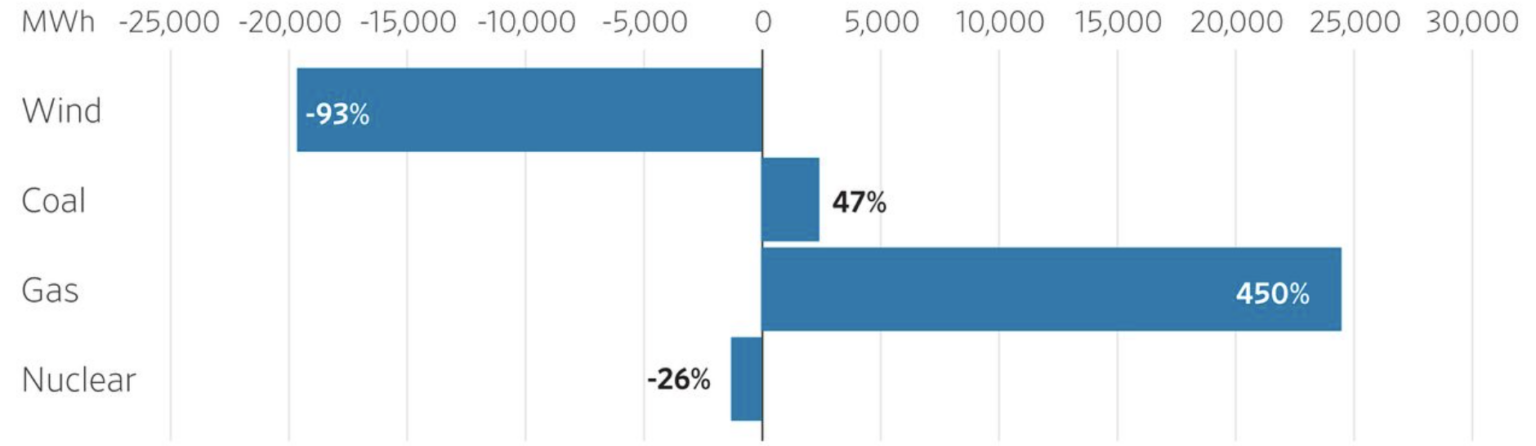
Texas leads the nation in wind-powered generation and was the first state to reach 10,000 megawatts of installed wind-generating capacity, subsidized by state mandates and federal tax credits. By the end of November 2020, installed wind capacity in Texas was 29,230 megawatts, and wind turbines at Mes had generated over half of the Texas power generation. When a storm hit in February 2021, wind generation dropped off, demand surged because of the cold, and fossil-fuel generation increased to cover the supply gap. Between the mornings of February 7 and February 11, wind as a share of the state’s electricity fell to 8% from 42%. Gas-fired plants produced 43,800 megawatts of power and coal plants produced 10,800 megawatts—about two to three times what they usually generate at their peak on any given winter day. Between 12 a.m. on February 8 and February 16, wind power plunged 93% while coal increased 47% and gas increased 450%.
In mid-March, 2024, a massive hailstorm crippled a 3,000-acre solar panel facility 40 miles outside of Houston. The storm sheared hundreds of panels, prompting nearby residents to worry that toxic chemicals may be leaking from them and endangering local water tables. The hailstorm caused damage to the solar panels at the Fighting Jays Solar facility, a 350-megawatt project brought online in July 2022 in Fort Bend County, Texas. According to the Department of Energy, hailstones the size of baseballs can have sufficient kinetic energy to shatter solar panel glass completely. The hail ranged in size from quarters to golf balls and even baseballs.
Texas is not the only state that has been hit by hail. In June 2023, a massive hailstorm destroyed a PV solar facility in Nebraska. The solar panels at a 5.2-megawatt solar farm in Scottsbluff, Nebraska, were mostly destroyed by baseball-sized hail moving at 100 to 150 miles per hour. The system’s 25-year expected life was cut to less than 4 years, leaving a toxic mess to clean up.
El Niño Weather Effects
A 2024 study on renewables in Texas found that both solar and wind power supplies tend to decline during El Niño. Extreme El Niño-driven heat can increase solar generation but also drive electricity demand up and strain the grid. In parts of the Western United States, particularly California, as well as parts of South America, the Middle East, and eastern China, the researchers found that El Niño reduces solar radiation and causes solar energy to decline despite growing solar energy capacity. The study also found that the effects are strongest during ‘super El Niño’ events, which cause temperatures in the central and eastern Pacific Ocean to rise more than 2 degrees Celsius above their average levels. These events have only occurred three times since the early 1980s. Parts of Asia have seen declines in wind power during El Niño events. Based on past events, researchers estimate that the next super El Niño could reduce solar power output by about 5% in California and by 10% in parts of southeastern China.
For wind, El Niño can shift storm tracks and change wind speeds, sometimes leading to less consistent or weaker wind patterns in key Texas wind corridors. This can reduce the efficiency of wind farms, especially in the Panhandle and West Texas regions where Texas leads nationally. In Texas, the combination of reduced solar irradiance and altered wind patterns can create a dual hit to renewable generation. Lower solar and wind output during El Niño can increase reliance on natural gas and other dispatchable sources. Parts of Asia have also seen declines in wind power during El Niño events.
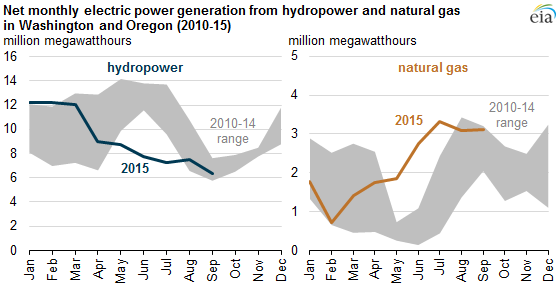
In some areas of South America and southern Africa, El Niño reduced hydropower output. In Colombia, where hydropower supplies up to 70% of the nation’s electricity, a strong El Niño in 2015 and 2016 caused water levels in the country’s dams to drop by 60 to 70%, according to a report from the World Energy Council. The 2015-2016 drought was the second-strongest in Colombia’s history. Rainfall was 40% below normal, resulting in a severe hydrological drought. Hydropower generation also dropped across other parts of the continent, including Brazil and Ecuador, as one of the worst droughts in decades affected the region. The Energy Information Administration reports that in the summer of 2015, a strong El Niño caused hydroelectric generation in Washington and Oregon, which provides the largest share of electricity generation in the Pacific Northwest, to be below normal, leading to increased reliance on natural gas and other fossil fuels to meet electricity demand.
El Niño comes as some world leaders, particularly in Europe and China, are considering expanding their renewable energy portfolios due to higher oil and gas prices resulting from the conflict in Iran. If countries continue on the renewable path, utilities and policymakers may need to adjust forecasts and reserve capacity to account for El Niño’s dampening effect on renewables.
Conclusion
Wind and solar power are affected by weather conditions and must have back-up, which essentially means a secondary system, whether that power is provided by coal, natural gas, or nuclear, or by very expensive storage batteries that store power when there is excess wind and/or solar power and release it when these sources are in a lull. Adding system costs to wind and solar power no longer makes them the cheap energy sources the media and environmentalists tout. Further, intermittent renewable sources are even more expensive when they no longer get the massive subsidies that they have been receiving for decades. With a super El Niño expected, the likelihood of solar, wind, and hydro output dropping is highly likely, and utility planners need to be prepared. Significant policy-driven changes have led to more weather-dependent energy sources in the United States and around the world, and utility planners must recognize the increased challenges to the reliability and affordability of these policies.
For media inquiries, please contact press@ierdc.org.

